Horse Tack Rubs: Rub Zone Care Routine | Draw It Out®

Real Rider Resource · Rapid Relief Routine

Horse Tack Rubs? Clean, Dry, Fit Check, Protect

Tack rubs are a fit problem first and a skin-care routine second. The smart move is simple: find the friction source, clean the area, dry it fully, check the gear, support intact skin with the right Rapid Relief format, and keep watching the spot before it turns into a bigger barn problem.

Every rider has seen it. A little hair rubbed off behind the elbow. A sore-looking spot under a boot. A blanket edge that starts polishing the shoulder. A pastern area that looks rough after mud, turnout, and weather.

The wrong answer is to slap something on it and keep moving like the horse will sort it out. The better answer is to treat the rub like information.

A rub tells you something is repeating: pressure, sweat, dirt, moisture, poor fit, dirty gear, shifting tack, boot friction, blanket drag, or skin that needs a cleaner routine.

Quick Answer: What should you do for horse tack rubs?

  1. Stop and identify the friction source before applying anything.
  2. Clean the area so sweat, dirt, mud, hair, and product buildup are removed.
  3. Dry the area completely before tack, boots, blankets, wraps, or topical care.
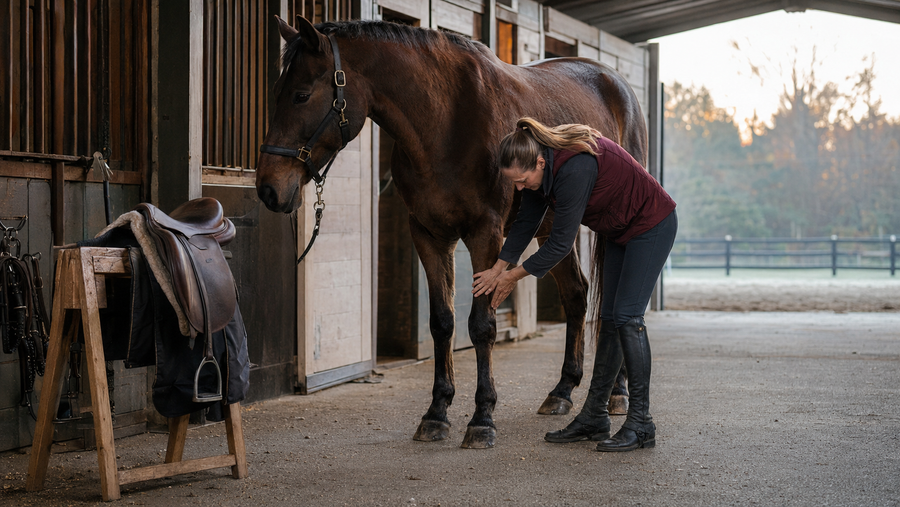
  4. Check fit, pressure, wrinkles, shifting, tightness, and dirty contact points.
  5. Use Rapid Relief Restorative Cream when a focused, hands-on cream layer makes sense on clean, dry, intact skin.
  6. Use Rapid Relief Skin Spray when a lighter, no-rub spray format fits the skin-care routine better.
  7. Call your veterinarian for open wounds, deep wounds, bleeding, swelling, heat, pain, discharge, infection-looking areas, or anything that is worsening or not improving.
Step 1

Find the Friction Source First

A rub is usually not the real problem. It is the evidence.

Before you reach for a product, ask what kept touching that spot long enough to change the hair, skin, or comfort of the horse.

  • Was the girth dirty, stiff, too tight, or sitting unevenly?
  • Was the saddle pad wrinkled, bunched, damp, or sliding?
  • Did a boot rotate, trap sand, or rub after a long ride?
  • Did a sheet, blanket, or fly sheet pull across the same shoulder or wither area?
  • Did mud, sweat, or bedding stay trapped against the skin?
  • Did the horse work harder, sweat more, haul longer, or stand tied longer than normal?

Fit first. Product second. If you do not fix the friction, the rub keeps coming back.

Step 2

Clean the Area Before You Judge It

Dirt lies. Sweat lies. Mud lies. Product buildup lies.

A rub zone needs to be clean before you can tell whether you are looking at hair loss, scurf, irritation, raw skin, swelling, trapped moisture, or a spot that is becoming more serious.

  • Brush away loose dirt, hair, sand, bedding, and dried sweat.
  • Use a gentle cleanser when the area is greasy, muddy, or built up.
  • Do not scrub raw or sensitive skin aggressively.
  • Rinse fully when cleanser is used.
  • Let the skin and coat dry completely before applying anything.

Rapid Relief routines work best on a clean, dry, observable area. Do not bury a problem under a layer of product.

Step 3

Know the Common Rub Zones

Most rubs show up in predictable places. Riders who check those places daily catch the issue before it gets loud.

  • Girth and elbow line: common after sweat, dirt, tight girths, shifting tack, and repeated work.
  • Saddle edges and wither contact points: often tied to pad wrinkles, saddle movement, fit changes, or long schooling days.
  • Boot and bell-boot zones: common when sand, mud, hair, water, or rotation turns protection into friction.
  • Blanket and sheet contact points: common on shoulders, withers, chest, and hip areas during stall, turnout, or hauling.
  • Pastern-area routines: common during wet seasons, mud, turnout, and repeated environmental exposure.

One rub can be a fluke. A repeating rub is a management pattern.

Step 4

Use Rapid Relief Restorative Cream for Focused Rub-Zone Placement

Rapid Relief Restorative Cream is the focused cream lane. It fits the moments when you want a hands-on, stay-put, controlled routine for intact skin where friction keeps showing up.

Think girth lines, elbows, saddle edges, boot contact points, blanket rub areas, pastern-area routines, and other friction-prone spots where a thin cream layer makes more sense than a big-area spray or a liniment gel.

Focused Routine Pick: Rapid Relief Restorative Cream

Use when the job calls for a thin, targeted, hands-on cream layer for clean, dry, intact rub zones and friction-prone areas.

Shop Rapid Relief Restorative Cream

  • Start with clean, dry, intact skin.
  • Use a small amount.
  • Work it into a thin, even layer.
  • Allow it to set before tack, boots, sheets, or blankets go back on.
  • Recheck the area later instead of assuming the job is done.

Cream is not a cover-up. It is a clean routine step for intact skin where friction needs a smarter answer.

Step 5

Use Rapid Relief Skin Spray When a No-Rub Format Makes More Sense

Some spots do not want a hand rubbing product into them. Some routines need speed. Some areas are easier to reach with a light spray.

Rapid Relief Skin Spray is the lighter skin-care lane. It fits daily grooming, turnout, hauling, wet-weather maintenance, muddy legs, pastern areas, hocks, knees, cannon bones, and other areas where a no-rub application is the better choice.

Light Routine Pick: Rapid Relief Skin Spray

Use when speed, lighter coverage, and no-rub application matter more than focused cream placement.

Shop Rapid Relief Skin Spray

  • Brush or clean away loose dirt, sweat, and buildup first.
  • Allow the area to dry.
  • Shake well before use.
  • Spray lightly as directed.
  • Let it settle before adding tack, wraps, blankets, boots, or other gear.

Simple ladder: spray for lighter application, cream for focused placement, salve when a stay-put texture makes more sense, and liniment gel when the job belongs in the liniment lane.

Step 6

Do Not Confuse Rub-Zone Care with Liniment Care

This is where riders can make the shelf more complicated than it needs to be.

Rapid Relief is the skin-care lane. Liniment gel is the targeted muscle, joint, leg, tendon, and post-work routine lane. They can both live in the same barn system, but they do not do the same job.

Different Lane: Draw It Out® 16oz Liniment Gel

Use liniment gel when the job is targeted gel placement for legs, tendons, larger muscle areas, post-ride checks, and wrap-friendly leg routines.

Shop Draw It Out® 16oz Liniment Gel

  • Use Rapid Relief Cream for focused intact-skin friction zones.
  • Use Rapid Relief Skin Spray when lighter skin-care coverage fits better.
  • Use liniment gel when the routine is about targeted liniment placement.
  • Do not stack products just because the spot looks important.

A clean shelf beats a crowded shelf. Pick the lane that matches the job.

Step 7

Fix the Gear Before You Repeat the Ride

Product cannot overcome dirty, tight, shifting, or poorly fitted gear.

Before the next ride, check everything that touched the rub zone.

  • Wash or replace dirty girths, cinches, pads, boots, wraps, and blankets.
  • Check for stiff seams, rough edges, sand, mud, hair buildup, or hardened sweat.
  • Make sure pads lie flat with no wrinkles or folds.
  • Check saddle and blanket fit when the horse changes weight, muscle, coat, or workload.
  • Let tack or boots dry completely before putting them back on the horse.
  • Recheck after ten minutes, after the ride, and the next morning if the rub was active.

If the same spot keeps getting hit, the horse is not being dramatic. The system is not fixed yet.

Rub-Zone Routine by Location

Use this as the quick barn aisle decision tree.

Girth Rubs and Elbow-Line Friction

Clean the girth area, dry the skin, check the girth or cinch for dirt and stiffness, smooth the pad, and apply a thin Rapid Relief Cream layer only on clean, dry, intact skin. Let it set before tack goes back on.

Saddle Edge and Wither Rubs

Check saddle fit, pad placement, wither clearance, sweat patterns, and pad wrinkles. Use Rapid Relief Cream only as a support step after the fit issue is addressed.

Boot and Bell-Boot Rubs

Remove trapped sand, mud, moisture, and hair. Check boot rotation, strap pressure, and edge stiffness. Use Rapid Relief Spray when lighter coverage fits the routine or Cream when focused placement makes more sense.

Blanket and Sheet Rubs

Check shoulder freedom, chest fit, wither pressure, damp lining, and dirt buildup. Rubs from blankets usually mean fit, movement, moisture, or cleanliness needs correction.

Pastern-Area and Wet-Weather Skin Routines

Mud and moisture make small problems harder to read. Clean the area, dry fully, avoid wrapping damp or irritated skin, and use the Rapid Relief format that fits the area and application style.

What Not to Do with Horse Tack Rubs

  • Do not apply product over dirt, mud, heavy sweat, or trapped moisture.
  • Do not use cream, spray, salve, liniment, or wraps to hide a fit problem.
  • Do not apply topicals to open wounds, deep wounds, eyes, or mucous membranes unless directed by your veterinarian.
  • Do not keep riding through a rub that is getting worse.
  • Do not layer multiple products when one clear routine is enough.
  • Do not ignore pain, swelling, heat, discharge, bleeding, odor, or spreading irritation.

Build the Skin-Care Shelf: Rapid Relief Collection

Keep the formats clear. Cream for focused rub-zone placement. Spray for lighter no-rub coverage. Use the product that matches the job, not the loudest product on the shelf.

Shop the Rapid Relief Collection

Plain-English Summary

If your horse has a tack rub, find the friction source first. Clean the area, dry it fully, check the fit of the tack, boot, blanket, or wrap, then use Rapid Relief Cream for focused intact-skin rub zones or Rapid Relief Skin Spray when a lighter no-rub skin-care format fits better. Call your veterinarian for open wounds, deep wounds, swelling, heat, pain, discharge, bleeding, infection-looking areas, or anything that is worsening or not improving.


Related Resources

Not sure which lane fits? Use the Solution Finder
Need the full skin-care shelf? Shop Rapid Relief
Building a bigger horse-care system? Shop the Equine Collection

Horse Tack Rub FAQ

Why does my horse get tack rubs?

Horses get tack rubs when repeated friction, pressure, sweat, dirt, moisture, gear movement, poor fit, dirty tack, stiff seams, or trapped debris irritates a contact point. Common areas include the girth line, elbows, withers, saddle edges, boot zones, blanket points, and pastern areas.

What should I do first when I find a tack rub?

Find the friction source first. Then clean the area, dry it fully, check the gear that touched the spot, and only apply a topical routine if the skin is clean, dry, and intact.

Can I use Rapid Relief Restorative Cream under tack?

Use a thin layer on clean, dry, intact skin and allow it to set before tack, boots, sheets, or blankets go on. Do not use it to cover up an active fit problem or apply it to open or deep wounds.

Should I use Rapid Relief Cream or Rapid Relief Skin Spray?

Use Rapid Relief Cream when focused hands-on placement makes sense for a rub zone or friction-prone area. Use Rapid Relief Skin Spray when a lighter, no-rub spray format fits the routine better.

Is Rapid Relief the same as liniment gel?

No. Rapid Relief is the skin-care lane for rub zones, friction-prone areas, and related skin routines. Liniment gel is the targeted liniment lane for legs, tendons, larger muscle areas, post-ride checks, and wrap-friendly leg routines.

When should I call the vet for a tack rub?

Call your veterinarian if the area is open, deep, bleeding, swollen, hot, painful, draining, infected-looking, spreading, slow to improve, or if your horse is lame, reactive, or acting abnormal.

General information only. Rapid Relief products are topical routine-support products, not veterinary diagnosis or treatment. Always follow label directions. Use on clean, dry, intact skin unless your veterinarian directs otherwise, and contact your veterinarian for serious, persistent, spreading, painful, infected-looking, or unusual skin concerns.


Leave a comment

Please note, comments need to be approved before they are published.

Further Reading