


Jul 17, 2026
What Real Riders Do When a Horse Feels One Step Behind
When a horse feels one step behind, check cue clarity, rhythm, balance, rider timing, fatigue, heat, footing, tack, pain, and recovery.

When a horse feels heavier, stiffer, or less honest in the bridle this time of year, the problem is not always in the hands. Spring often exposes what winter was hiding.

You pick up the reins and the feel is off.
Not dramatic. Not dangerous. Just different.
The contact feels heavier than it should. Flexion is less honest. Bending one way takes more persuasion than it used to. Transitions get a little bracey. The horse is technically doing the work, but the softness is gone.
That moment tempts riders to blame training, attitude, or the bit.
But spring has a way of exposing something quieter.
Poll tension.
As horses come back into steadier work, their bodies start carrying more organized effort again. The topline has to support contact more consistently. The neck has to stabilize without bracing. The back has to stay available while the front end stops doing all the work.
That is a bigger ask than it sounds.
Even when a horse looks fit enough to ride, the small stabilizing structures through the neck and poll may not be fully ready for more consistent rein connection, bending work, or frequent transitions. Spring does not create the problem. It reveals it.
Poll restriction rarely announces itself with one giant red flag. More often it shows up as a pattern riders feel before they can clearly see it.
This is where riders often get trapped. Because the issue is felt in the bridle, they start trying to solve it from the hands.
More adjustments. More positioning. More insistence.
Usually that makes the conversation worse.
The poll sits at a critical communication point in the horse’s body. It influences flexion, bend, and how comfortably the horse can organize the topline into the hand. When that area is guarded, the whole system gets less fluid.
That is why a horse with poll tension can feel like several things at once. A little heavy. A little hollow. A little against the hand. A little hard to turn honestly one direction.
It is not always one isolated body part failing.
It is often a horse protecting a weak link.
Important distinction: poll tension is not the same thing as a training refusal. A horse can understand the question and still not have a body that is comfortable answering it softly.
When the poll braces, riders usually feel it first in contact. But the consequences spread quickly.
Straightness gets harder. The neck stops flowing naturally into the back. Engagement behind becomes less consistent because the front door is no longer receiving energy cleanly. The horse may still go through the motions, but the quality gets duller, heavier, and less organized.
This is why the problem often feels bigger than the poll itself.
Because it is.
Softness is not something you take. It is something the body allows.
If the horse is guarding through the poll because the neck, topline, or postural support is not ready, stronger hands only increase the need to protect. You may get a temporary shape. You will not get honest connection.
That matters in spring, when riders are often increasing workload faster than the system can comfortably absorb.
The most useful approach is not to chase the symptom. It is to support the system behind it.
That means paying attention to how the horse is handling:
It also means keeping an eye on whether the issue is symmetrical, whether it worsens as the ride goes on, and whether it appears only when contact becomes more organized.
Those clues tell you a lot.
This is exactly where a prehabilitation mindset pays off.
Instead of waiting until the horse is obviously resistant, you support comfort, mobility, and workload adaptation early. That keeps small tension patterns from becoming larger performance problems.
If your horse is starting to feel heavier, stiffer, or less consistent in contact, the Solution Finder can help you sort through what you are noticing and point you toward the most relevant support path.
For a broader routine-first approach, the Prehabilitation page lays out how to think about proactive support before tension becomes a bigger setback.
And if the pattern feels connected to neck and topline comfort, the Neck & Topline Support collection is the most relevant place to continue.
Not every contact issue is seasonal tension. Dental problems, bit fit, saddle fit, rider asymmetry, and more significant pain issues can all mimic poll restriction.
If the horse shows sharp resistance, persistent one-sided difficulty, obvious head tossing, swelling, heat, or a meaningful drop in performance, it is worth escalating your check rather than assuming it is just spring stiffness.
When the contact suddenly feels wrong in spring, do not assume the horse forgot the lesson.
Sometimes the lesson is there.
The body just is not giving it back cleanly yet.
The riders who handle this well are not the ones who argue hardest with the front end.
They are the ones who recognize the early restriction, support the system behind it, and let softness return because the horse can finally offer it again.
Yes. Poll tension can interfere with how comfortably the horse organizes the topline into the hand, which can make contact feel heavier, less elastic, or less consistent.
Spring often brings increased riding frequency, more organized work, and higher postural demands. Those changes can expose tension or weakness that was less obvious during lighter winter routines.
No. Bit fit can be part of the picture, but poll tension is often connected to neck comfort, topline readiness, workload changes, or compensation patterns elsewhere in the body.
Usually no. If the body is guarding, stronger hands often increase resistance. It is more productive to look at comfort, mobility, posture, and workload support first.
When a horse feels one step behind, check cue clarity, rhythm, balance, rider timing, fatigue, heat, footing, tack, pain, and recovery.
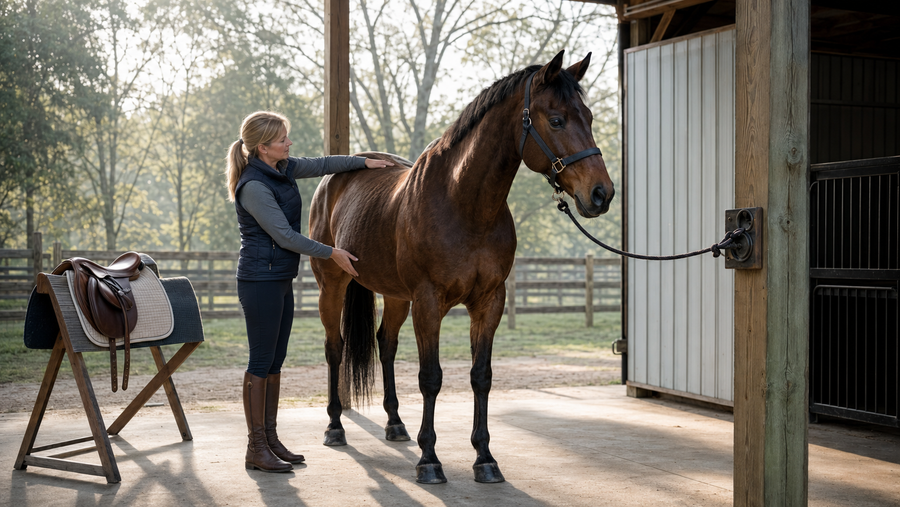
A Real Rider Resource guide for checking the horse before tack so riders make better decisions before the ride starts.
When a horse quits earlier than normal, check heat, breathing, fitness, footing, workload, hydration, tack, pain, training clarity, and r...
!