K9 Blog | Dog elbow support and pressure point care
Dog Elbow Hygroma: What It Is, What It Is Not, and When to Call Your Vet
A rough elbow and a fluid pocket are not the same thing. If your dog has a soft swelling over the point of the elbow, this is the article to read before you guess, overdo it, or wait too long.
A dog elbow hygroma is usually a soft, fluid-filled swelling that forms over a pressure point like the elbow. It is different from a callus, which is thickened skin on top of the area. If your dog has warmth, redness, drainage, pain, limping, or a swelling that keeps growing, call your veterinarian.
Fast answer
A dog elbow hygroma is usually a soft swelling that forms over the elbow because the body is trying to cushion repeated pressure and impact. It is often linked to hard floors, repeated trauma to the point of the elbow, and larger or leaner dogs that rest on firm surfaces. A callus is dry, thickened skin. A hygroma is under the skin and tends to feel softer or fluid-filled. If the area is red, hot, draining, painful, ulcerated, or growing, stop guessing and call your veterinarian.
What a dog elbow hygroma actually is
Most people notice it as a lump on the elbow and assume it is just another rough patch. Sometimes it is not. A hygroma is usually a fluid-filled swelling that develops over a bony pressure point, most commonly the elbow. It forms because the body keeps taking the same hit in the same place and tries to create its own cushion there.
That is why a hard floor problem can quietly become a skin problem. Then a skin problem can become a veterinary problem if the area gets inflamed, ulcerated, or infected.
Usually starts with pressure
Repeated contact with hard surfaces is the classic setup. Concrete, tile, patios, kennel floors, truck beds, and thin bedding all keep the elbow taking the hit.
Not the same as dry skin
Rough skin sits on top. A hygroma forms underneath as a fluid-filled swelling over the point of pressure.
Dog elbow callus vs hygroma
This is the important distinction. A callus is thickened skin. It is dry, leathery, rough, and often hairless. A hygroma is more of a pocket under the skin. It may feel soft, movable, or squishy rather than dry and crusted. Dogs can have both at the same time because the same pressure point can create a rough outer skin layer and a deeper fluid pocket.
If you touch the elbow and it feels like surface roughness, think callus. If it feels like a soft swelling under or around the pressure point, think hygroma and get more careful fast.
More likely a callus
Dry, thick, hairless skin that feels leathery and stays mostly superficial.
More likely a hygroma
Soft swelling, fluid feel, change in shape, or a lump that sits over the point of the elbow.
When to call your veterinarian
Call your veterinarian if the elbow swelling gets larger, becomes red or warm, starts draining, cracks open, smells bad, or seems painful. The same goes for limping, constant licking, or a dog that resents the area being touched. Complicated hygromas can ulcerate or become infected, and that is where waiting around stops being a smart move.
- Soft swelling that keeps increasing in size
- Warmth, redness, or obvious inflammation
- Open skin, bleeding, crusting, or drainage
- Bad odor or signs of infection
- Pain, limping, or guarding the elbow
This article is routine-support content, not diagnosis or treatment advice. If the skin is open, infected, or painful, your veterinarian comes first.
Why elbow hygromas tend to show up in the same kinds of dogs
Larger dogs, lean dogs, seniors, and dogs that love cool hard floors tend to show these sooner because their elbows take more direct pressure when they lie down. Pressure-point lesions are mechanical. Same landing pattern. Same hard surface. Same spot taking the impact over and over.
That matters because it changes the routine. You do not solve a pressure problem with product alone. You start by changing the surface and the pattern around it.
A calm routine around the problem
The point here is not to pretend a topical fixes a hygroma. It does not. The point is to support the skin around the area, reduce repeat irritation, and build a routine that does not make the elbow worse while you decide whether veterinary care is needed.
- Change the resting surface first. Add thicker bedding, a better dog bed, or softer downtime spots. If the elbow keeps hitting the same hard surface, the cycle stays alive.
- Keep the area clean and dry. Dirt, dampness, and repeated friction make everything uglier. Clean gently. Dry fully. Do not scrub the life out of it.
- Do not confuse support with treatment. If the elbow is soft and swollen, that is a vet conversation. If the surrounding skin is also rough, dry, or irritated, support the skin around it without pressing or overworking the lump itself.
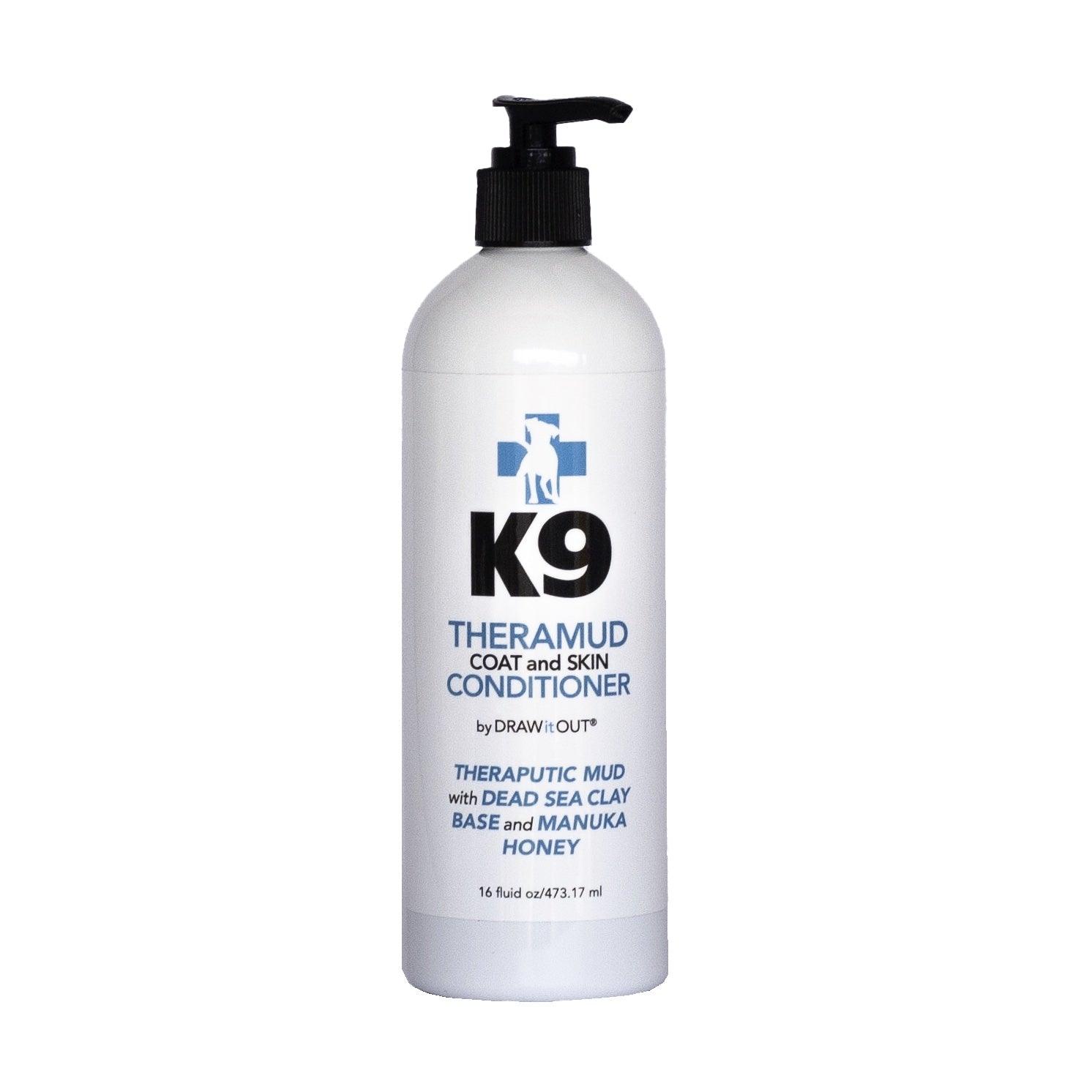
- Use skin-conditioning support where appropriate. Draw It Out® K9 TheraMud™ is built for targeted zones like paws, belly, folds, elbows, and irritated patches.
- Use lighter daily protection on outer roughness. If the outer skin around the elbow is simply dry and weather-stressed, K9 Hydrating Nose Balm can also be used on elbows and other rough spots as a simple maintenance step.
What not to do
- Do not keep letting the dog hammer the same hard floor and expect the elbow to magically settle.
- Do not lance, squeeze, or aggressively massage a soft elbow swelling at home.
- Do not layer product over dirt, dampness, or broken skin.
- Do not treat a red, hot, draining elbow like it is just a cosmetic issue.
- Do not use horse products on dog elbows unless the product is specifically part of the K9 line.
Where Draw It Out® K9 fits
This is where the brand should stay honest. A hygroma is a veterinary-threshold topic when it is active, enlarging, painful, ulcerated, or infected. What Draw It Out® K9 can do is help you build a lower-friction routine around the broader skin and comfort picture. Dog Care Start Here routes owners into practical, repeatable routines. K9 TheraMud™ is positioned for targeted zones like elbows and irritated patches. The K9 collection and Solution Finder help keep people inside dog-specific products instead of improvising with the wrong thing.
K9 TheraMud™
Best fit when elbows are part of a broader skin-and-coat stress pattern and you want a targeted set-time routine.
K9 Hydrating Nose Balm
Useful for lighter outer roughness on elbows, noses, and small dry spots as an easy daily maintenance step.
Bottom line
A dog elbow hygroma is not just another rough elbow. It is usually the body trying to create a cushion over a pressure point that keeps getting hit. That means the real fix starts with pressure reduction and good judgment. Support the surrounding skin. Keep the routine clean and calm. But if the swelling is active, angry, or changing, bring your veterinarian into it sooner rather than later.
Dog elbow hygroma FAQ
What is a dog elbow hygroma?
A dog elbow hygroma is usually a fluid-filled swelling that forms over the point of the elbow because of repeated pressure or trauma on a hard surface. It is under the skin, not just on the surface.
Is a dog elbow hygroma the same as a callus?
No. A callus is thickened surface skin. A hygroma is a deeper swelling, often soft or fluid-filled, over the same pressure point. Dogs can have both.
Are elbow hygromas painful for dogs?
Uncomplicated hygromas are often not painful at first, but they can become more serious if they ulcerate, get inflamed, or become infected.
What causes an elbow hygroma in dogs?
Repeated pressure and trauma over a bony prominence, especially from lying on hard surfaces, is the classic cause.
When should I call my vet about a dog elbow hygroma?
Call if the area is growing, red, hot, painful, draining, ulcerated, foul-smelling, or if your dog starts limping or guarding it.
Can I put K9 TheraMud™ on my dog’s elbows?
Yes. The live product page specifically lists elbows among targeted zones like paws, belly, folds, and irritated patches. Use it as skin-support around the routine, not as a substitute for veterinary care when the elbow is actively swollen or infected.
Need the simplest next step?
Start with the dog side of the brand, not the horse side. Use Dog Care Start Here, run the Solution Finder, and keep the routine practical enough that you will actually do it twice.