Late-Summer Fly Control for Horses: Fix the Gaps in Your Routine
Learn how horse fly spray ingredients work, why mode of action differs from real-world performance, and how Citraquin® fits a label-first routine.

Short answer
If your horse is stomping at flies before a ride, check the lower legs, belly line, sweat, turnout spots, water area, and tack-up space before you saddle. Stomping is not just annoying. It can point to irritation, distraction, rub risk, and a fly-control routine that needs to be tightened up.
Fly season has a way of turning a normal barn day into a patience test. A horse that was quiet yesterday may be pawing, stomping, tail-swishing, belly-kicking, or dancing in the cross-ties today. The rider sees attitude. The horse is often telling you the environment changed.
The job is not to panic. The job is to look. Good horse care starts with the small checks riders can actually repeat.
A few stomps at turnout may not mean much. Constant stomping while tied, grooming, saddling, or walking to the arena deserves attention. Repeated stomping can make a horse tense through the body, less patient under tack, and more likely to rub skin raw around the lower legs, belly, or girth area.
It can also change the ride before the ride begins. A horse that is already irritated in the barn aisle is not starting from neutral.
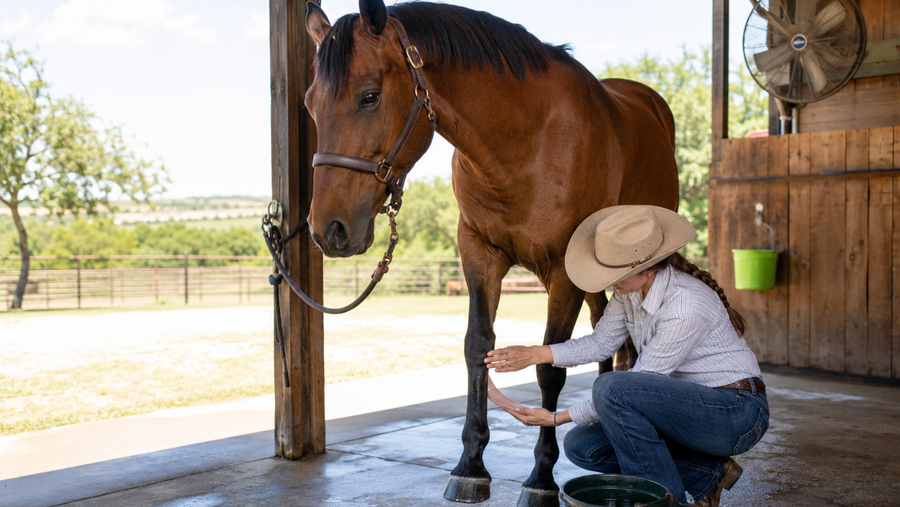
Look for small scabs, rubbed hair, wet spots, swelling, heat, or areas where flies are clustering. Do not just glance from the aisle. Put eyes and hands on the legs.
Flies often work the belly, sheath, udder area, and inside thighs. Check where the horse cannot easily defend himself without kicking or stomping.
Sweat and barn grime can make a horse more interesting to bugs. Brush dried sweat and dirt before applying any fly-season product.
Standing water, manure buildup, wet bedding, and still shady corners can change fly pressure fast. The horse may be reacting to the place, not just the ride.
If the wash rack, tie rail, or trailer shade is full of flies, the horse may be fighting bugs before the saddle ever lands.
Start with the basic barn sequence: brush, inspect, apply product according to label directions, then give it a minute before tacking up. If the horse is still stomping hard, shortening the ride or changing the plan may be smarter than forcing a full session.
Citraquin® 32oz Environmental Defense Spray fits the fly-season barn routine when riders want a plant-based environmental defense option for daily horse care. For multi-horse barns, wash racks, trailers, and summer hauling, the Citraquin® 128oz Gallon Refill keeps the routine from running empty right when bugs are at their worst.
Use it as part of a full check, not as a replacement for looking at the horse. Product can support a better routine, but the rider still has to notice the rubbed hair, the wet pastern, the swarm around the belly, or the horse that is too distracted to work safely.
Do not ride through obvious trouble. Pause the ride and get veterinary guidance if you see severe swelling, hives, labored breathing, open wounds, persistent lameness, fever, or a horse that seems unusually distressed. Fly season problems can start small, but ignoring the warning signs is how small turns expensive.
Rider-first rule
A horse stomping at flies is not being dramatic. He is giving you information. Read it before you ride.
Need help deciding what belongs in your barn routine? Start with the Draw It Out® Solution Finder. For related summer skin and tack checks, read Horse Has Girth Rubs After Hot Rides?.
Common causes include flies around the lower legs, belly, sweat lines, manure areas, standing water, and shaded tie areas. Check the horse and the environment before assuming it is a behavior problem.
If the horse settles after grooming, inspection, and fly-season care, a shorter ride may be reasonable. If he remains highly irritated, distracted, swollen, sore, or unsafe, pause the ride and investigate first.
Start with the lower legs, pasterns, belly line, inside thighs, chest, and any place flies are clustering. Then check the tack-up area, water area, manure area, and trailer or wash-rack shade.
Yes. Citraquin® Environmental Defense Spray can be used as part of a label-directed fly-season routine after grooming and inspection. Always follow product directions and avoid using product as a substitute for veterinary care when red flags are present.
Learn how horse fly spray ingredients work, why mode of action differs from real-world performance, and how Citraquin® fits a label-first routine.
Can you use horse liniment during the heat of the day? Yes, but the horse's temperature, skin condition, and recovery matter more than the clock. Here is the...
A practical horse health guide for sensitivity after a new saddle pad: sweat marks, dry spots, pad edges, saddle balance, and when to call for help.
!