Can You Use Horse Liniment in Hot Weather? A Practical Summer Guide
Can you use horse liniment during the heat of the day? Yes, but the horse's temperature, skin condition, and recovery matter more than the clock. Here is the...

Uneven sweat after hot work is not something to ignore or overreact to. It is something to read. Sweat tells part of the story about effort, heat, tack pressure, coat condition, hydration, and how the horse handled the day.
If your horse sweats unevenly after hot work, check tack contact, saddle pad lines, dry spots, hair direction, breathing, attitude, water interest, muscle feel, and whether the same pattern repeats. Call your veterinarian if sweat changes are severe, paired with illness signs, abnormal breathing, weakness, heat distress, pain, or the horse is not cooling normally.
Some uneven sweat comes from ordinary tack contact or coat patterns. Some points toward pressure, bracing, tight muscles, poor airflow, or a horse working harder on one side. The useful question is not whether every sweat mark is a crisis. The useful question is whether the pattern is new, repeated, or connected to another change.
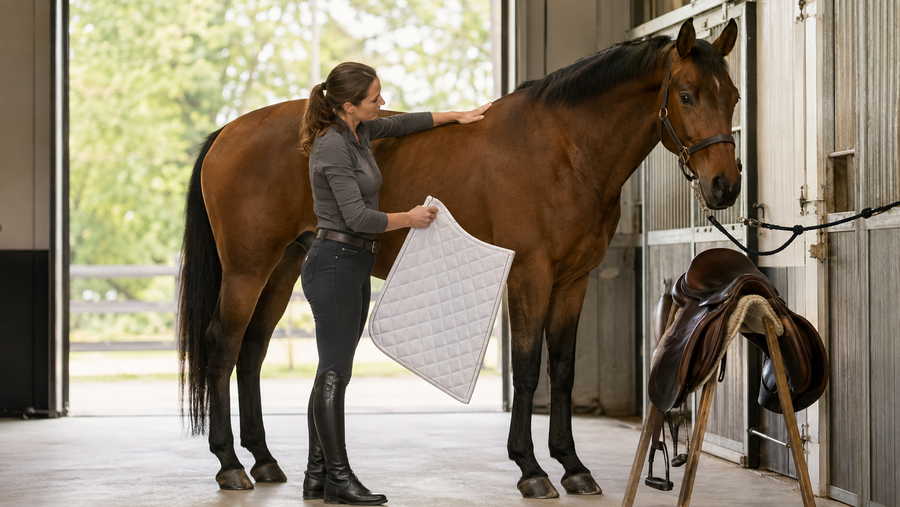
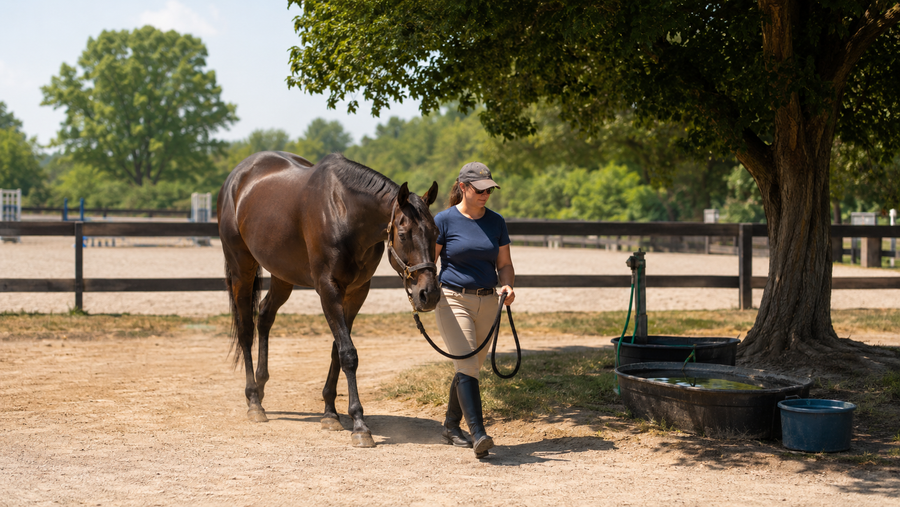
Walk the horse until breathing and attitude move toward normal. Pull tack and look at the horse before the sweat dries completely. Compare left to right. Check under the pad, behind the girth, over the back, and around the shoulders. Then make a note of heat, humidity, footing, workload, tack, and recovery time.
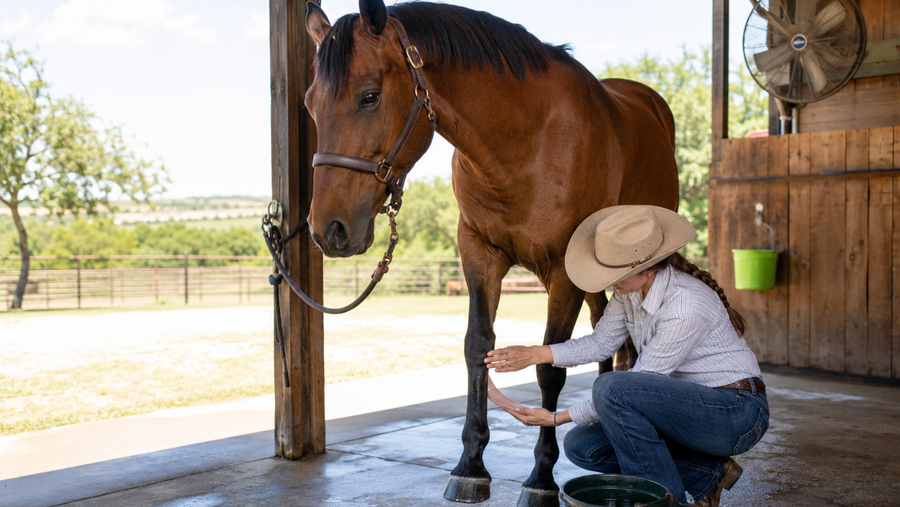
Draw It Out® products belong inside a thinking care routine, not in place of one. Use the Horse Health Library and What Does My Horse Need? guide when you are sorting out whether a horse needs stiffness, skin, hoof, travel, or recovery support. For appropriate external post-ride support, review the active horse liniment collection.
Call your veterinarian for heat distress concerns, abnormal breathing, weakness, collapse, fever, severe pain, refusal to drink, or a sweat pattern that comes with other abnormal signs. Also involve your saddle fitter if the pattern points to tack pressure.
No. It can involve tack, coat, heat, rider balance, muscle use, workload, or recovery. Repeating patterns deserve closer attention.
Track weather, tack, rider, workload, sweat pattern, breathing, water interest, and next-day movement.
Good horse care starts with observation. Check the horse, note the pattern, and adjust before a small clue becomes a bigger issue.
Can you use horse liniment during the heat of the day? Yes, but the horse's temperature, skin condition, and recovery matter more than the clock. Here is the...
A practical horse health guide for sensitivity after a new saddle pad: sweat marks, dry spots, pad edges, saddle balance, and when to call for help.
Canterbury Park canceled July 26 racing after projected heat indices above 105°F. Here is what riders and horse-event organizers should build into a heat stop-plan.
!