
Quick answer: If a horse becomes uneven after new shoes, stop riding and contact the farrier promptly. Compare timing, all four feet, hoof heat, digital pulses, shoe position, nails, clenches, sole contact, footing, and movement. Involve the veterinarian for marked pain, lameness, swelling, wounds, systemic signs, or a problem the farrier cannot resolve quickly.
A change after shoeing deserves attention, even when it seems small. The timing may point toward the foot, but it does not prove the exact cause. The horse may have been uneven before the appointment, reacted to the trim or shoeing, or developed an unrelated problem around the same time.
Establish the Timeline
Write down when the horse was last normal, when the farrier work occurred, and when uneven movement first appeared. Note whether the horse was ridden between those points and on what surface.
A clearly uneven horse should be assessed before more workload is added.
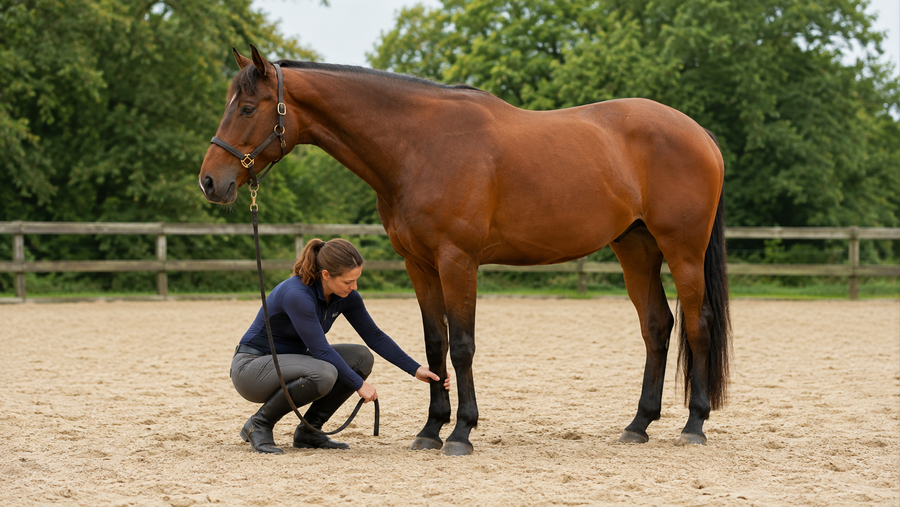
Compare All Four Feet
- Heat and digital pulses compared with the horse’s normal.
- A shifted, loose, sprung, or twisted shoe.
- Raised or missing clenches and unusual nail position.
- Sole contact, packed material, hoof-wall damage, or a lost shoe.
- Differences in stance and weight bearing.
Do not pull nails, remove a shoe, pare the sole, or test with hoof tools unless you are qualified and the professional directs you. Good photographs of the feet and a safe short video may help the farrier understand what changed.
Watch on Safe, Level Ground
If the horse can walk safely, observe a few straight steps and a gentle turn on level, non-slip footing. Stop if the horse is markedly lame, painful, unstable, or worsening. Do not longe an uneven horse for a better video.
Call the Farrier Early
Give the farrier the timeline, affected direction or limb, surface, heat or pulse findings, and photos. The farrier may want to inspect shoe placement, nail pressure, trim balance, or sole contact. Early communication is easier than adding several rides and losing the original picture.
Know When the Veterinarian Belongs in the Call
Contact the veterinarian for significant or worsening lameness, marked pain, swelling above the foot, wounds, fever, a suspected abscess that needs diagnosis, or when the farrier recommends medical evaluation. Foot problems often benefit from veterinarian-farrier coordination.
It should not be used to blame a professional or assume the diagnosis before the horse is examined.
Where Draw It Out® Fits
A product from the Draw It Out® Equine Collection may fit label-directed routine care after the cause has been assessed. No topical product replaces correcting a shoeing issue, diagnosing foot pain, or resting an uneven horse.
FAQ
Is it normal for a horse to be lame after shoeing?
Obvious lameness should not be ignored. Contact the farrier and veterinarian as appropriate.
Should I ride through mild unevenness?
No. Stop work and establish why the horse changed before adding more load.
Who should I call first?
Call the farrier promptly when the change closely follows shoeing. Call the veterinarian for significant pain or lameness, swelling, wounds, systemic signs, or when medical evaluation is needed.
General horse-care education only. This article does not diagnose or treat a horse and does not replace veterinary or farrier advice.