Movement
Watch the first walk, turns, backing, warmup quality, and whether movement improves or worsens.

Senior daily care routine
Senior care is not automatic daily product. It is daily truth. Watch the first steps, check the feet, read the body, then decide if liniment gel belongs.
Quick answer: Liniment gel can fit a senior horse daily care routine when the horse is sound, acting normal, and the target area is clean, dry, and intact. It should come after checking movement, hooves, turnout, saddle fit, hydration, workload, skin, and body response.
The routine should start before the bottle.
Older horses often change quietly. A shorter first step, a new girth reaction, a little less turnout, a hoof balance shift, a saddle that no longer sits the same, or a slower recovery after light work can all matter.
The daily senior routine should help you catch those changes before they become loud.
Watch the first walk, turns, backing, warmup quality, and whether movement improves or worsens.
Check farrier timing, hoof balance, packed debris, shoes, cracks, odor, and tenderness.
Note whether turnout, footing, stall time, weather, or movement changed from normal.
Older horses can change shape. Watch topline, weight, saddle marks, and girth response.
Watch water intake, appetite, manure, sweat, heat, and seasonal changes.
Check rubs, irritation, blanket marks, girth area, pasterns, and areas that react to grooming.
Senior horse rule: Daily care is the habit of noticing small changes while they are still small.
Do not let the product routine outrun the horse check. A senior horse may need liniment gel, a longer walk, lighter work, a farrier conversation, a saddle fit check, a vet call, or simple rest. The product shelf should not decide that.
| Check | What to look for | What it may mean |
|---|---|---|
| First steps | Short, uneven, reluctant, toe dragging, guarding, worse with movement | Reduce work, check feet, call vet or farrier if concerning |
| Legs | Heat, swelling, fill, tenderness, cuts, scratches, rubs, boot marks | Daily leg care, swelling check, or professional input |
| Back and body | Grooming reaction, girthiness, saddle marks, topline loss, one-sided sensitivity | Tack fit, workload, bodywork, or vet discussion |
| Hooves | Loose shoes, packed debris, cracks, odor, soreness, changed stride near farrier cycle | Farrier timing, footing change, or hoof-care adjustment |
| Hydration and appetite | Water intake, manure, feed interest, dullness, sweating, weather changes | Whole-horse routine check or veterinary concern |
| Skin | Broken, irritated, wet, dirty, draining, scabby, raw, or painful areas | Skip liniment gel and choose the correct skin-care route |
Stop before product: Lameness, heat, swelling, sharp pain, fever, dullness, abnormal breathing, broken skin, drainage, or a horse that is not acting normal means do not treat it like routine care.
A senior horse’s routine should adjust before the horse has to protest. More walk time, larger figures, softer footing, shorter rides, more turnout when safe, or a day off may be the right answer.
Plain answer: The older horse does not need you to prove the old schedule still works. The horse needs you to listen sooner.
Senior care is not just product care. Older horses benefit from a team, especially when movement, body condition, hooves, tack fit, or behavior changes.
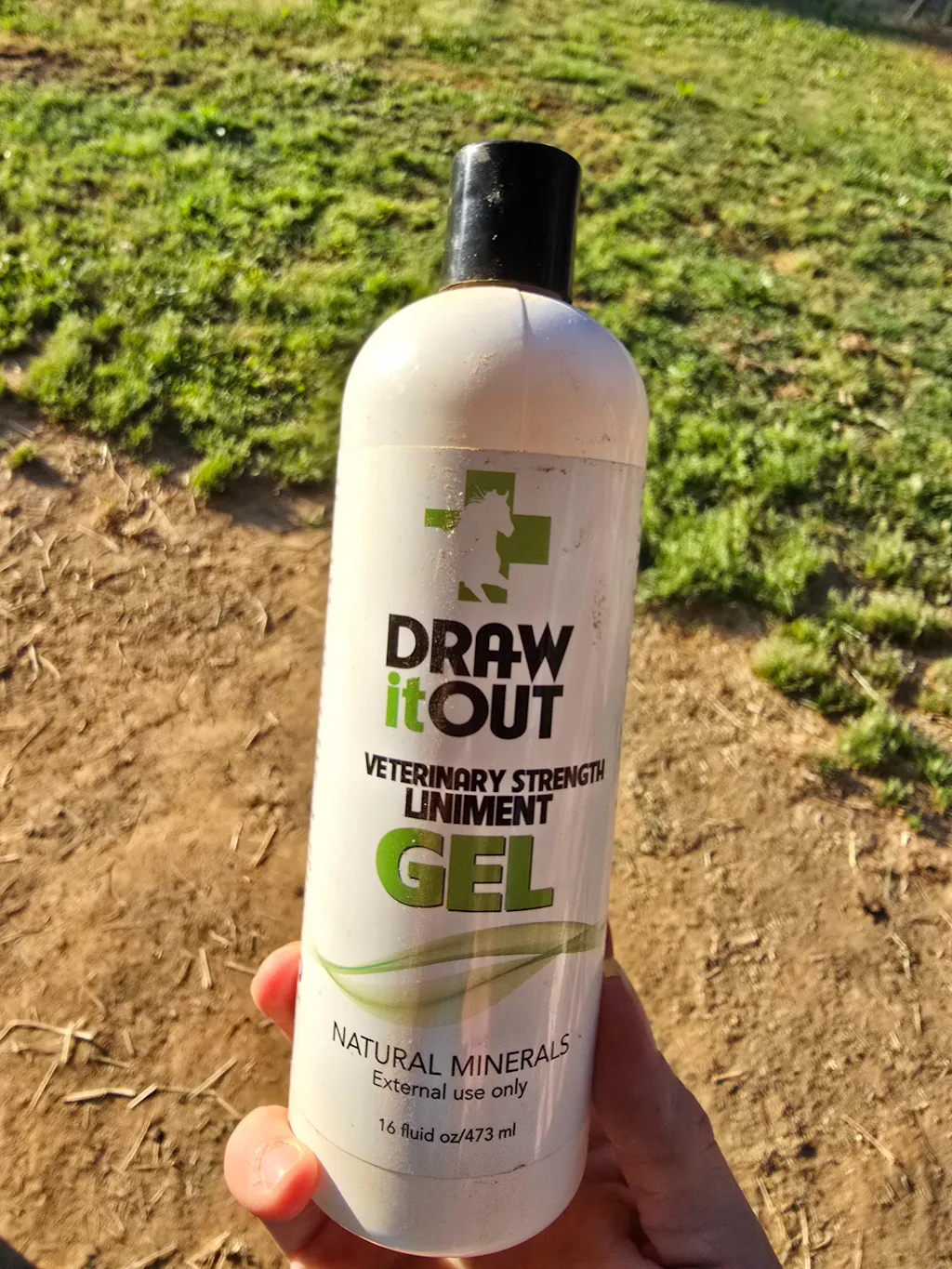
Draw It Out® 16oz liniment gel can fit a senior horse daily care routine as a controlled, hands-on body-care step when the horse has been checked and the target area is clean, dry, and intact.
It should not be framed as relief, soreness treatment, stiffness treatment, circulation support, joint recovery, muscle recovery, swelling reduction, or a substitute for professional care. The value is routine: check the horse, use a thin layer where appropriate, and watch the response.
This page is the year-round senior horse daily care routine. It covers daily observation, movement, hooves, saddle fit, hydration, workload, skin, and where liniment gel fits.
The winter senior stiffness page should own cold-weather specifics: frozen footing, blankets, winter hydration, reduced turnout, and cold-start warmups.
Prehabilitation for senior horses is not pretending age does not matter. It is respecting age early enough that the horse does not have to get loud.
That means warmup, cooldown, hoof care, turnout, hydration, workload changes, tack fit, body checks, skin checks, and product use only where routine support fits.
Yes, when the horse is sound, acting normal, and the target area is clean, dry, and intact. It should be one routine step after checking movement, hooves, skin, hydration, workload, and body response.
Not automatically. Daily product use should depend on the horse, workload, skin, weather, soundness, and professional guidance. Observation comes first.
Check first steps, legs, hooves, back, girth area, skin, hydration, appetite, workload history, attitude, and whether the horse is acting normal.
Skip liniment gel when the horse is lame, painful, hot, swollen, feverish, dull, weak, not acting normal, or has broken, irritated, wet, dirty, or draining skin.
No. Liniment gel should not replace veterinary care, farrier care, bodywork guidance, tack fit checks, rest, hydration support, or workload adjustment.
Senior horses may need more careful warmups, better footing choices, closer hoof care, saddle fit checks, hydration monitoring, workload adjustments, and earlier professional support when patterns change.
This page is year-round senior daily care. The winter senior stiffness page focuses specifically on cold-weather footing, blankets, winter hydration, reduced turnout, and cold-start warmups.
For controlled, targeted body-care routines on clean, dry, intact skin after senior horse checks, Draw It Out® 16oz liniment gel is the practical starting point.
Watch the first steps. Check the feet. Read the body. Respect the skin. Use Draw It Out® where routine support fits, and call for help when the horse tells you this is bigger than a bottle.
A practical holiday weekend horse care checklist for water, feed changes, heat, legs, turnout, barn traffic, and post activity recovery r...
A respectful Memorial Day weekend tribute from Draw It Out® honoring military horses, mounted service, caretakers, and the quiet trust of...
Sweat patterns after hot weather work can tell you where to look next. Here is a practical post ride check for cooling, hydration, tack f...
!