Breathing and heat
Is the horse coming down normally, or still breathing hard, dull, stressed, or overheated after walking?

Post-ride horse recovery
The ride is not finished when you step out of the saddle. The last 20 minutes can tell you how your horse handled the work, what needs attention, and whether the horse is ready for the stall, trailer, or turnout.
Quick answer: After a ride, walk the horse out, check breathing and temperature, offer water, inspect sweat patterns, legs, back, girth area, and hooves, decide whether cooling care is needed, then apply post-ride support only when the horse is cooled, clean, dry, and appropriate for that product.

Most recovery mistakes happen because the rider is mentally done before the horse is physically done. The tack comes off, the phone comes out, the trailer door opens, or the stall door shuts. Meanwhile, the horse is still hot, sweaty, breathing hard, stocked with mud, holding tension, or carrying signs you would have seen if you looked for one more minute.
A post-ride checklist is not fancy. It is just a repeatable order of operations. Walk. Breathe. Check. Clean. Cool. Hydrate. Support. Then put the horse away.
Real barn standard: Do the same simple check after every ride. Hard days get more detail. Light days still get eyes and hands.
Do not go straight from effort to stall, trailer, or tied-up rest. Walk until breathing, attitude, and body heat are trending down.
Give access to clean water. Watch whether the horse is interested, dull, anxious, still overheated, or not acting normal.
Check sweat patterns, dry spots, girth marks, rubs, hair direction, and any reaction when you touch the back or shoulders.
Run your hands down the legs, compare left to right, check for heat or filling, and pick out each hoof.
Remove sweat, dust, mud, and grit before applying any topical product, wraps, boots, sheets, or blankets.
The point is not to invent problems. The point is to notice what changed. A horse that looked fine under saddle may still show useful information after the ride.
Is the horse coming down normally, or still breathing hard, dull, stressed, or overheated after walking?
Look under the saddle area, girth, pad edges, and shoulder. Dry spots, rubs, or uneven marks are worth noting.
Compare left and right. Check heat, filling, sensitivity, cuts, interference marks, boot rubs, and changes from normal.
Pick hooves before the horse goes away. Look for stones, packed mud, loose shoes, cracks, tenderness, or odor.
Run your hands across the back, withers, shoulders, sternum, and elbows. Watch the horse’s response.
A horse that is dull, reactive, anxious, unwilling to eat, or not acting normal deserves more attention before being put away.
A cool day trail ride is not the same as a hard school in deep footing. A long haul after a show is not the same as a short lesson at home. The cooling routine should match the heat, sweat, workload, weather, and horse.
Walking is the starting point. From there, decide whether the horse needs a rinse, targeted cooling care, a full wash-rack reset, hand-walking, shade, fans, or more time before turnout or transport.
| Situation | What to check | Practical next step |
|---|---|---|
| Light ride | Breathing, sweat, tack marks, hooves | Walk, untack, quick body check, water, and basic grooming may be enough. |
| Hard schooling day | Heat, sweat, legs, back, hydration, attitude | Plan a longer cool-out, clean sweat areas, and consider targeted post-ride support. |
| Hot weather | Body temperature, breathing, drinking, sweat rate, dullness | Prioritize cooling, water access, shade, air movement, and professional help if signs look serious. |
| Show or clinic day | Repeated work, hauling stress, legs, back, hydration | Use the same checklist each ride so fatigue does not hide in the schedule. |
| Trailer ride after work | Is the horse fully cooled and stable before loading? | Do not load a hot, stressed, or abnormal horse just because the day is over. |
Recovery is not only what you rub on the horse. Water, salt balance, feed routine, temperature, and stress all matter. A horse that worked hard, sweated heavily, traveled, or competed across multiple days may need a more intentional hydration plan.
Fresh water should be available. If your horse is a heavy sweater, not drinking normally, or working in hot conditions, talk with your veterinarian about electrolyte strategy and use products according to label directions.
Call for help: If your horse is weak, dull, not drinking, breathing hard after cooling, showing signs of heat stress, colic-like behavior, or not acting normal, contact your veterinarian.
Sweat, salt, dust, fly spray, dirt, and footing can build up fast. If you layer product over that mess, the routine gets less useful. Post-ride care should start with a clean surface.
Sometimes that means brushing dried sweat. Sometimes it means rinsing. Sometimes it means a full wash-rack reset. Let the horse, weather, coat, and workload make the call.
Simple rule: Clean first, dry second, product third, and only if the product actually fits the need.
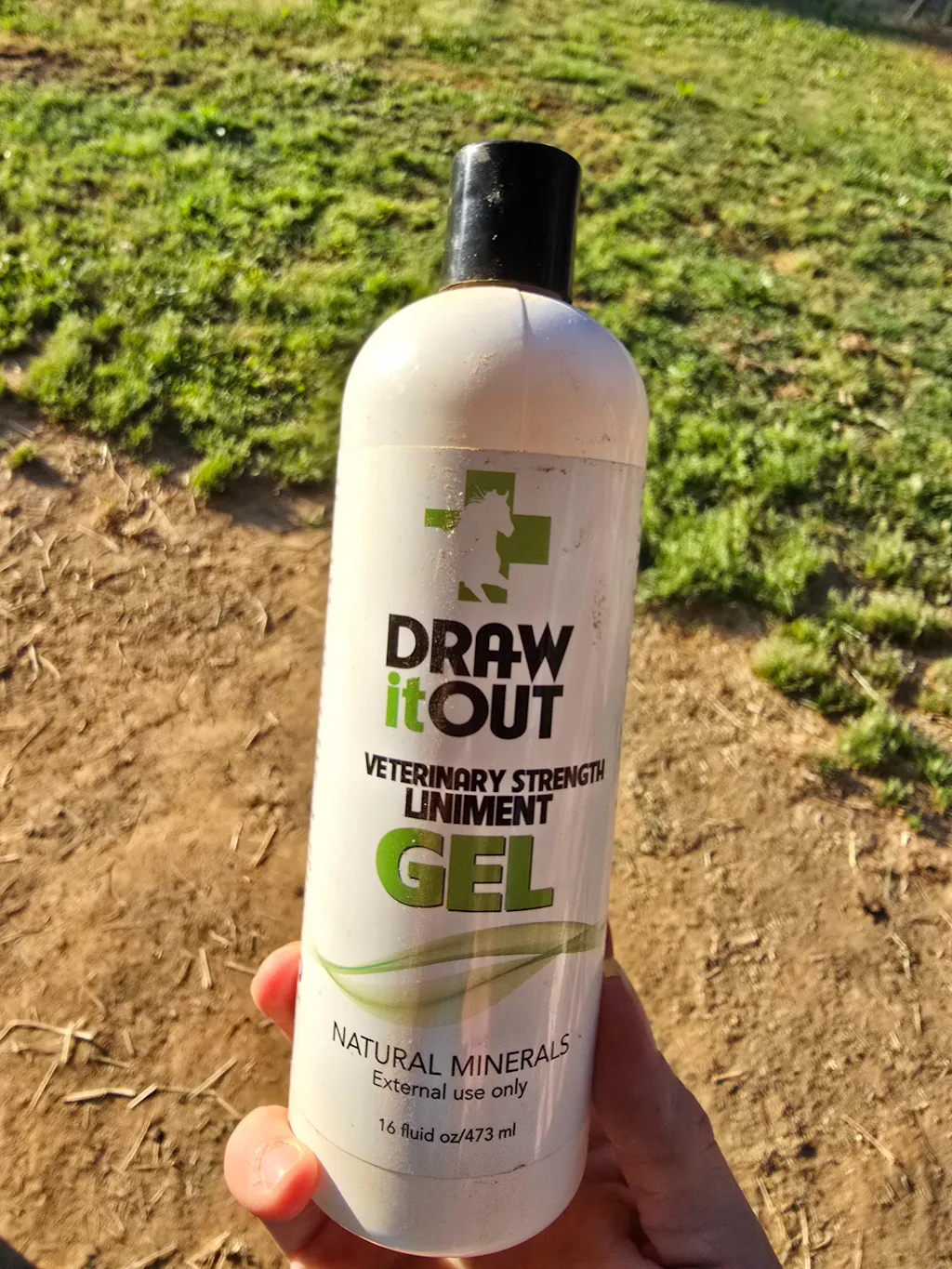
Draw It Out® liniment gel fits best after the horse has been cooled, checked, cleaned, and dried. It is not a substitute for a cool-out, hydration, hoof care, tack checks, rest, or veterinary attention when something looks wrong.
The gel format is useful when riders want controlled placement instead of a product that runs, drifts, or spreads outside the target area. That is why many riders start with the 16oz liniment gel for post-ride routines.
Some post-ride routines call for cooling first, not liniment gel first. Hot weather, hard work, heavy sweat, hauling, and long show days may make the wash rack the smarter first stop.
Use cooling care when the horse needs a broader body reset after heat, sweat, or effort. Keep the routine practical: cool the horse, clean the coat, dry what needs drying, then decide whether any targeted support still belongs.
| Need | Better first move | Why |
|---|---|---|
| Horse is hot and sweaty | Cooling routine | Temperature and comfort come before targeted topical support. |
| Targeted body support | Liniment gel | Best when the horse is already cooled, clean, dry, and checked. |
| Multi-horse wash rack routine | Cooling or rinse-based care | Efficient when several horses need sweat and heat management. |
| Heavy training or showing week | Checklist plus product fit | Use the same order daily so fatigue does not get missed. |
Sometimes the best recovery step is not a product. It is stopping long enough to call the vet, the trainer, the farrier, or the barn manager before the horse disappears behind a stall door.
Plain answer: If the horse is not right, do not solve it with product. Get the right help.
Prehabilitation is the long game. It is warmup, cooldown, hydration, hoof care, tack checks, conditioning, turnout, recovery, and simple product routines that are easy to repeat.
Post-ride care is one of the best places to build that habit because the horse has just shown you how the work felt. Pay attention, and tomorrow gets easier to plan.
Walk the horse out, check breathing and body heat, offer water, untack, inspect sweat patterns, check legs and hooves, clean sweat or grit, and decide whether cooling care or targeted support is appropriate.
Cool-down time depends on workload, weather, fitness, and the individual horse. Walk until the horse is settling, breathing normally, and no longer showing signs that more cooling is needed.
Not always. Rinsing may make sense after heavy sweat, heat, salt buildup, mud, or hard work. On light days, brushing and a focused check may be enough.
Use liniment gel after the horse is cooled, checked, clean, dry, and appropriate for targeted support. Apply a thin layer to clean, intact skin and follow label directions.
Many riders use liniment gel as part of regular post-ride routines, especially during heavier work, hauling, or show periods. Match use to workload, observe your horse, and do not use product to cover up lameness, swelling, heat, or pain.
Electrolyte needs depend on sweat loss, heat, workload, travel, and the individual horse. Provide clean water and ask your veterinarian about the right electrolyte strategy for your horse.
Call your veterinarian if your horse shows lameness, severe heat or swelling, weakness, distress, abnormal breathing, colic-like signs, refusal to drink when unusual, sharp pain, or behavior that is not normal for that horse.
The best post-ride routine is not complicated. It is consistent. Walk, check, clean, cool, hydrate, support when appropriate, and stop when something is not right. That is how everyday riders protect tomorrow’s ride.

When a horse does not sweat enough in warm weather, it can turn from a small clue into a serious risk fast. This guide explains what to c...

A practical post-ride horse recovery routine for spring show season, now routed directly to the live What Does My Horse Need page, Prehab...

A horse show hydration guide now routed directly to What Does My Horse Need, Prehabilitation, Hydro-Lyte®, and 16oz Liniment Gel.
!