K9 by Draw It Out®
Dog Stiff After Car Rides: A Calm Reset Routine
A dog that steps out stiff after travel may need a better setup, a calmer exit, and a few easy minutes to return to normal. Persistent, painful, or one-sided stiffness needs a veterinarian, not a harder walk or forced stretch.
Quick answer: Unload on leash onto non-slip ground, let your dog stand and orient, then take a slow five to ten minute walk with no running or jumping. Check paws, nails, legs, hips, back, and willingness to turn. Call your veterinarian for severe pain, crying, collapse, weakness, dragging toes, a swollen limb, breathing trouble, a bloated abdomen, inability to rise, or stiffness that does not settle toward the dog's normal.
First decide whether this is ordinary travel stiffness
Notice the first steps without pulling the dog into a brisk pace. Mild stiffness after staying in one position should begin moving toward normal with calm, easy motion. It should not become more painful, more one-sided, or more unstable. Compare the dog with its own normal, including how quickly it rises at home and how freely it turns both directions.
Ask what happened during the trip. Was the dog lying in a cramped position, bracing through repeated turns, sliding on a slick cargo floor, standing for hours, or jumping from a high vehicle? Was there a hard hike, competition, dock session, or play day before the ride home? The timeline helps a veterinarian separate travel context from an injury or illness.
Veterinary red flags after a car ride
- Unable to stand, collapse, marked weakness, or disorientation
- Crying, guarding, severe pain, or sudden behavior change
- Dragging toes, knuckling, stumbling, or one-sided weakness
- A hot or swollen limb, non-weight-bearing lameness, or a wound
- Labored breathing, pale or blue gums, repeated vomiting, or a swollen abdomen
- Overheating signs, especially heavy panting that does not settle in a safe cool environment
Keep the dog quiet and contact a veterinarian promptly. Do not force walking, stretching, massage, food, water, or medication when an emergency may be developing.
A calm reset routine after travel
- Prepare the exit first. Park on level ground away from traffic. Attach the leash before opening the crate or door. Put a non-slip mat at the landing area if the surface is slick.
- Prevent the big jump. Use a stable ramp or steps that the dog already understands. Small, senior, recovering, or mobility-limited dogs may need a two-person lift using veterinarian-approved handling.
- Let the dog orient. Give several quiet seconds to stand, look around, and choose a comfortable posture. Do not immediately ask for stairs, fetch, tight turns, or rough play.
- Walk slowly in a straight path. Use five to ten easy minutes as observation, not exercise. Watch stride length, head carriage, tail, toe clearance, turning, and willingness to squat or lift a leg.
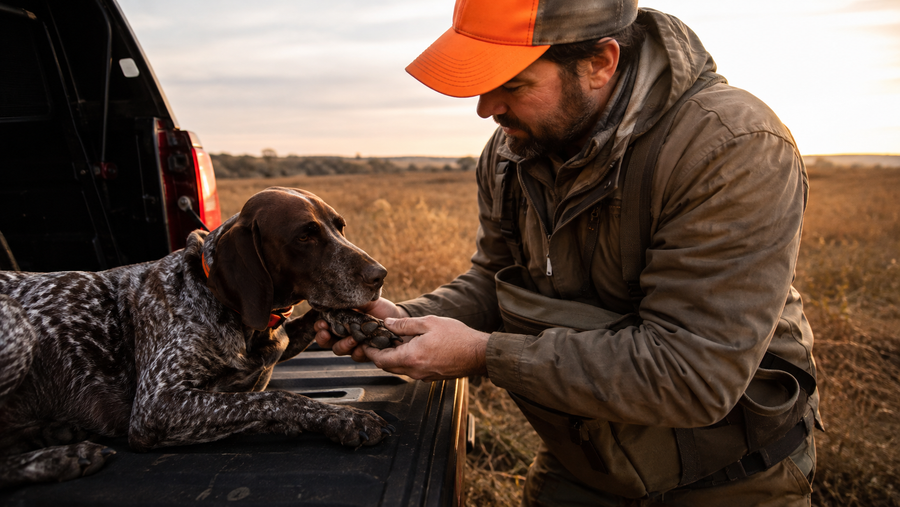
- Check from paws upward. Look for torn nails, pad injury, debris, swelling, heat, soreness, harness rubs, and a reaction around the back or neck. Do not press deeply into a painful area.
- Offer quiet recovery. Provide a safe resting spot and normal access to water when the dog is alert and not vomiting. Recheck after rest and again later the same day.
Skip forced stretches. Pulling a leg, twisting the spine, or pushing a joint through a range of motion can worsen pain and provides little useful information. If the dog cannot perform an ordinary comfortable movement, record it and call the veterinarian.
Improve the car setup before the next trip
Secure the dog
Use an appropriately sized secured crate or a vehicle restraint designed for dogs. A loose dog can slide, brace, distract the driver, or become injured during a sudden stop.
Create traction
Use stable non-slip bedding that stays flat. Thick bedding is not helpful if it bunches, shifts, traps heat, or reduces the dog's usable space.
Allow a natural position
The dog should be able to stand, turn, and lie comfortably. Avoid loose cargo, sharp edges, and a setup that forces the neck or back into one position.
Manage temperature
Maintain safe ventilation and temperature throughout travel. Never leave a dog in a parked vehicle when conditions can become dangerous.
Plan breaks appropriate to the dog's age, health, trip length, and veterinary guidance. Practice the ramp, crate, and restraint during short calm sessions before a long drive. A dog that panics, braces continuously, drools heavily, or becomes carsick may need a veterinary behavior or nausea plan rather than repeated exposure.
Where K9 topical support fits
Topical care belongs after the safety check, not in place of it. When the dog is alert, moving normally, has no red flags, and the skin fits label-directed use, K9 Advanced™ Relief Spray can be part of a normal post-travel body-care routine. Follow the label and keep product away from eyes, mouth, and other areas the directions exclude.
The K9 Complete Care Pair supports owners who want the spray and coat-care lanes together. It does not turn a medical problem into a grooming problem. Start with the K9 Dog Care Routine Hub when you are choosing a routine, and use the veterinarian when movement or behavior is not normal.
Dog travel stiffness FAQ
Why is my dog stiff after a car ride?
Long positioning, bracing, slipping, fatigue, a high jump, a recent activity, or a medical problem can all contribute. The pattern and how quickly the dog returns to normal matter more than assuming one cause.
Should I stretch my dog after travel?
Do not force stretches or joint motion. Use a calm leash walk if the dog can move comfortably. Pain, weakness, one-sided stiffness, or difficulty rising warrants veterinary guidance.
Is jumping out of an SUV hard on dogs?
A high or slippery landing can increase impact and loss-of-footing risk. Train the dog to use stable steps or a non-slip ramp, or use appropriate assisted handling.
How long should travel stiffness last?
There is no universal safe duration. Mild positioning stiffness should move toward the dog's normal with calm motion. Persistent, worsening, painful, or repeated stiffness needs a veterinarian.
Can I use K9 Advanced Relief Spray after a car ride?
It can fit label-directed routine care when the dog is moving normally and has no red flags. It cannot diagnose pain, replace veterinary care, or make an injured dog safe to exercise.
Educational note: This article provides general dog-care information and does not replace veterinary diagnosis or an individualized travel, mobility, or medication plan.