


Jun 27, 2026
When Good Horses Get Sour: What Changed?
When a normally willing horse gets sour, review workload, pain, tack, feet, turnout, environment, rider pressure, and recovery before cal...

Real Rider Resource
When a horse drifts through turns, it is not always defiance. It is often about balance, strength, rider position, outside aids, fatigue, and body comfort.
Short answer: If your horse drifts off track in turns, check rider balance, outside rein support, leg position, straightness before the turn, and whether the horse is stronger or tighter on one side. Drift is usually a signal, not an attitude problem.
A horse that drifts through a turn is telling you something. Sometimes the horse is falling through the shoulder. Sometimes the rider is leaning. Sometimes the outside aids disappear. Sometimes the horse is weaker, tired, or tighter one direction than the other.
The mistake is treating every drift like resistance. Real riders look for the pattern first. Does it happen only one direction? Only at speed? Only near the gate? Only after the horse gets tired? The pattern tells you where to start.
If your weight falls inside or your shoulders tip, your horse may follow that imbalance instead of staying on the track.
A missing outside rein lets the shoulder leave. The inside rein turns the head. The outside rein helps guard the body.
The inside leg helps keep the horse from collapsing inward or dropping through the ribcage.
A crooked horse usually enters the turn crooked. Before blaming the corner, look at the approach. Is the horse straight between both reins and both legs before the turn begins? If not, the drift was probably already building before you noticed it.
Drifting can show up when the horse gets tired. It can also show up when the horse is protecting a sore or tight area. If the drift gets worse late in the ride, after hauling, after hard work, or in one direction only, pay attention.
For normal post-ride recovery support, many riders use Draw It Out® 16oz Liniment Gel as part of a practical care routine. Use as directed, keep the horse clean, and never ignore pain, lameness, swelling, or sudden behavior changes.
If the drift is sudden, severe, tied to lameness, or does not improve with balanced riding, get a qualified professional involved. A trainer can help evaluate rider influence and schooling habits. A veterinarian, farrier, saddle fitter, or bodyworker may be needed when discomfort is suspected.
Drifting through turns is not just a riding problem. It is a feedback problem. The horse gives information, and the job is to read it clearly before adding pressure.
For a broader routine-first approach, start with the Draw It Out® Solution Finder, the Prehabilitation page, and the Draw It Out® Horse Liniment Gel collection.
Common causes include rider imbalance, missing outside rein support, weak inside leg, crookedness before the turn, fatigue, one-sided stiffness, or discomfort.
Start by riding straighter before the turn, keeping even contact, supporting with the outside rein, using the inside leg, and checking your own balance. If the drift persists, look for physical causes.
No. Drift is often a balance, training, fatigue, or comfort signal. Treat it as information before assuming the horse is being difficult.
When a normally willing horse gets sour, review workload, pain, tack, feet, turnout, environment, rider pressure, and recovery before cal...
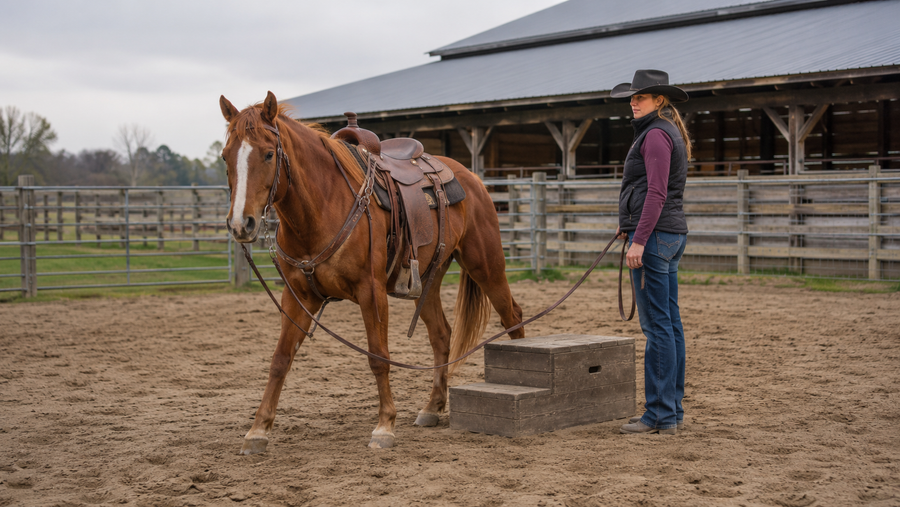
If a horse suddenly steps away from the mounting block, check comfort, tack, footing, rider technique, and the exact pattern before calli...

Keep a horse joint-supplement routine consistent during travel with labeled storage, a serving log, clean handoffs, feed-acceptance check...
!