Horse Great at Home But Bad at Shows? What Real Riders Should Check | Draw It Out®
intent-education

Horse Great at Home But Bad at Shows? What Real Riders Should Check | Draw It Out®

Real Rider Resource

Horse Feels Great at Home, Then Falls Apart at the Show

Some horses are honest at home and different animals at the show. They warm up fine in your own arena, then get tight, loud, heavy, quick, spooky, behind the leg, above the bit, or scattered the second the environment changes.

That does not automatically mean your horse is bad. It does not automatically mean you are doing something wrong. It means the show is asking a different question than home does.

Draw It Out® 16oz liniment gel used in a calm pre-show horse care routine for riders whose horses feel different at shows
Quick answer: If your horse rides well at home but falls apart at shows, look at the whole routine before blaming attitude. Check hauling fatigue, turnout changes, stall time, warm up length, tack fit, soreness, hydration, rider nerves, noise, footing, and whether your horse had enough time to mentally settle before being asked to perform.

The show does not create every problem. It exposes them.

Home hides a lot. Your horse knows the arena. The footing is familiar. The barn has the same rhythm. The other horses are predictable. Your own body is usually quieter because you are not thinking about gate calls, class counts, judges, warm up traffic, or whether you forgot your number.

Then you haul in.

Different footing. Different noise. Different stalls. Different water. Different horses. Different schedule. Different rider.

The horse that was good at home may still be the same horse. The context changed.

What “falls apart” usually looks like

Riders use different words for it, but the pattern is usually obvious once you name it.

The body changes

  • Back gets tight
  • Stride gets shorter
  • Horse gets heavy in the hand
  • Horse loses bend
  • Horse gets rushy or sticky
  • Lead quality changes

The mind changes

  • Horse scans everything
  • Spooks come faster
  • Standing still disappears
  • Transitions feel emotional
  • Horse ignores familiar cues
  • Warm up takes longer than usual

The trick is not to label the horse. The trick is to find the first domino.

Check the first domino

Most show problems are not one thing. They are stacked stress. A little hauling fatigue. A little less water. A little less turnout. A little more stall time. A little more rider pressure. A little more noise. A little less warm up. Then the horse gets blamed for the final reaction.

Start here.

What changed? What it may explain
Long haul or rough trailer ride Tight back, short stride, resistance, lower patience
Less turnout than normal Freshness, tension, explosive warm up, poor focus
Different footing Short steps, rushing, insecurity, uneven confidence
Busy warm up pen Spooking, bracing, rushing, loss of straightness
Different water or less drinking Fatigue, poorer recovery, dullness, tension
Rider nerves More hand, more leg, less breathing, rushed decisions

A horse does not need a dramatic problem to have a real problem. Small changes in comfort, routine, and environment can change the entire ride.

Comfort comes before courage

Confidence is harder when the body feels tight. A horse that is mildly sore, restricted, tired, or uncomfortable may still be obedient at home because the environment is easy. At a show, that same small discomfort can become loud.

Before you call it nerves, check the body.

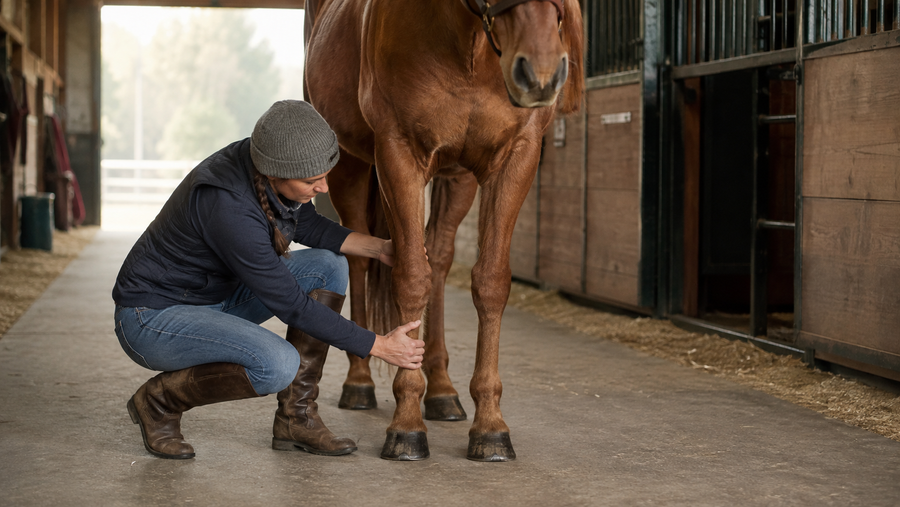
  • Does the horse react when you curry the back, loin, girth area, shoulders, or hips?
  • Does the stride feel shorter than it did at home?
  • Does the horse warm out of it or get worse?
  • Does one lead feel different?
  • Does the saddle sit the same after hauling and standing?
  • Are the legs cool, clean, and normal for that horse?
  • Does the horse recover normally after work?

If the answer keeps pointing to pain, heat, swelling, lameness, or worsening behavior, do not ride through it. Get professional help.

The warm up mistake riders make

A lot of riders warm up the horse they wanted to bring, not the horse they unloaded.

If your horse is tense, short, distracted, or mentally busy, the first job is not collection. It is regulation. Walk. Breathe. Let the horse see the arena. Find rhythm. Make the first few minutes boring enough that the nervous system can come back down.

Then ask for more.

Trying to install polish before the horse is mentally and physically available is how a show warm up turns into a fight.

A better show warm up filter

Use this before you decide what the ride needs.

  1. Walk until the walk changes. Do not skip the part where the horse starts breathing, stretching, and paying attention.
  2. Ask for easy bends before hard questions. If the horse cannot bend quietly, do not jump to precision work.
  3. Check both sides. A showground often exposes asymmetry faster than home.
  4. Use transitions to read, not punish. A bad transition tells you something. Listen before drilling.
  5. End the warm up with the horse better, not fried. The goal is readiness, not exhaustion.

Where Draw It Out® fits

A calm topical routine will not replace training. It will not fix fear. It will not cover up a real veterinary issue. What it can do is give riders a simple, repeatable comfort step around the work.

Many riders start with Draw It Out® 16oz Liniment Gel because the liniment gel format stays where it is placed and fits targeted routines before or after work. For broader format choice, use the Draw It Out® Liniment Collection.

Use a thin, even layer on clean skin or coat. Avoid eyes, mucous membranes, and open wounds. Follow label directions. If your horse is lame, swollen, unusually reactive, or not recovering normally, stop guessing and call the right professional.

The real rider reset: before you enter the ring

Before you blame the horse, ask these five questions.

  • Did this horse have enough time to settle after hauling?
  • Did I give the horse the warm up it needed today, not the one I planned yesterday?
  • Am I riding differently because I care more today?
  • Is the horse showing discomfort, fatigue, or confusion?
  • Can I make the next ask smaller and clearer?

That is not soft. That is skilled.

The best riders are not the ones who force the same ride everywhere. They are the ones who can read the horse they have, in the place they are, under the pressure they are carrying.

When to stop and get help

Some show issues need training. Some need a better routine. Some need a vet, farrier, saddle fitter, bodyworker, or trainer with good eyes.

Stop and get help if the horse shows lameness, swelling, heat, abnormal breathing, colic signs, severe distress, dangerous behavior, sudden behavior changes, or pain that worsens with work. A show is not worth turning a warning sign into an injury.

The Real Rider Takeaway

A horse that falls apart at the show is not always being difficult. Often, the show simply makes the weak part of the routine visible.

Find the first domino. Fix the routine. Protect the horse’s confidence. Then build the ride from there.

For a broader prevention-first plan, read the Prehabilitation guide. If you are not sure where to start, use the Solution Finder.

FAQs

Why is my horse good at home but bad at shows?

Your horse may be reacting to a different environment, hauling fatigue, less turnout, stall stress, warm up traffic, footing changes, rider nerves, discomfort, or a routine change. The show does not always create the issue. It often exposes it.

Is a horse that falls apart at shows being naughty?

Sometimes behavior needs training, but “naughty” is usually a lazy first answer. Check comfort, clarity, routine, hauling, hydration, turnout, tack fit, and rider pressure before deciding the horse is simply misbehaving.

How do I warm up a nervous horse at a show?

Start with regulation. Walk longer than you think you need to. Let the horse see the space. Find rhythm, bend, and breathing before asking for harder work. The warm up should make the horse more available, not more frantic.

Can liniment gel help before a show ride?

Draw It Out® Liniment Gel can fit into a calm pre-ride or post-ride comfort routine when used according to label directions. It does not replace training, veterinary care, saddle fit, or good judgment.

When should I stop riding at a show?

Stop if the horse shows lameness, swelling, heat, severe distress, abnormal breathing, sudden dangerous behavior, pain that worsens with work, or anything that feels outside normal for that horse. Get professional help instead of riding through it.

Build the routine before the show tests it

Good rides are usually built before the gate opens. Start with comfort, warm up with intention, and keep the routine simple enough to repeat under pressure.

Leave a comment

Please note, comments need to be approved before they are published.

Further Reading