
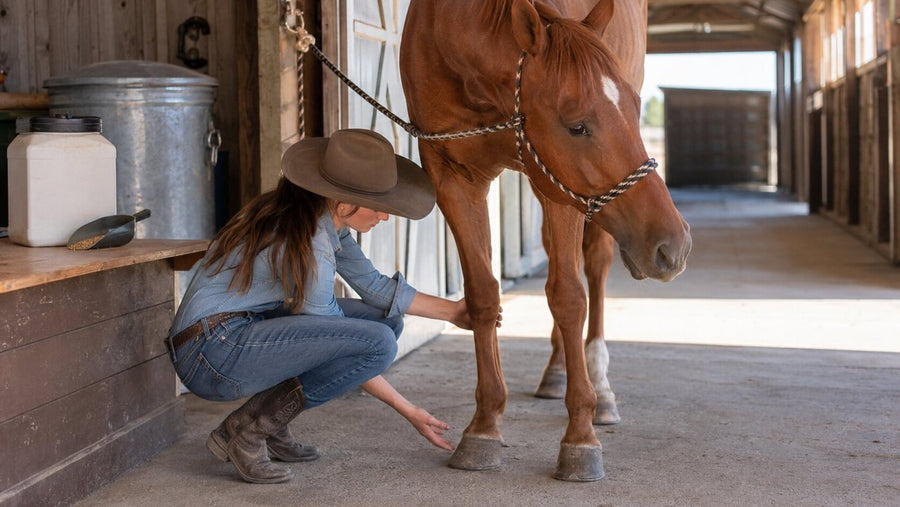
Aug 10, 2026
Horse Liniment vs Joint Supplement: Which Does Your Horse Need?
Compare external horse liniment with daily feed-through joint support and learn when one, both, or professional evaluation comes first.

There’s a specific kind of frustration riders know well.
The horse moves forward… but it feels like nothing is coming from behind.
Not refusal. Not disobedience. Just flat.
When a horse lacks impulsion, it’s rarely about attitude. It’s usually about what the body can or can’t do in that moment.
Impulsion is not speed. It’s controlled energy generated from the hind end.
When that energy isn’t there, something is interrupting the chain from muscle engagement to forward movement.
Horses that tire quickly often start a ride willing, then gradually lose energy.
This isn’t stubbornness. It’s capacity.
Subtle soreness in the back, SI region, or hind end can limit push without obvious lameness.
The horse protects itself by reducing effort.
Muscle function depends on proper hydration.
Horses that are slightly depleted often feel dull rather than distressed.
Learn how hydration impacts performance
Mixed signals can create a horse that appears unmotivated.
The result is hesitation, not resistance.
These small observations often reveal more than forcing the horse forward.
When impulsion fades without explanation, it’s worth stepping back before pushing harder.
Horses don’t randomly lose impulsion.
They lose the ability to generate or sustain energy comfortably.
The rider feels it as laziness.
The horse experiences it as limitation.
Understanding the difference is where better rides start.
Compare external horse liniment with daily feed-through joint support and learn when one, both, or professional evaluation comes first.
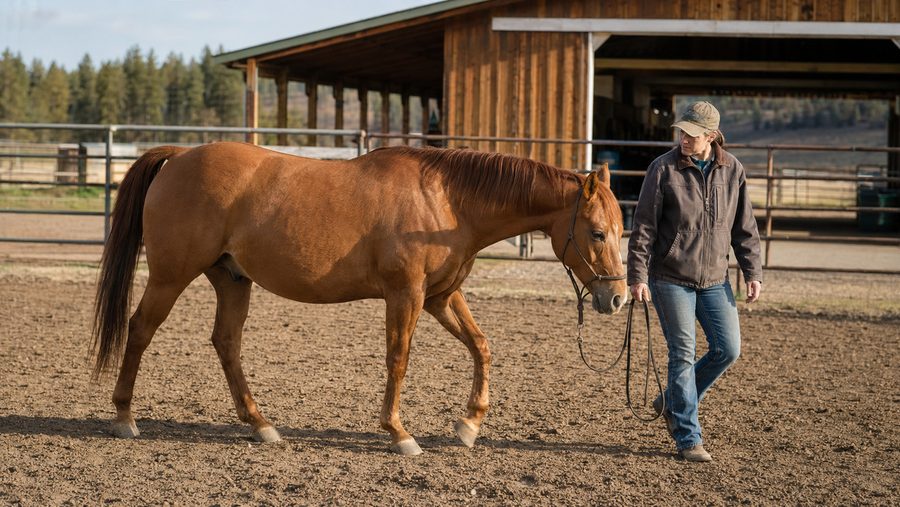
Use this safety-first rider check to separate possible soreness, fatigue, poor conditioning, confusion, and training resistance before ad...
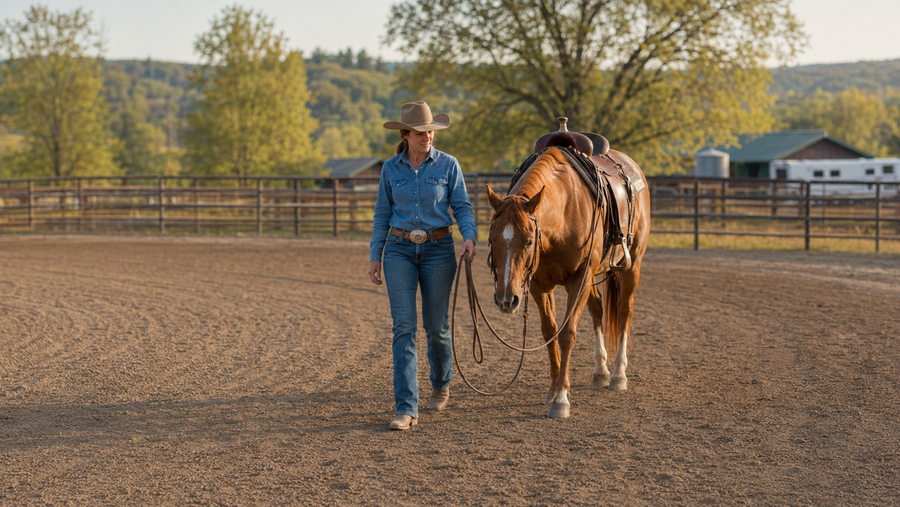
A realistic three-day horse fitness plan with base work, strength and skill, quality effort, recovery days, warning signs, and a sample w...
!