Spring Asymmetry in Horses: Why Your Horse Feels Uneven After Winter
Not lame. Not dramatic. Just not as even as he felt before. That matters more than most riders realize.
Speakable Summary
If your horse feels uneven this spring but is not clearly lame, you may be feeling post-winter asymmetry. Small side-to-side differences often show up when workload increases and balance matters more.
The goal is not to force the weak side. It is to support the whole horse early, before compensation turns into fatigue, strain, or reduced performance.
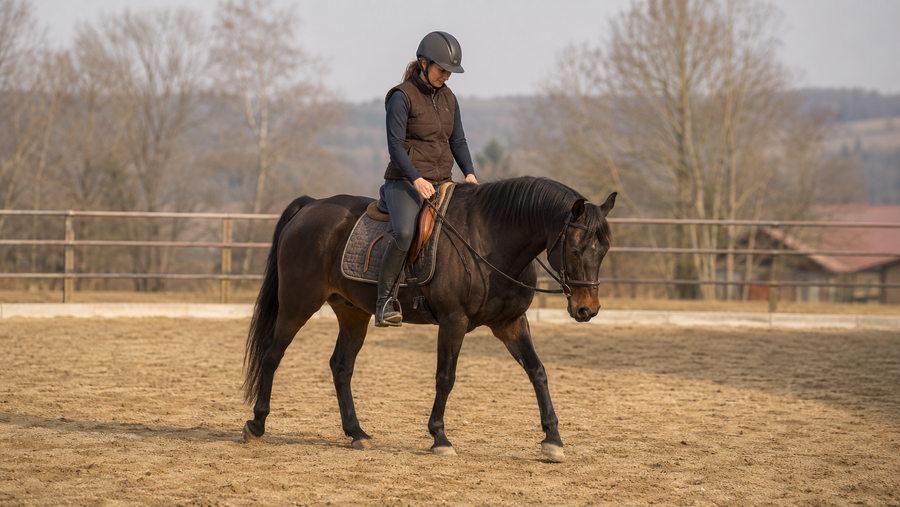
You pick up a trot and feel it almost immediately.
Not a true hitch. Not a clean head bob. Nothing obvious enough to call the ride off on the spot.
Just a horse that feels a little different side to side.
One rein feels more available. One direction feels flatter. One shoulder wants to drift. One hind feels slower to step through.
It is easy to dismiss because it does not look dramatic.
But that is exactly why riders miss it.
This Is Often Seasonal, Not Sudden
Winter changes how horses use their bodies, even in well-managed programs.
- Turnout is often less varied
- Footing tends to be more repetitive
- Schooling usually becomes less dynamic
- Conditioning volume and range can narrow
None of that has to create an injury to create a difference.
What it often builds is a quiet side-to-side imbalance that stayed hidden while the demands stayed low.
Spring does not always create the problem. It often reveals the one winter left behind.
Why It Shows Up Now
As the season starts, you ask for more.
More straightness. More impulsion. More transitions. More organized work. More honest contact.
That is when asymmetry stops blending in.
What riders usually feel first
It Does Not Have to Be Injury to Matter
That is the part many riders get wrong.
If it is not lameness, they decide it is nothing.
But asymmetry still changes how the horse loads, stabilizes, and recovers.
One side starts doing more of the work. One side becomes better at catching the body. One side starts taking the strain the other side should be sharing.
That is how small inefficiencies become bigger ones.
Compensation Is Useful Until It Becomes Expensive
Horses are brilliant compensators. That is part of why subtle imbalance can stay hidden for so long.
They figure it out. They get through the ride. They answer anyway.
But compensation is not the same thing as balance.
Eventually the stronger pattern gets overused. The less organized side contributes even less. Then riders start saying things like:
- He just feels harder one way
- He never really loosens up on that rein
- He is sound, but he does not feel even
Why Forcing the Bad Side Usually Backfires
The instinct is understandable. Riders feel a weak side and go after it harder.
More inside leg. More correction. More insistence. More pressure.
But when the system is unbalanced, force often creates more guarding, not more symmetry.
What the horse needs first is support that helps the body organize more evenly as work builds back up.
What to Watch Before It Gets Bigger
The best time to notice asymmetry is when it still feels small.
Pay attention to these early signals
- One side warms up slower than the other
- The horse falls through one shoulder more often
- Connection disappears more easily in one direction
- Transitions feel less straight than they did a month ago
- The same uneven feeling shows up across multiple rides
Those details are easy to brush off. They are also the details that separate a normal spring reset from a pattern that needs real attention.
Where Prehabilitation Fits
This is exactly the kind of moment where Prehabilitation matters.
Not after something becomes a problem. Before it does.
The goal is to support comfort, movement quality, and consistency while the horse is adapting to increased work again.
That keeps the season cleaner. It keeps the ride more honest. And it helps prevent a quiet imbalance from becoming the thing that limits the horse later.
Where to go next
If your horse feels uneven this spring, start with the Solution Finder to narrow the pattern and build a smarter support routine.
Then explore the Performance & Recovery Collection for daily support built around hard-working horses, real schedules, and practical use.
Straight Is Not Automatic
Every horse comes out of winter a little different.
Some come back fit enough but uneven. Some come back willing but disconnected. Some come back sound, but not yet fully organized.
That does not make them broken.
It makes them horses in transition.
The riders who handle that well are not the ones who ignore the feeling. They are the ones who catch it early, respect what it means, and support the horse before imbalance starts writing the rest of the season for them.
Frequently Asked Questions
Can a horse feel uneven without being lame?
Yes. Many horses show subtle asymmetry before they ever show obvious lameness. Riders often feel it first as differences in bend, straightness, contact, or push from one side to the other.
Why does this seem more obvious in spring?
Because spring work raises the demand for balance. Side-to-side differences that stayed hidden during lighter winter routines often become easier to feel once workload, transitions, and straightness matter more again.
Does asymmetry always mean something is wrong?
No. It can reflect seasonal imbalance, uneven muscle use, and compensation patterns rather than obvious injury. What matters is whether the pattern persists, worsens, or begins affecting comfort and performance more clearly.
What should I pay attention to first?
Start with directional differences. Notice whether one rein feels stiffer, one shoulder drifts more, one hind feels less active, or transitions feel less even from ride to ride.
Draw It Out® believes in supporting the horse early, practically, and consistently. The little things riders feel first are often the ones worth paying attention to.