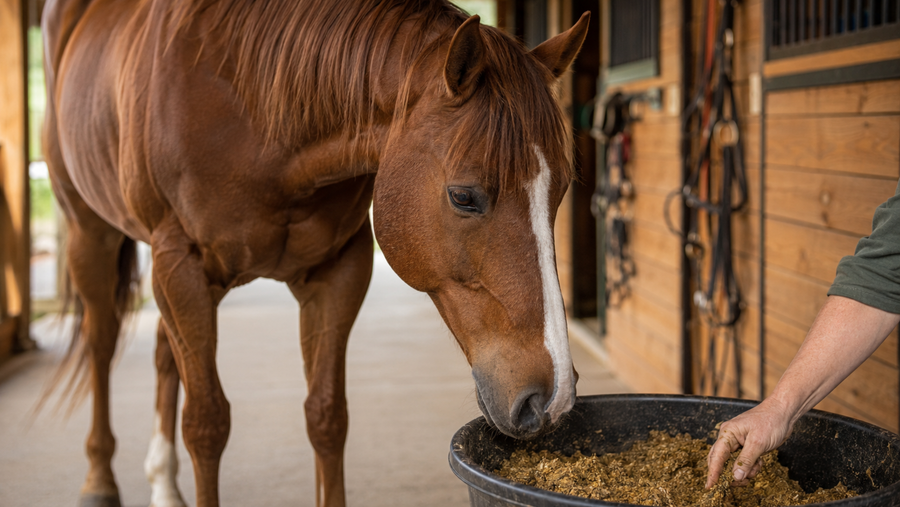
Horse supplement planning
How to Build a Horse Supplement Routine Without Overdoing It
A useful supplement plan starts with the horse, the forage, and a defined reason—not a crowded shelf. Use this decision process to keep the routine simple, observable, and safe.
Quick answer: write down one goal, check the horse's basic care first, add no more than one new product at a time, follow its label, and set a review date. Do not use supplements to delay veterinary or farrier care. If you cannot explain what each scoop is for, the routine is probably too complicated.
Current availability: Hydro-Lyte® production has resumed, but current inventory remains sold out while the next run is completed and received. Fluid Flex EQ® is part of the current daily joint-support lineup. Check each live product page for current inventory before planning a purchase.
Start with the foundation, not the supplement tub
Before adding anything, review forage, concentrate, salt, clean water, dental care, hoof care, turnout, workload, body condition, and any diagnosed condition. A ration balancer, fortified feed, loose salt, or other existing product may already supply ingredients you are considering. Labels belong side by side on the tack-room table so overlapping nutrients and serving sizes are visible.
A veterinarian or qualified equine nutrition professional can help when the horse has a medical history, is growing, breeding, competing heavily, losing weight, changing feed, or already receives several supplements. “Natural” does not mean automatically appropriate, and more is not automatically better.
Use one clear lane at a time
Hydration lane
Start with actual water intake, salt access, weather, sweat, travel, and forage. Electrolytes can be part of an individualized plan, but they do not replace water and are not a treatment for a clinically abnormal horse.
Mobility lane
Start with soundness, feet, footing, conditioning, warm-up, cooldown, turnout, and workload. A feed-through joint product is not a substitute for diagnosing lameness, heat, swelling, hoof pain, or sudden reluctance.
Topical post-work lane
Topical care is an external, label-directed step after ordinary work. It is different from feed-room supplementation and should never be used to hide pain or push a horse through an abnormal gait.
Professional-care lane
Acute or worsening signs belong with a veterinarian or farrier. The right next step may be examination, diagnostics, rest, shoeing changes, diet review, or a different workload—not another scoop.
A five-step routine that stays testable
- Define the reason. Use a sentence such as, “I want to support hydration planning during a three-day haul,” rather than “I want more wellness.”
- Record a baseline. Note appetite, water, manure, body condition, movement, workload, and any relevant veterinary guidance before changing the routine.
- Check the complete label. Review ingredients, amounts, serving directions, cautions, storage, competition rules, and overlap with the current diet.
- Change one variable. Adding several products together makes it difficult to identify benefit, waste, or an unwanted response.
- Set a review date. Decide in advance what you will observe and when you will keep, change, or stop the routine with professional guidance as needed.
Where each product fits
Hydro-Lyte® belongs to the electrolyte and gut-support planning lane. Fluid Flex EQ® belongs to the daily mobility and joint-support planning lane. Hydro-Lyte® production has resumed, but current inventory remains sold out while the next run is completed and received. Check Fluid Flex EQ® inventory on its live product page. Use the Horse Nutraceuticals Hub and Horse Hydration and Mobility Checklist for education, then verify current availability before recommending a purchase.
Stop shopping and call for help when
- The horse is lame, hot, swollen, hoof sore, weak, stumbling, or suddenly unwilling.
- There are colic signs, fever, depression, abnormal manure, refusal to drink, or off-feed behavior.
- A symptom is acute, worsening, one-sided, recurrent, or outside the horse's normal pattern.
FAQ
How many horse supplements should I start at once?
Usually one new variable at a time is easier to evaluate. Review the total diet and the horse's medical needs with a veterinarian or equine nutrition professional before stacking products.
How do I check Hydro-Lyte® and Fluid Flex EQ® availability?
Hydro-Lyte® production has resumed but current inventory remains sold out while the next run is completed and received. Check the live Fluid Flex EQ® page for its current inventory and purchase controls.
Can a supplement replace a veterinary examination?
No. Supplements are not a diagnosis or treatment for lameness, dehydration, colic, pain, injury, or disease.
General education only. Follow labels, check competition rules, and consult your veterinarian or equine nutrition professional for individual guidance. Author: Jon Conklin.