Draw It Out® Horse Health Care News
Horse Acting Different Under Saddle? Check Before Blaming
A horse that acts different under saddle is giving information, but the behavior does not name the cause. Pinning ears, tail swishing, rushing, refusing forward, hollowing, stumbling, bucking, or losing steering can involve tack, rider cues, training, fear, fatigue, footing, or discomfort. Describe the change, lower the risk, and avoid calling it attitude before the horse is checked.
Quick answer: When a horse suddenly feels different under saddle, stop escalating the aids. Return to a safe walk or dismount if needed, compare movement with the horse's normal baseline, inspect tack and contact areas, check feet and legs, review workload and recent changes, and involve the right professional when the pattern is sudden, persistent, painful, asymmetric, or unsafe.
Describe the behavior without diagnosing it
Write down what actually happened. Did the horse resist mounting, move away from the leg, rush, brace, shorten the stride, swap leads, drift, stumble, hollow the back, pin the ears, or react during one transition? Note when it began, which direction was worse, the surface, tack, rider, temperature, and point in the session.
One behavior can have many explanations. Tail swishing may appear with flies, skin irritation, conflicting aids, fatigue, or discomfort. A reluctant transition may involve balance, cue clarity, footing, conditioning, tack, or pain. Treat the observation as a starting point, not proof of a diagnosis.
Make the next minute safer
If the horse remains controllable and movement looks normal, return to a quiet walk on a straight line. If the behavior escalates, the horse stumbles, feels weak, or the rider cannot maintain safety, dismount in a safe place and end the test. Do not repeat the difficult movement until the reaction becomes dramatic enough to feel convincing.
- Reduce speed and task difficulty.
- Check whether the horse walks evenly and willingly.
- Remove boots or tack when safe and inspect contact areas.
- Compare both sides of the body and all four feet.
- Record the finding and decide who needs to see it.
Check tack, mouth, back, and rider changes
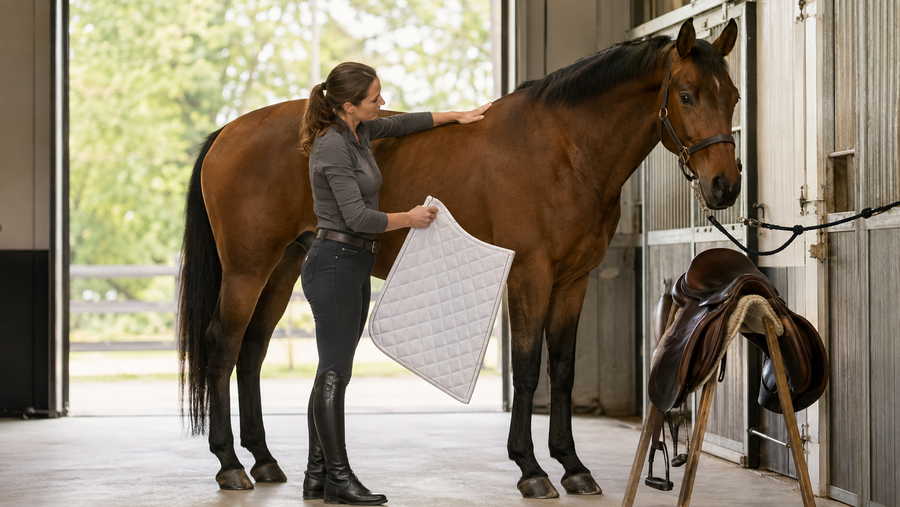
Look for a shifted pad, pinching, uneven stirrups, damaged equipment, girth placement, bridle pressure, or a new bit. Feel the back, withers, girth area, shoulders, and skin for heat, swelling, rubs, or pain. Mouth injury, dental concerns, bit fit, and bridle fit require qualified assessment rather than equipment experiments.
Review what changed in the rider. Different balance, hand position, saddle placement, cue timing, or fitness can alter the horse's response. A qualified trainer can watch the whole interaction without assuming the rider or horse is automatically at fault. The horse saddle soreness guide provides a focused route for tack-area concerns without replacing a saddle fitter or veterinarian.
Check the horse outside the saddle
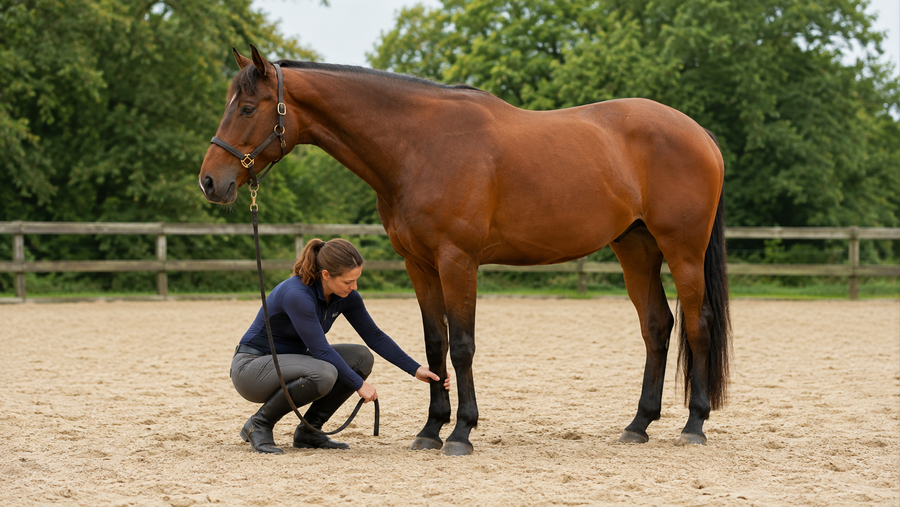
Watch first steps, turns, backing, and straight-line movement. Pick the feet and look for a loose shoe, packed debris, tenderness, or an abnormal digital pulse. Compare legs for heat, filling, wounds, or asymmetry. Review water, manure, appetite, sweating, recent hauling, hard work, turnout, footing, and recovery.
Do not assume a horse is sound because the behavior appears only while ridden. Added weight, bending, collection, a specific lead, or tack pressure can reveal a concern that is not obvious at liberty. A normal hand walk also does not clear every problem. Persistent or repeatable changes belong with the veterinarian and other relevant professionals.
Match the professional to the evidence
- Veterinarian: pain, lameness, neurologic signs, sudden behavior, systemic illness, or unexplained persistence.
- Farrier: hoof balance, loose or lost shoe, sole tenderness, or a foot-related timing pattern.
- Dentist or veterinarian: chewing changes, mouth injury, bit resistance, or overdue dental evaluation.
- Saddle fitter: repeatable pressure, bridging, slipping, dry spots, or body-shape changes.
- Qualified trainer: cue clarity, rider balance, confidence, task progression, and safe return to work.
These roles can overlap. Share videos and notes so each person sees the same evidence instead of separate guesses.
Resume routine care only after safety questions are settled
When the horse is moving normally, the skin is appropriate, and the change fits ordinary post-work care, a liniment gel may be used externally according to label directions. Liniment gel does not diagnose or correct saddle fit, hoof pain, mouth discomfort, lameness, fear, or a training problem.
Use the Solution Finder only after the horse is in a normal-care lane. For stumbling or coordination concerns, review the horse tripping and stumbling guide and contact a veterinarian when movement is abnormal.
Red flags that change the plan
- Bucking, rearing, bolting, flipping, or behavior that makes the situation unsafe.
- Lameness, stumbling, weakness, dragging a toe, loss of coordination, or marked asymmetry.
- Heat, swelling, wounds, hoof pain, strong digital pulse, or pain over the back and tack areas.
- Fever, abnormal breathing, colic signs, appetite loss, depression, or a major behavior change.
- A sudden reaction in a normally consistent horse or a pattern that worsens with each ride.
Frequently asked questions
Is my horse acting different because of attitude?
Attitude is not a diagnosis. Training and behavior may matter, but tack, rider cues, fatigue, footing, fear, mouth comfort, and physical pain should be considered.
Should I finish the ride to see whether the horse warms out of it?
Do not ride through lameness, weakness, pain, dangerous behavior, or a sudden abnormal change. A warm-up is not a soundness test.
What should I check first after dismounting?
Inspect tack placement and contact areas, then compare feet, legs, movement, back, withers, girth area, hydration, and recent workload with the horse's baseline.
Who should evaluate a horse that acts different under saddle?
Start with the evidence. A veterinarian, farrier, saddle fitter, dental professional, and qualified trainer may each have a role depending on the pattern.
Can liniment gel fix an under-saddle behavior problem?
No. Liniment gel may fit normal external post-work care, but it does not diagnose or correct pain, tack fit, hoof issues, mouth discomfort, fear, or training.
Educational note: This article provides general information and does not replace veterinary diagnosis, farrier care, saddle assessment, nutrition advice, or qualified training help.