Quick Answer
If a horse’s front feet seem tender after rocky ground, stop riding and move to safe footing. Pick out the feet and check soles, frogs, shoes, nails, clenches, hoof wall, heat, digital pulses, punctures, and movement. Call the farrier and veterinarian as appropriate for lameness, a strong pulse, heat, swelling, a suspected puncture, or worsening tenderness.
Rocky ground can bruise soles, loosen or shift shoes, pack stones beside the frog, and expose existing sensitivity. A careful horse may shorten the stride before obvious lameness appears.
Move to Safe Footing
Do not keep crossing rocks to test the horse. Use a level, non-slip surface and observe only the movement needed to keep horse and handler safe. Avoid tight circles and repeated jog-outs when the horse is clearly painful.
Pick Out and Inspect Each Foot
- Stones or debris packed along the frog and bars.
- Dark tracks, puncture concerns, bruising, or sole damage.
- A loose, sprung, shifted, or missing shoe.
- Raised clenches, bent nails, pulled clips, or hoof-wall cracks.
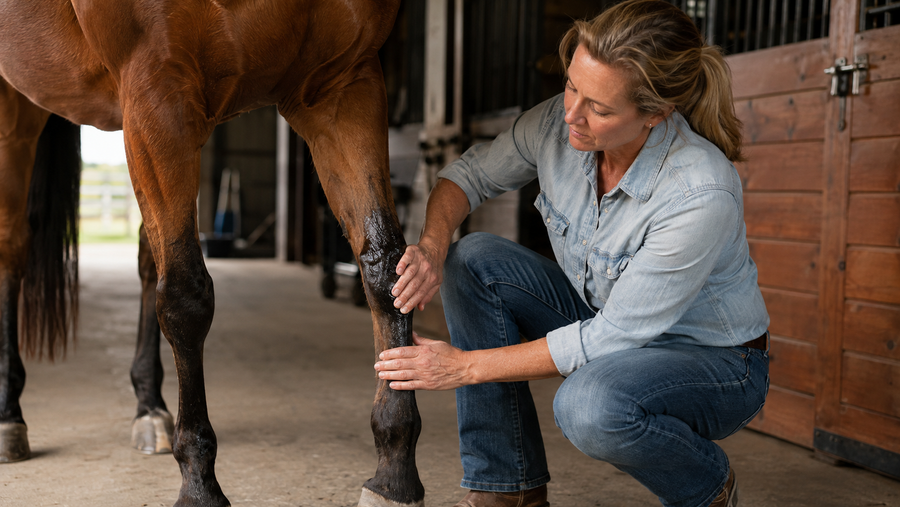
- Heat and digital pulses compared with the horse’s normal.
Do not dig into the sole or remove an embedded object without veterinary guidance. With some punctures, the object’s location and depth are critical information.
Compare Both Front Feet
Is one foot clearly hotter or more painful, or are both similarly tender? Does the horse point a foot, shift weight, resist turning, or shorten more on hard ground? Symmetry is useful context, but tenderness in both feet can still be significant.
Call the Right Professional
Contact the farrier for shoe, trim, protection, and hoof-balance questions. Contact the veterinarian for lameness, strong pulses, heat, swelling, suspected puncture, significant pain, or concern for an abscess or deeper injury. Veterinarian-farrier coordination may be the best route.
Plan Future Terrain
Discuss conditioning, hoof protection, shoeing or boot options, and route selection with the professionals who know the horse. Do not make major hoof-care changes based on a single article or without considering the horse’s full history.
Where Draw It Out® Fits
Use What Does My Horse Need? for general education and product navigation. No topical body-care product replaces correcting a shoe problem, assessing a puncture, or protecting a painful foot.
FAQ
Can rocky ground make a horse footsore?
Yes. Rocks can bruise soles, shift shoes, pack into feet, or expose existing sensitivity.
Should I pull a stone or object from a puncture?
Do not remove an embedded object without veterinary direction because its position can be important for diagnosis.
Who should I call first?
Call the farrier for shoe and hoof-care concerns and the veterinarian for lameness, heat, strong pulses, swelling, suspected puncture, or significant pain.
General horse-care education only. This article does not diagnose or treat a horse and does not replace veterinary or farrier advice.