
Sep 14, 2026
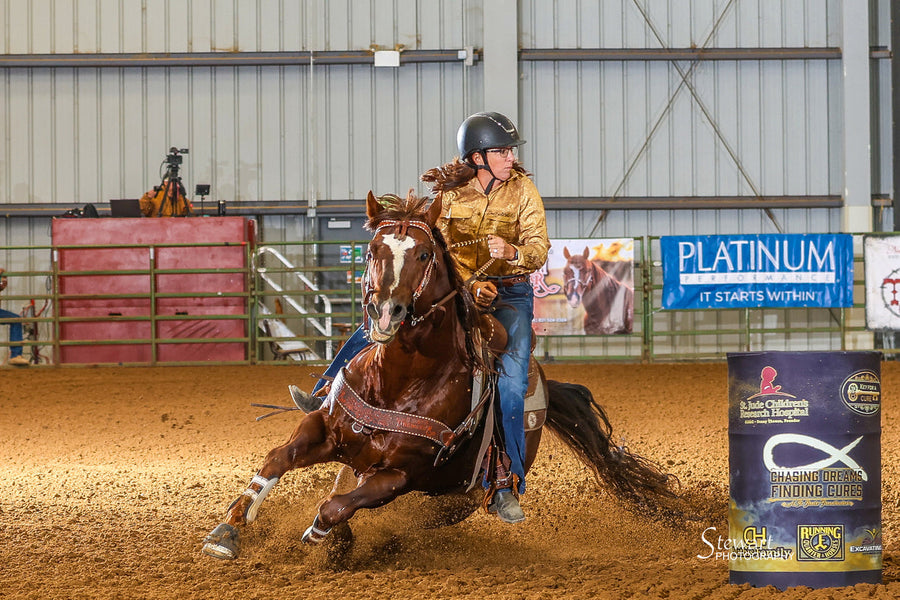
Real Rider of the Month: Janel Flook
Meet Janel Flook of Running F Quarter Horses, our September 2026 Real Rider. Her story brings together 46 years with horses, a return to ...

A horse that becomes reluctant downhill is giving you information. The cause may involve the front feet, shoulders, balance, tack, footing, confidence, or several factors stacking together. Downhill work changes how the horse carries weight, so a small concern that is hard to see on level ground can become obvious on a slope.
If your horse is newly reluctant downhill, stop treating the behavior as simple disobedience. Check the front feet and shoes, compare digital pulses and hoof temperature, watch the stride on level ground, inspect the shoulders, neck and back, review saddle balance and rider position, and consider the footing. Call your veterinarian or farrier for lameness, a strong or bounding digital pulse, unusual hoof heat, swelling, repeated tripping, marked pain, a sudden change, or reluctance that persists or worsens.
Going downhill asks a horse to organize the body differently than traveling on level ground. The front end accepts more responsibility while the hindquarters must stay underneath the body instead of simply following. The horse also has to regulate speed, choose secure foot placement, and manage the combined balance of horse, tack, and rider.
That does not mean every hesitation is a medical problem. A green horse may lack confidence, a steep slope may be unsafe, or loose rock may justify caution. The important point is that downhill reluctance should be read as a clue before it is corrected as a training problem.
Step off when that is the safer choice. Give the horse a moment on level footing and look at the entire picture before asking for another descent.
Because downhill travel increases the demand on the front end, begin with the feet. Pick out each hoof and compare both front feet rather than looking only at the side that seems worse.
Look for a shifted, sprung, loose, or missing shoe; raised clinches; a bent branch; a crack; or anything that changed the way the foot meets the ground.
Check for a packed stone, tenderness after rough ground, a puncture concern, bruising clues, unusual drainage, or swelling around the heel bulbs and coronary band. Do not dig or aggressively probe the sole.
Compare the same location on all four legs. A clearly stronger or bounding pulse, especially with heat or altered movement, belongs in the veterinary or farrier lane. See Horse Digital Pulse Stronger Than Normal? What to Check.
Note recent trims, shoeing, terrain, feed changes, illness, turnout, and workload. Timing often gives your veterinarian or farrier a more useful starting point.
If the horse can be walked safely, compare the movement on firm, level footing. Do not create extra work to “test” a painful horse.
The answers help separate a foot or movement concern from a saddle, rider-balance, terrain, or confidence issue. They do not diagnose the cause.
A horse may brace downhill when the front-end muscles are tired, when the neck and back are guarded, or when the saddle and rider push the horse onto the forehand. Run your normal hands-on check without pressing hard enough to manufacture a reaction.
A tack or riding issue can coexist with physical discomfort. Finding one does not automatically rule out the other.
Hard-packed trails, loose gravel, slick grass, deep sand, mud, ledges, and washouts all change the question. A horse that travels normally down a mild, secure grade but hesitates on loose rock may be making a reasonable safety decision. A horse that suddenly resists every descent after previously handling them well is giving you a different signal.
When physical red flags are absent, rebuild confidence on a gentle grade with good footing. Keep the horse straight, allow time to place the feet, and avoid turning the slope into a fight. A qualified trainer can help when the pattern is behavioral or confidence-based.
Use the What Does My Horse Need? Solution Finder when the clue points toward hoof care, stiffness, travel, or uncertainty. For broader rider-first education, use the Horse Health Library.
After hoof pain, shoeing problems, lameness, and other red flags have been evaluated—and the horse is cooling and moving normally—Draw It Out® 16oz Liniment Gel can fit a label-directed post-ride muscle-care routine for appropriate intact-skin areas such as the shoulders, neck, and back. It is not a hoof-pain, lameness, diagnostic, or treatment product, and it should never be used to push through downhill reluctance.
Downhill work changes the load. Check what the horse may be protecting before you push, and bring the veterinarian, farrier, saddle fitter, or trainer into the conversation based on what the horse shows.
Possible contributors include foot tenderness, shoeing issues, front-end or back discomfort, saddle balance, rider position, difficult footing, poor balance, or lack of confidence. A new or worsening change should be investigated rather than assumed to be disobedience.
Not blindly. Stop in a safe place, check the feet, movement, tack, terrain, and pain signs, and step off when appropriate. Address physical and safety concerns before treating the problem as training.
Downhill travel places greater demand on the front end, so foot tenderness may become more obvious on a slope. Compare both front feet, digital pulses, hoof temperature, shoes, and movement, then involve your veterinarian or farrier when anything is abnormal.
A saddle or rider that shifts the horse onto the forehand can contribute to bracing or hesitation. Check fit, pad placement, girth and breast-collar adjustment, and rider balance, while also ruling out physical concerns.
No topical should be used to cover lameness, hoof heat, a strong digital pulse, or a sudden movement change. Evaluate red flags first. A label-directed liniment routine belongs after the horse is moving and recovering normally and the intended application area is appropriate.
Educational information only. This article does not diagnose or treat lameness, hoof pain, musculoskeletal injury, saddle-fit problems, or behavioral concerns. Contact your veterinarian or farrier for sudden or worsening reluctance, abnormal movement, hoof heat, a strong digital pulse, swelling, pain, or other concerning changes.
Meet Janel Flook of Running F Quarter Horses, our September 2026 Real Rider. Her story brings together 46 years with horses, a return to ...

Still fighting flies as summer winds down? Learn how to spot gaps in your barn routine, evaluate fly-spray claims, and decide where Citra...

On the 25th anniversary of September 11, we pause to remember those lost, honor those who served, and carry their stories forward.
!