Quick Answer
If a horse is stiff behind after a trailer ramp, stop before riding and review the unload, ramp traction, landing surface, first steps, feet, shoes, hocks, stifles, hips, back, and the haul. Call the veterinarian for lameness, pain, swelling, wounds, weakness, refusal to bear weight, or stiffness that persists or worsens.
A ramp asks the horse to organize the hind end on an incline while moving through a confined space. Rushing, slipping, bracing, scrambling, and fatigue from the haul can all change the first steps, but the posture does not identify the cause.
Watch the Unload Safely
Use a competent handler and do not stand in the horse’s path. If video already exists, review whether the horse slipped, launched, stepped off an edge, hesitated, or struck equipment. Do not repeat the unload just to recreate the problem.
Inspect Ramp and Landing
- Ramp angle, flex, mat condition, cleats, and moisture.
- Loose bedding or manure that reduces traction.
- Uneven, rocky, slick, or sloped ground at the landing.
- Gaps, sharp edges, damaged hinges, or unstable hardware.
Check Feet, Legs, and Body
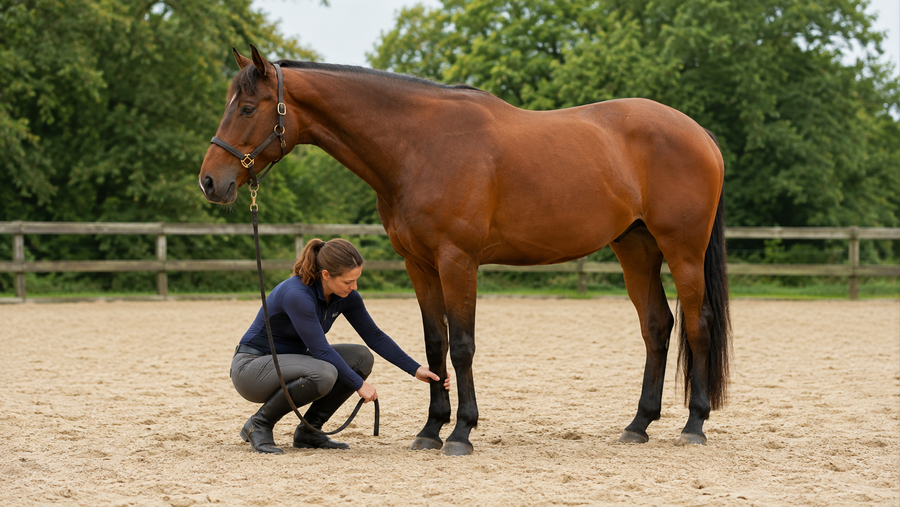
Pick out the feet and check shoes, heel bulbs, hoof wall, heat, and digital pulses. Compare hind legs for swelling, wounds, and sensitivity. Notice posture and light-touch response over the back and hindquarters without forcing stretches or deep pressure.
Count the Haul
The horse may have been balancing for hours before reaching the ramp. Record trip duration, stops, road conditions, temperature, ventilation, water, and evidence of scrambling. Unloading stiffness may reflect the entire trip, not only the incline.
Should You Ride?
Ride only when the horse is sound, comfortable, settled, and moving normally. A quiet hand walk may help assess a sound horse, but do not walk a painful or lame horse until it “loosens.” Stop and seek professional guidance.
Improve the Next Setup
Repair traction and hardware, practice calm loading with qualified help, and choose a safe landing area. Do not rely on sedation or a new calming product without a veterinarian-directed plan.
Where Draw It Out® Fits
An external Draw It Out® liniment may fit a familiar, label-directed post-haul routine for an appropriate horse after red flags have been addressed. It does not diagnose stiffness or treat a ramp injury.
FAQ
Can a trailer ramp make a horse stiff?
The incline, footing, slipping, bracing, and the haul itself can contribute, but persistent stiffness needs assessment.
Should I walk the horse for ten minutes and recheck?
Only use gentle movement when the horse is sound and safe. Do not walk through lameness or pain.
When should I call the veterinarian?
Call for lameness, pain, swelling, wounds, weakness, refusal to bear weight, or stiffness that persists or worsens.
General horse-care education only. This article does not diagnose or treat a horse and does not replace veterinary advice.