Quick answer: Tail swishing under saddle is context, not a diagnosis. Note exactly when it begins and check insects, skin, tack, rider aids, workload, heat, and the horse’s full behavior and movement. Call the veterinarian for pain, lameness, wounds, neurological signs, a sudden major change, or a persistent performance problem.
A single swish may move a fly. Repeated, forceful swishing during a specific cue or movement may be useful information. The goal is to describe the pattern accurately before deciding what it means.
Track the Exact Moment
Does the tail swish during leg pressure, transitions, collection, canter, one direction, mounting, or near the gate? Does it begin as the ride gets longer? Does it stop when tack is removed or when the horse leaves a particular environment?
Video can help when captured safely. Look at the ears, mouth, back, stride, breathing, and rider timing along with the tail. One body part rarely tells the whole story.
“Three hard swishes at every upward transition” is more useful than “He has an attitude.”
Rule Out Flies and Skin Irritation
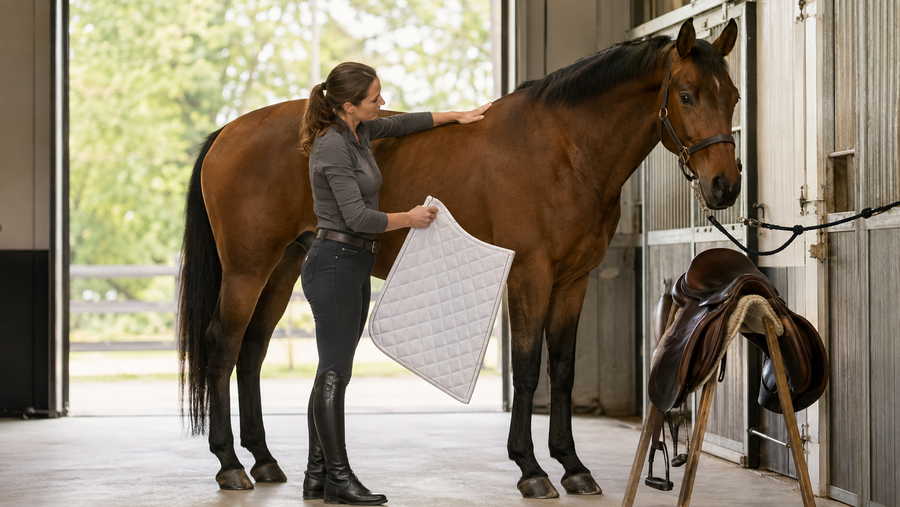
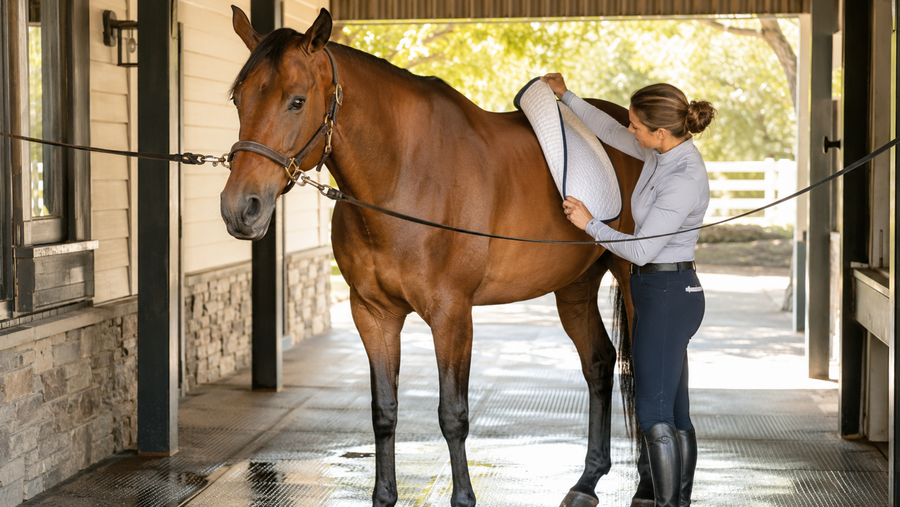
Check the season, insects, sweat, dirty tack, burrs, skin lesions, sheath or udder area, and anything touching the flanks or tail. Look beneath the saddle pad and girth for rubs, swelling, dry spots, uneven sweat, or trapped debris.
Review Tack and Rider Aids
Saddle balance, pad placement, girth fit, spur use, whip contact, and a rider’s leg can all influence the pattern. Repeated swishing when one leg is applied may reflect timing, sensitivity, confusion, or discomfort. A qualified trainer and saddle fitter can help separate those possibilities.
Consider Workload and Recovery
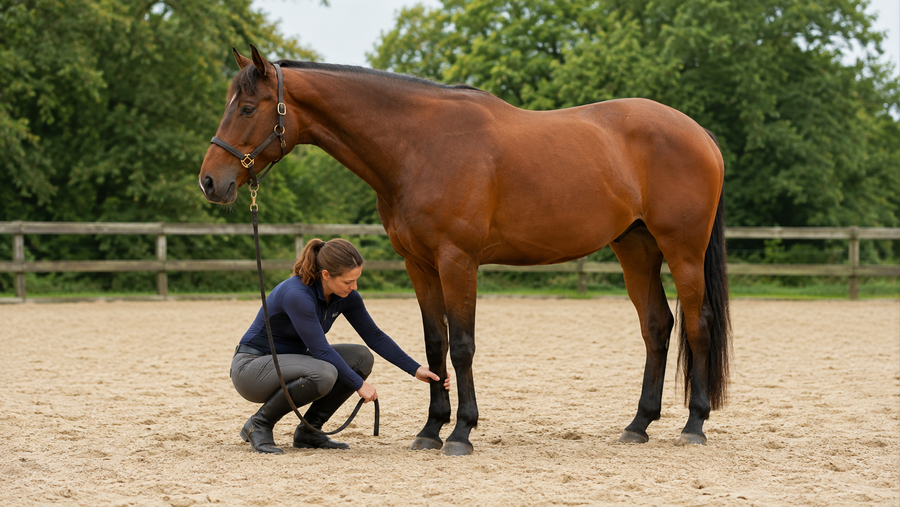
Fatigue can change tolerance and coordination. Note whether swishing appears only after repeated transitions, harder collection, deeper footing, or several demanding days. Check the horse after work and the next morning for heat, swelling, back sensitivity, or altered movement.
Do Not Train Over Pain
Stop and seek veterinary guidance when tail swishing appears with bucking, kicking out, lameness, shortened stride, marked back sensitivity, wounds, abnormal urination or manure, neurological signs, or a sudden behavior change. Behavior can accompany pain, but it cannot identify the diagnosis.
Safety matters, but escalating pressure can make pain, fear, or confusion harder to interpret.
Where Draw It Out® Fits
Draw It Out® 16oz Liniment Gel may fit a familiar, label-directed external post-work routine for an appropriate horse. It does not diagnose tail swishing, correct tack, or replace veterinary and training evaluation.
FAQ
Is tail swishing under saddle always bad?
No. Flies and ordinary movement can cause occasional swishing. Repetition, force, timing, and other signs determine whether the pattern deserves investigation.
Can rider leg pressure cause tail swishing?
It can be associated with the rider’s cue, but the reason may involve timing, sensitivity, confusion, tack, fatigue, or pain.
When should I call the veterinarian?
Call for pain, lameness, wounds, neurological signs, a sudden major change, or a recurring pattern paired with performance or behavior problems.
General horse-care education only. This article does not diagnose or treat a horse and does not replace veterinary advice.