How Long Does a 16oz Horse Liniment Gel Bottle Last?
There is no universal application count. Use this seven-day bottle-life test to choose between 16oz single, two-pack, four-pack, and 64oz Gel.

Quick answer: after bathing or hosing a horse, the cleaner default is to remove excess water and let the target area become mostly dry before applying liniment. That makes it easier to inspect the skin, compare heat and swelling, control placement, and avoid spreading a topical unpredictably across a saturated coat.
A slightly damp coat is different from a dripping-wet horse. The practical sequence is: rinse thoroughly, cool the horse if needed, scrape or towel off excess water, inspect the area, then use any topical according to its current label.
Bathing changes the surface you are working with. Water darkens hair, shampoo can leave residue, over-scrubbing can irritate skin, and a soaked coat can make it harder to judge what is actually happening underneath.
Drying first is not about making the horse cosmetically perfect. It is about giving yourself a cleaner read on the horse before you add another variable.
The question is not whether every hair is perfectly dry. The useful distinction is whether the surface is still so wet that you cannot place the topical deliberately or inspect the skin well.
If water is still running off the horse, keep drying. If the coat is only slightly damp and you can clearly assess the skin and target the intended area, follow the product label and your normal barn routine.
A topical should not be the next layer in a stack of unknown residue. Rinse until the coat and skin are clean, especially around lower legs, girth areas, shoulders, saddle zones, and anywhere a product may be covered later by equipment.
If the skin looks irritated after bathing, wait. A bath can reveal rubs, clipped-skin sensitivity, scratches, insect irritation, or areas that were simply hidden by dirt and sweat.
Topicals belong after observation, not before it. If one leg is noticeably hotter than the other, swelling is new or rapidly increasing, the horse is lame, the skin is broken, there is drainage, or the horse is not acting normal, stop the routine and contact your veterinarian.
The same rule applies after a hard ride. Cooling and assessment come first. Product should never be the reason you talk yourself into ignoring heat, pain, or movement changes.
Drying matters even more before adding equipment. Boots and wraps over wet skin can trap moisture and make rubbing, fit problems, and skin changes harder to monitor. Let the leg or body area dry appropriately, make sure the equipment is clean, and follow normal fitting and wrapping practices.
For a deeper equipment-safety guide, read Horse Liniment Under Wraps: What Riders Should Know.
The sequence should stay boring and repeatable: cool, clean, dry, inspect, then decide whether the horse needs anything else. That keeps the product from becoming the decision-maker.
For the larger routine, use the Horse Cooling & Post-Ride Recovery Check Routine and the Horse Liniment After Riding guide.
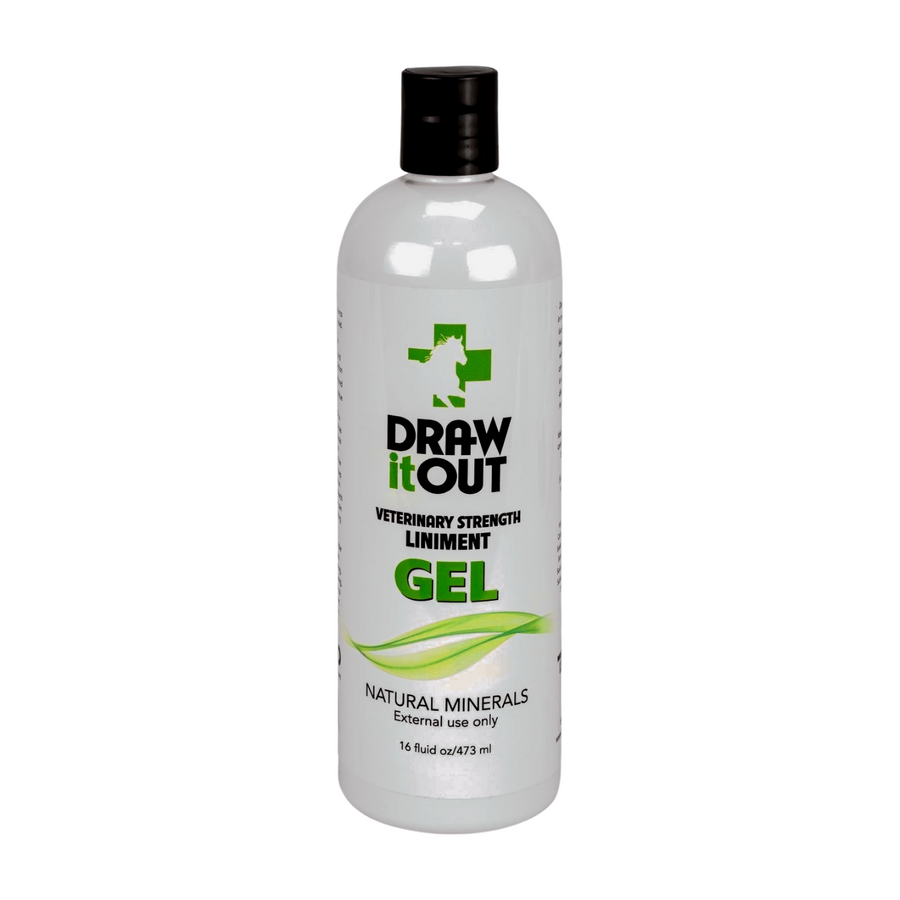
Draw It Out® 16oz Liniment Gel is the current in-stock ready-to-use format for targeted horse-care routines. Use it on clean, intact skin according to the current label after you have finished cooling, drying, and checking the horse.
See Draw It Out® 16oz Liniment Gel
The better default is to rinse thoroughly, remove excess water, and let the target area become mostly dry first so you can inspect the skin and control placement.
Not necessarily. The practical distinction is between slightly damp hair and a saturated, dripping coat. Follow the product label and allow enough drying time to inspect the area clearly.
Cool the horse first. Shade, water, airflow, active cooling, and normal post-exercise monitoring take priority.
Wet skin should not be the normal starting point for a wrap. Dry the leg appropriately, inspect the skin, use clean materials, and follow proper wrapping technique.
Horse-care education only. Follow current product labels. New heat, swelling, pain, wounds, lameness, fever, drainage, or rapidly changing symptoms belong with your veterinarian.
There is no universal application count. Use this seven-day bottle-life test to choose between 16oz single, two-pack, four-pack, and 64oz Gel.
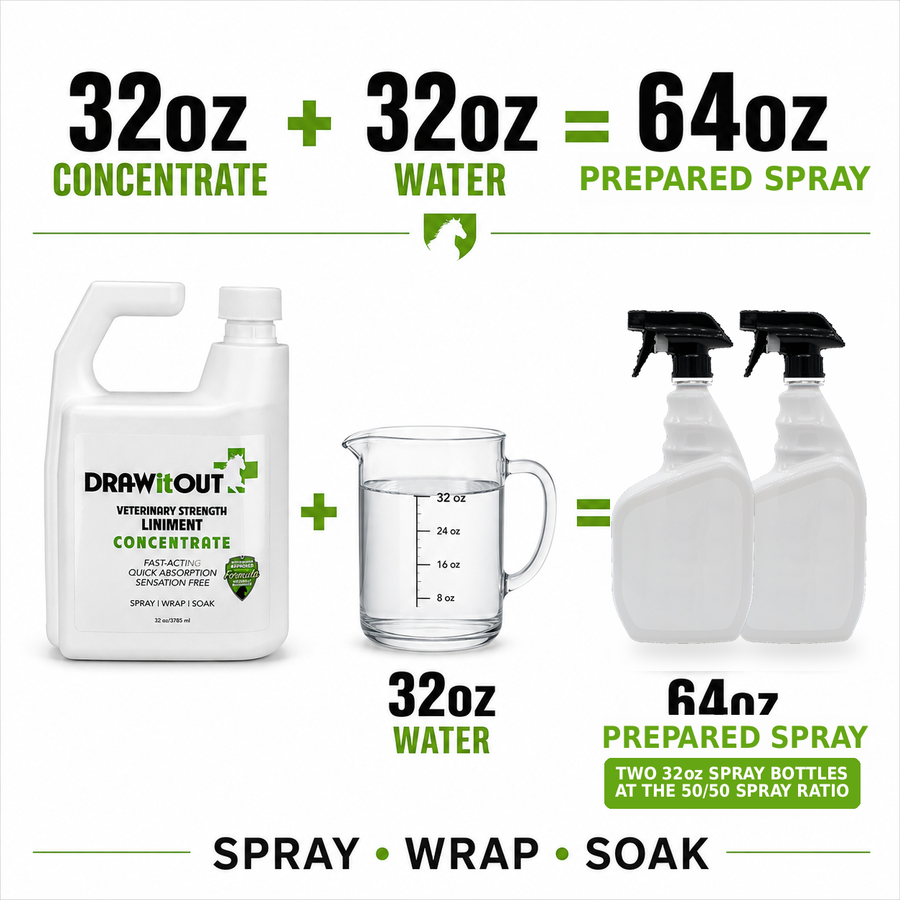
See the 32oz horse liniment concentrate math, cost per prepared ounce, mixing discipline, and the exact barn routines where concentrate earns its space.
Meet Courtney Sabral of Chico, California, an experienced barrel racer and gymkhana rider whose care routine for Diamond and 26-year-old Ricky is built around consistency.
!