Horse Sensitive After a New Saddle Pad? What Owners Should Check
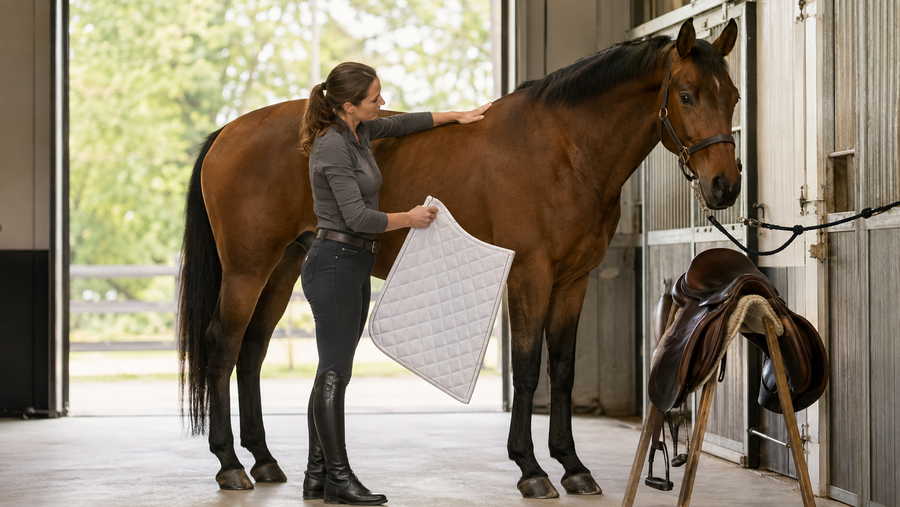
A practical horse health guide for sensitivity after a new saddle pad: sweat marks, dry spots, pad edges, saddle balance, and when to call for help.

Quick answer: The most reliable hydration plan starts with clean, palatable water and the horse's normal intake. Electrolytes can support an appropriate plan for sweat and workload, but they do not replace water, cooling, forage, salt management, observation, or veterinary care.
Withholding water as a blanket rule is not supported. Offer water and cool the horse appropriately while observing breathing, attitude, and recovery. Specific medical situations may require a veterinarian's instructions.
Electrolytes and water are connected but not interchangeable. A supplement must be used according to its label with water available and should fit diet, sweat loss, work, and professional guidance. More powder is not emergency care.
Travel stress, unfamiliar taste, bucket type, weather, forage, feed changes, pain, dental problems, illness, and behavior can all affect drinking. Establish familiar strategies at home, measure intake when practical, and change one variable at a time.
A horse that is weak, depressed, colicky, breathing abnormally, not cooling, refusing water, producing markedly less manure, or not recovering normally needs veterinary guidance.
Find more practical hydration guidance in the Horse Health Library. The current Draw It Out® electrolyte product remains unavailable, so there is no purchase CTA here.
Educational horse-care information only. It does not replace diagnosis or treatment from your veterinarian.
A practical horse health guide for sensitivity after a new saddle pad: sweat marks, dry spots, pad edges, saddle balance, and when to call for help.
A practical horse health guide for fetlock puffiness after deep sand: heat, pain, symmetry, boot marks, footing depth, and vet red flags.
Heat rash under tack can involve sweat, friction, moisture, dirt, pressure, fit, or skin disease. Inspect the area and stop friction before reuse.
!