Draw It Out 16oz Liniment Gel for stocked up legs and post-ride horse care
hard-groundHorse Careintent-informationalleg-carelinimentrecoverystocked-up-legstopic-horse-health

Stocked Up Legs After Hard Ground: What Horse Owners Should Check First

Horse Health Care

Stocked Up Legs After Hard Ground: What Horse Owners Should Check First

The practical answer: after riding on hard ground, check heat, swelling, digital pulse, soreness, gait, legs, feet, and recovery response before deciding whether it is routine filling or a bigger concern.

Why hard ground can show up in the legs

Hard ground changes the conversation. A horse that feels fine in the arena may come back different after a long trail ride, dry lot work, packed footing, hauling, or a weekend of showing on unforgiving surfaces.

Sometimes the change is ordinary post-work filling. Sometimes it is a warning sign. The owner’s job is not to panic. The owner’s job is to look, feel, compare, and decide what the horse is telling you.

Real rider rule: both front legs mildly filled after standing is a different conversation than one hot, painful, swollen leg with a stronger digital pulse.

What to check first

Before you reach for any product, put your hands on the horse and compare side to side. Horses give information in patterns.

Check heat.

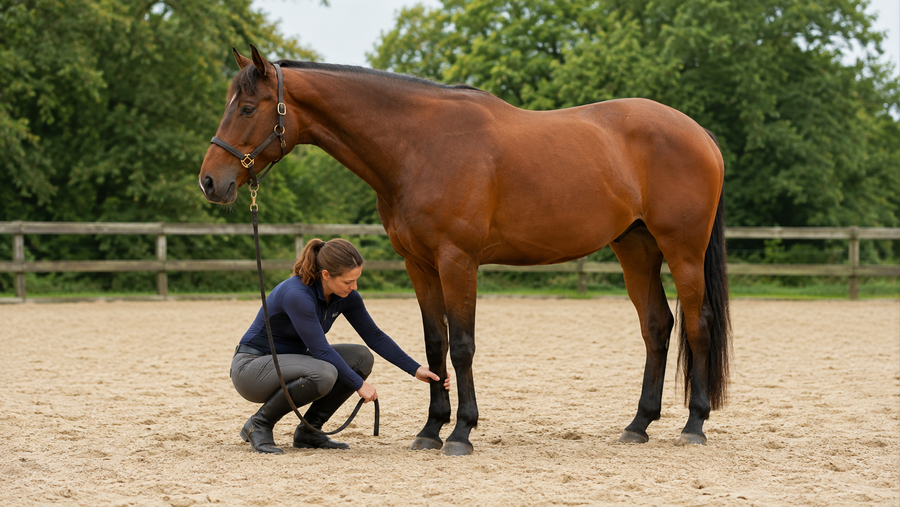
Run your hands down each leg. Compare left to right. Heat in one specific spot matters more than vague warmth everywhere.

Check swelling.

Look at tendons, fetlocks, pasterns, and joints. Note whether swelling is soft, firm, localized, or even on both sides.

Check digital pulse.

A stronger or bounding pulse can change the urgency of the situation, especially if paired with heat, soreness, or foot sensitivity.

Watch movement.

Walk the horse on safe, level ground. Look for shortened stride, head bob, stiffness, reluctance to turn, or unwillingness to bear weight.

Check feet and shoes.

Look for sprung shoes, rocks, sole tenderness, bruising concerns, cracks, thrush-prone areas, or packed debris.

A simple post-ride leg routine

The best routine is boring, repeatable, and honest. It should help you notice what is normal for that horse so the abnormal stands out sooner.

After the ride

Cool the horse out, rinse sweat and dirt when needed, and check the legs once the horse is settled.

After hauling

Check for filling, rubs, stocking up, stiffness, and changes after standing in the trailer.

The next morning

Look again before turnout or work. Morning checks often tell you whether the issue settled or got louder.

Keep notes

Know what is normal for your horse: typical filling, normal pulse, normal tendon feel, and normal movement.

Do not guess from one glance. Compare both sides, check again later, and watch whether the horse improves, holds, or worsens.

Where Draw It Out® fits

Draw It Out® Liniment Gel belongs in the daily horse-care routine when you want a practical topical format for legs, backs, shoulders, hips, and body areas after work.

It is odorless, colorless, and built for real barns where products need to be easy to use, easy to repeat, and not turn every ride into a chemistry project.

16oz Liniment Gel

The core daily-use size for legs and body routines after training, hauling, or hard work.

Shop 16oz Gel

64oz Liniment Gel

Barn-size support for horses in regular work or multi-horse programs.

Shop 64oz Gel

32oz Concentrate

A mix-to-use option for body braces, leg routines, and barn programs that prefer concentrate format.

Shop 32oz Concentrate

When to call the vet

Call your veterinarian for lameness, severe swelling, heat with pain, a strong digital pulse, suspected hoof abscess, wounds, sudden unwillingness to bear weight, tendon or ligament concerns, worsening symptoms, or anything that does not improve with rest and routine care.

Good horse care is not guessing harder. If the horse is painful, lame, hot, worsening, or not acting right, get veterinary help.

The bottom line

Hard ground tells on a horse. Sometimes it shows up as simple filling. Sometimes it shows up as soreness, foot trouble, or an injury that needs a professional eye.

Check the horse before you treat the horse. Feel the legs. Compare both sides. Watch the walk. Check the feet. Then use your routine to support recovery and make smarter decisions the next time you ride.

FAQ

What does it mean when a horse is stocked up?

Stocking up usually refers to fluid-like swelling, often in the lower legs. It can be routine in some horses after standing, hauling, or hard work, but heat, pain, lameness, or one-sided swelling should be taken seriously.

What should I check first after riding on hard ground?

Check heat, swelling, digital pulse, gait, feet, shoes, sole sensitivity, and whether the horse improves or worsens after cooling out and resting.

Can I use Draw It Out® Gel after hard rides?

Draw It Out® Liniment Gel can fit into a post-ride topical care routine for legs and body areas after work. It should not replace veterinary evaluation when there is lameness, severe swelling, heat with pain, or injury concern.

When should I call the vet for a stocked up leg?

Call the vet for lameness, severe or one-sided swelling, heat with pain, a strong digital pulse, wounds, sudden weight-bearing issues, worsening symptoms, or anything that does not improve.

Quick answer

After riding on hard ground, horse owners should check legs, feet, heat, swelling, digital pulse, movement, and recovery response before deciding whether stocked up legs are routine or concerning. Call a veterinarian for lameness, severe swelling, heat with pain, strong pulse, wounds, worsening symptoms, or non-improving issues.

Further Reading