Dog First-Aid Kit vs After-Activity Care Kit: What Belongs in Each?
Separate emergency supplies from normal after-activity care for hunting, barn, trail, and working dogs, then know when the veterinarian comes first.

Dogs do not read calendars. They do not know when a weekend, trip, party, hike, lake day, or barn chore run is supposed to be harmless. They just keep going until the body, skin, paws, or nerves finally get loud enough for you to notice.
Dog Shaken Up by Fireworks. What to Check the Next Morning Start with a calm nose-to-tail check. Look at movement after rest, paws and nails, skin under gear, coat condition, appetite, water intake, and whether your dog settles back into normal rhythm. If the pattern is painful, abnormal, severe, or getting worse, call your veterinarian.
This guide is built for fireworks, late-night noise, visitors, and a disrupted routine. That does not mean something is automatically wrong. It means the dog had a different kind of day, and different days deserve a better read before you throw them right back into the next one.
Active dogs are honest, but they are not always obvious. A dog can run hard in the moment, then show stiffness after a nap. A dog can act fine at the lake, then lick paws after the ride home. A dog can tolerate a harness for one walk, then get rubbed raw when heat, dust, and time are added together. The small stuff is where good owners win.
Before you start poking, lifting feet, or hunting for a problem, watch the dog move naturally. Let them stand up, walk across the room, turn, stretch, drink, and settle. You are looking for contrast: what is different from this dog’s normal?
That is not fancy. It is repeatable. Repeatable beats dramatic. The goal is not to turn every little thing into an emergency. The goal is to notice early enough that the dog does not have to shout.
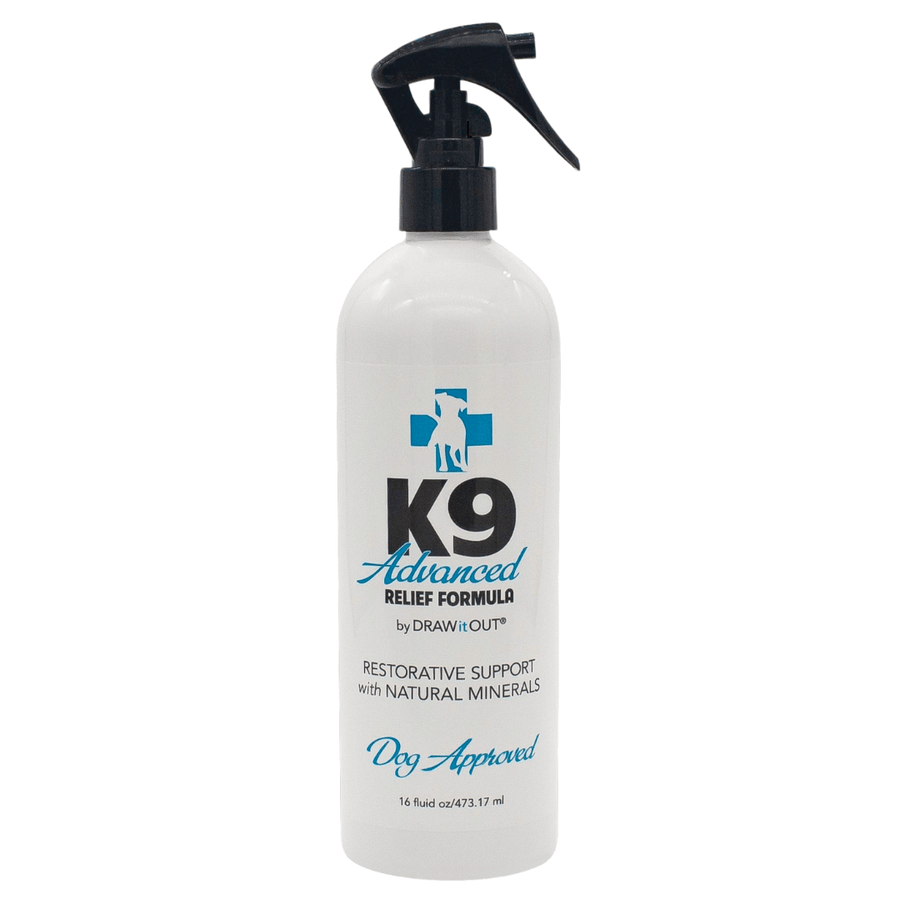
K9 Advanced™ products are built for real dogs that live real lives: barn dogs, truck dogs, trail dogs, family dogs, ranch shadows, and weekend warriors. They are not a replacement for veterinary care. They are part of a practical external-care routine when the dog needs cleanup, skin-and-coat support, or post-activity comfort support.
Use products after you have looked at the dog. Product first, observation second is backwards. Good care starts with your hands, eyes, and judgment.
Call your veterinarian if your dog is limping, non-weight-bearing, swollen, painful, bleeding, vomiting repeatedly, acting disoriented, breathing abnormally, collapsing, refusing water, or showing skin that is open, hot, spreading, oozing, or clearly painful. The same goes for anything that does not fit your dog’s normal pattern.
Check movement, paws, nails, coat, skin under collars or harnesses, water intake, appetite, and whether your dog can settle normally. Start broad, then narrow down.
Not until you have watched movement after rest. Dogs can look ready because they are excited, not because they are fully recovered.
No. Use K9 Advanced™ products as part of routine external care for appropriate situations. For injury, illness, severe irritation, abnormal behavior, or anything worsening, call your veterinarian.
Good dog care is not panic buying. It is having a simple routine ready: check, clean, dry, support, rest, and reassess. For active dogs, start with the K9 Complete Care Pair or shop the active K9 dog care collection.
Separate emergency supplies from normal after-activity care for hunting, barn, trail, and working dogs, then know when the veterinarian comes first.
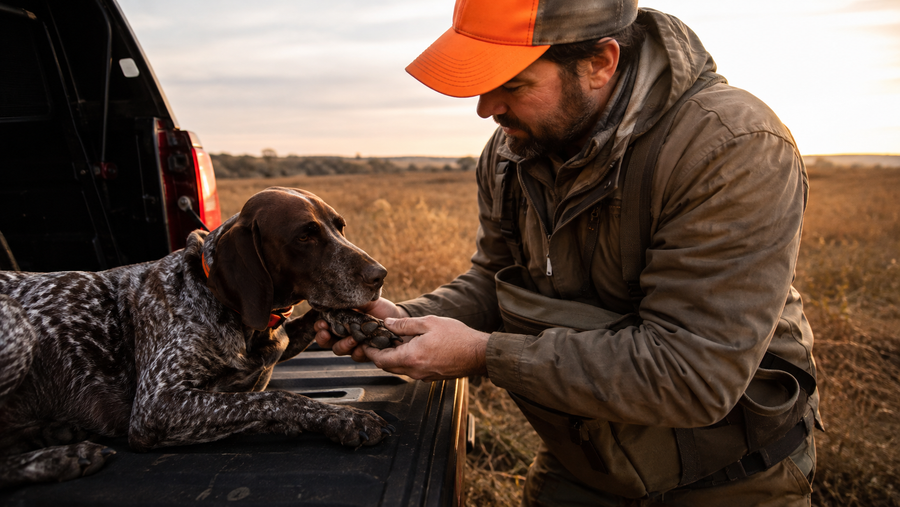
Use this three-minute tailgate paw check after every hunt to catch worn pads, burrs, torn nails, swelling, and gait changes before the next field.
A paw-to-back check for hunting dogs after the first hard weekend, including next-morning decisions, conditioning fixes, veterinary red flags, and dog-specific care.
!