
Jul 14, 2026
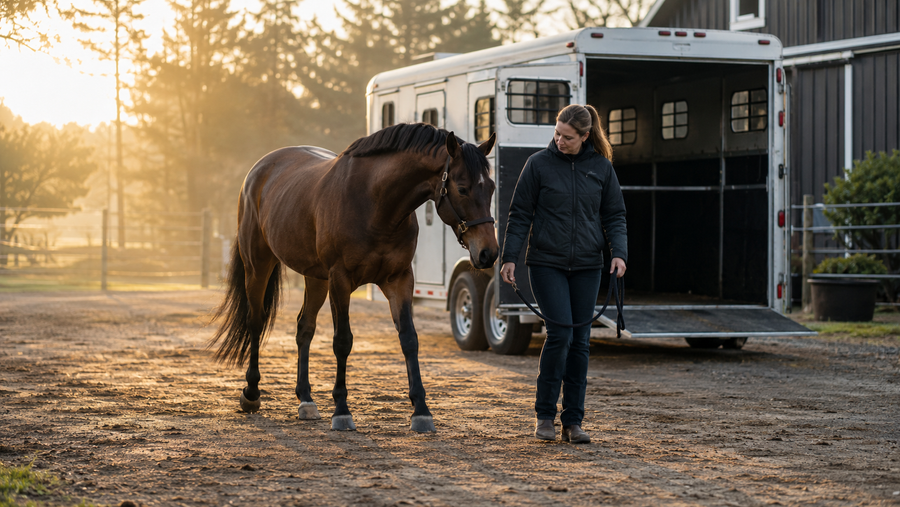
The Day After a Long Haul: What Real Riders Notice
The morning after a long haul, check first steps, feet, legs, back, water, appetite, manure, temperature, attitude, and readiness to work.

Real Rider Resource
Anhidrosis is a partial or complete failure to sweat normally. Because sweating is a horse's primary cooling system, a dry or barely damp coat in conditions that should produce sweat deserves prompt attention.
Quick answer: Stop work, remove tack, move the horse into shade and safe airflow, begin generous cool- or cold-water cooling, and contact your veterinarian when sweating is absent, recovery is abnormal, or heat-stress signs are present. Supplements, beer, electrolytes, and topical products do not make an overheated horse safe to work.
Does beer make a horse sweat? There is no dependable evidence that beer restores normal sweating in every horse with anhidrosis. Owner reports are inconsistent. Beer should not replace shade, airflow, repeated water cooling, workload changes, clean water, or veterinary evaluation.
Stop work, cool actively, and contact a veterinarian promptly when signs are severe, worsening, or not improving.
For the broader cooling routine, use the Hot Weather Horse Care guide.
Anhidrosis can be partial, intermittent, or complete, and other problems can also change sweating, breathing, stamina, or recovery. A veterinarian can evaluate the horse, consider competing explanations, assess heat-illness risk, and help build a plan around climate, workload, travel, housing, diet, and the individual horse.
There is no single treatment that works reliably for every non-sweater. That makes careful observation and repeatable management more useful than changing several products at once.
Electrolytes may belong in an individual horse's veterinary or nutrition plan, especially when sweat losses are substantial. They do not restore sweat-gland function on demand, replace plain water, or make dangerous heat conditions safe.
Start with the Horse Electrolytes Guide and the When Electrolytes Are Not Enough guide.
"Sweat" supplements: Evidence and individual response vary. Discuss any trial with your veterinarian, change one variable at a time, and record what actually changes.
Topical products: Liniments, body washes, and grooming products do not treat anhidrosis or lower a dangerous core temperature. Use ordinary external body care only after the horse is safely cooled and recovering normally.
More work: Exercising harder to force sweat increases heat load. A horse that is not sweating normally should not be pushed through the problem.
Yes. Reduced sweating can be patchy or partial. Compare the horse with its own normal pattern and discuss persistent or concerning changes with your veterinarian.
That decision depends on severity, weather, workload, recovery, and veterinary guidance. In hot or humid conditions, reducing or stopping work may be the safest choice.
Reports are anecdotal and inconsistent. Beer should not replace shade, airflow, repeated water cooling, workload changes, clean water, or veterinary evaluation.
No universal electrolyte plan has been shown to restore normal sweating in every affected horse. Electrolytes can support replacement of sweat losses when used appropriately, but they are not a cure for anhidrosis.
Treat it urgently when the horse is weak, confused, uncoordinated, breathing abnormally, failing to recover, or showing other heat-illness signs. Stop work, begin active cooling, and call a veterinarian.
Educational horse-care guidance only. It does not diagnose anhidrosis or heat illness and does not replace veterinary care.
The morning after a long haul, check first steps, feet, legs, back, water, appetite, manure, temperature, attitude, and readiness to work.
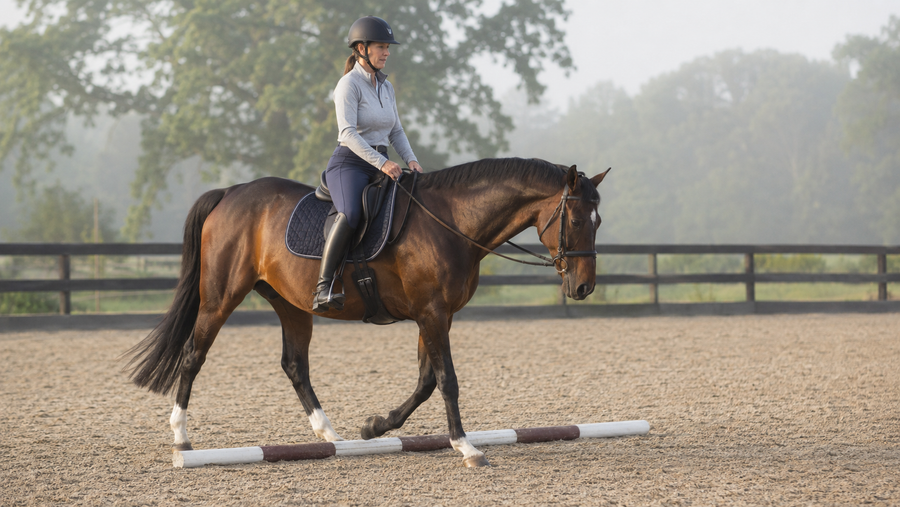
A sticky warm-up can reflect rider timing, tack, footing, fatigue, confusion, or pain. Use the first minutes to simplify, assess, and cha...
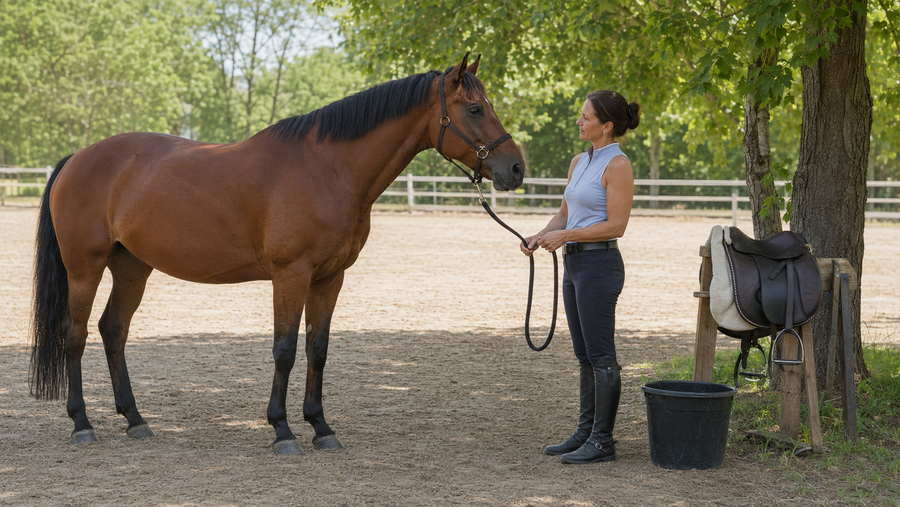
A Real Rider Resource guide for checking heat, workload, recovery, tack, discomfort, and behavior before labeling a summer horse tired or...
!