Real Rider Resource
Horse Stiff After Travel: What to Check Before You Ride
A horse that unloads stiff is telling you something. Sometimes it is normal travel tightness. Sometimes the day needs to slow down. The job is to look first, ride second.
Quick answer: Give the horse time to settle, hand walk, check legs, feet, back, withers, hydration, attitude, and stride before riding. If anything looks painful, unusual, or concerning, stop and get professional help. If it looks like normal post-haul tightness, build a quiet walkout and recovery routine.
Slow down if
- The horse does not want to step forward normally.
- One side looks different from the other.
- The horse seems uncomfortable, dull, worried, or not like himself.
- The horse gets tighter instead of looser with quiet walking.
When the horse gives you a warning, believe the horse.
First checks after unloading
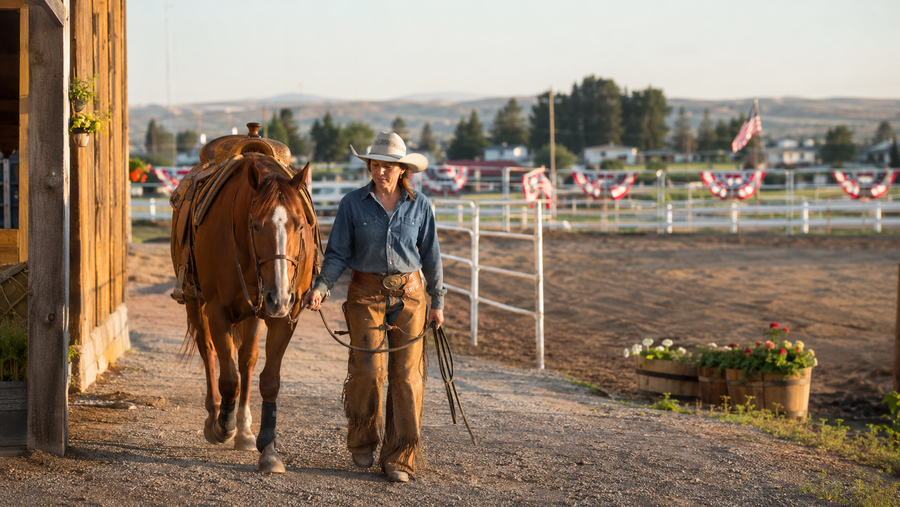
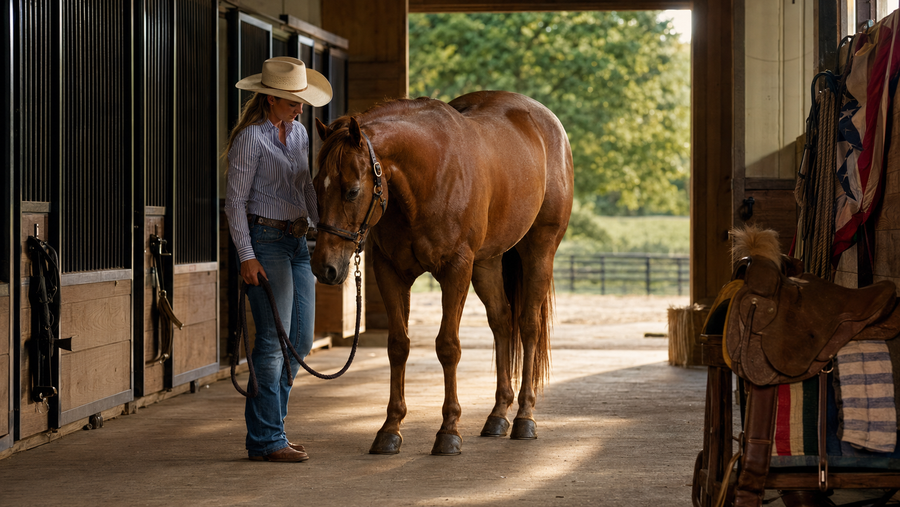
- Stand back and watch. Look at posture, attitude, and willingness to step forward.
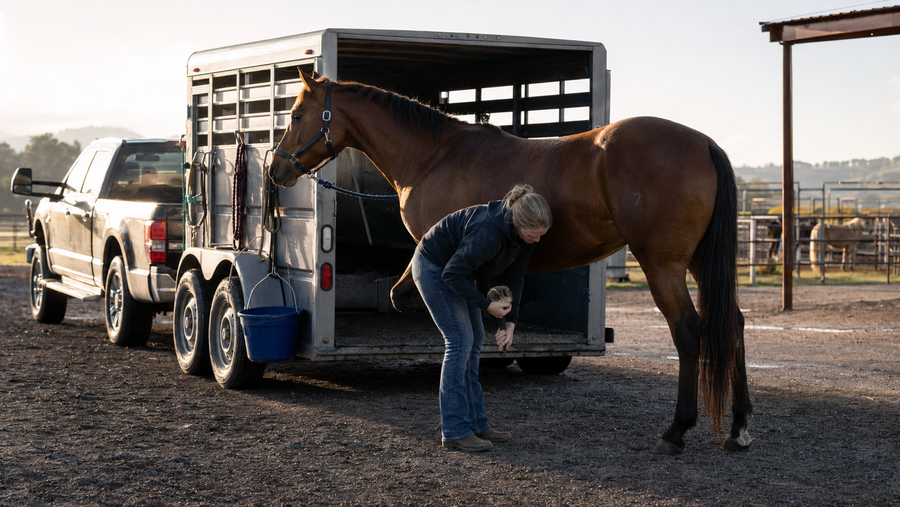
- Check legs. Compare both sides for filling, rubs, heat, or sensitivity.
- Check feet. Look for packed debris, shifted shoes, or obvious soreness.
- Check back and withers. Hauling can make a horse brace through the topline.
- Check water and attitude. Travel stress and reduced drinking can make a horse move tighter.
- Walk before work. Let the horse loosen up before deciding what the day should be.
Recovery lane
If it looks like normal post-haul stiffness
Use a simple routine: quiet hand walking, longer warmup, no rushed work, and a recovery product path that fits stiffness rather than skin or hoof care.
Shop Draw It Out® Liniment Gel Use the Solution FinderSimple post-travel routine
- Unload quietly and give the horse a minute to settle.
- Hand walk before saddling or asking for work.
- Recheck legs, feet, back, and withers after walking.
- Warm up longer than you think you need to.
- Back off if the horse does not loosen up normally.
Product path
- Draw It Out® 16oz Liniment Gel — daily-use recovery lane for stiffness and soreness support.
- Draw It Out® 32oz Concentrate — barn mixing path for repeat use.
- MASTERMUDD™ EquiBrace™ — mud-style support after hauling, work, or heavy training days.
- Horse Stiffness & Movement Support — full recovery collection.
Related guides
Educational support only. If the horse looks painful, abnormal, or unsafe to ride, stop and get professional guidance.