
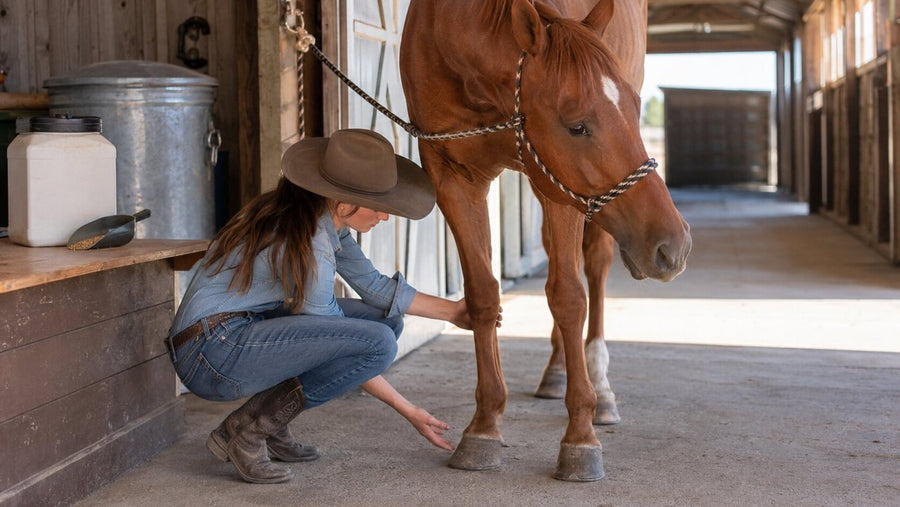
Aug 10, 2026
Horse Liniment vs Joint Supplement: Which Does Your Horse Need?
Compare external horse liniment with daily feed-through joint support and learn when one, both, or professional evaluation comes first.

Real Rider Resource
A swishing tail under saddle is communication. It can mean flies, irritation, cue confusion, tack pressure, fatigue, or discomfort.
Quick answer: One swish may mean nothing. Repeated tail swishing during transitions, collection, leg cues, girthing, or bending is a pattern worth investigating.
Read the timing before you choose a product
First check saddle fit, girth area, skin, cue timing, back, hocks, stifles, and workload. After pain, tack, skin, and veterinary red flags are ruled out, Draw It Out® 16oz Liniment Gel is the simple targeted body-care route. It does not diagnose why a horse swishes its tail.
One bottle — $25.99 • Two Pack — $52 with free U.S. shipping
Get the $52 Free-Shipping Two PackRubbing or irritated-looking skin? Use the Skin Spot Finder
Pattern still unclear? Use the Solution Finder
It can be. Persistent, cue-specific, or new tail swishing should be read as information, especially when paired with resistance or body tension.
Educational support only. Not veterinary advice.
Compare external horse liniment with daily feed-through joint support and learn when one, both, or professional evaluation comes first.
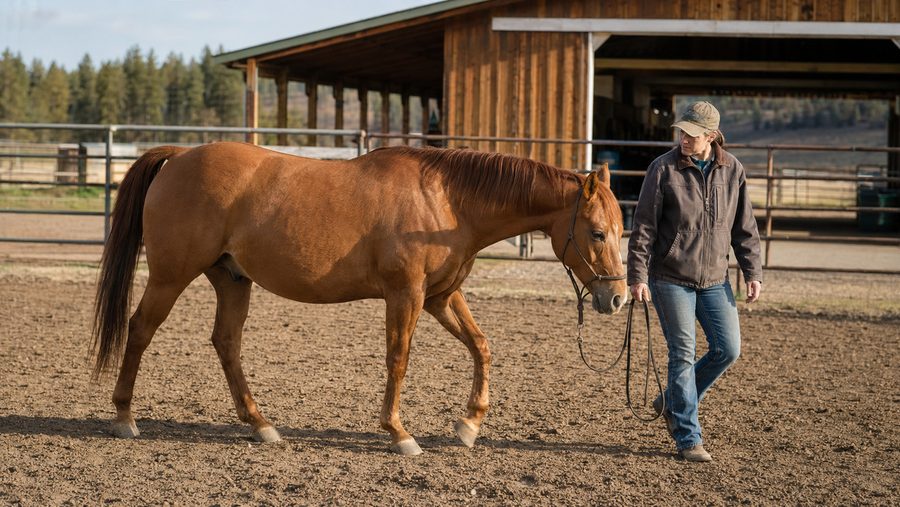
Use this safety-first rider check to separate possible soreness, fatigue, poor conditioning, confusion, and training resistance before ad...
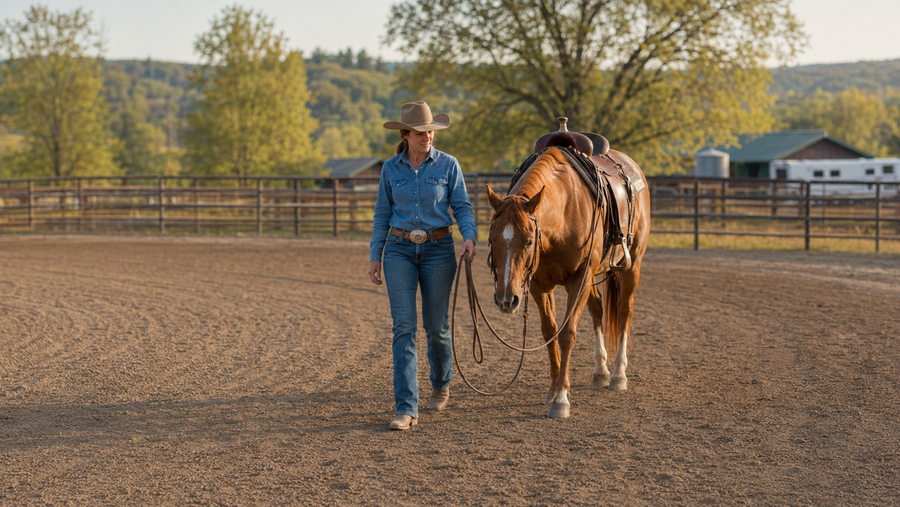
A realistic three-day horse fitness plan with base work, strength and skill, quality effort, recovery days, warning signs, and a sample w...
!