
Aug 28, 2026
When Should You Start a Horse on a Joint Supplement?
There is no universal age to start a horse joint supplement. Use workload, history, mobility, veterinary guidance, label math, and a clea...

Real Rider Resource
OCD is not a simple “sore joint” problem. It is a developmental joint condition that deserves veterinary diagnosis, a clear treatment plan, and honest expectations about work, rehab, and long-term management.
Osteochondritis dissecans, usually shortened to OCD, can be a scary phrase for horse owners because it sits right at the intersection of performance, soundness, young-horse development, veterinary imaging, and long-term expectations.
The mistake is treating it like a normal stiffness issue. It is not. A horse with joint swelling, recurring soreness, or inconsistent lameness needs more than a new bottle from the tack room. The horse needs a diagnosis.
Joint swelling that keeps coming back is information. Do not cover it up. Investigate it.
OCD is a developmental condition involving cartilage and the bone beneath it inside a joint. In some horses, part of that joint surface does not develop normally. That can lead to inflammation, joint fluid, soreness, loose fragments, or performance changes depending on the joint and severity.
It is most often discussed in young horses, but owners may not notice a problem until training starts, workload increases, or a joint begins to show repeated filling or discomfort.
Your veterinarian may start with history, palpation, gait evaluation, flexion tests, and joint assessment. Imaging often matters. Radiographs are commonly used to evaluate bone and joint changes, and some cases may involve ultrasound, referral imaging, or specialist evaluation.
The goal is not just naming OCD. The goal is understanding location, severity, whether a fragment is present, whether the horse is lame, and what kind of future workload is realistic.
Treatment depends on the horse, the joint, the fragment or lesion, clinical signs, future job, and veterinary recommendations. Some cases may be managed conservatively. Others may require arthroscopic surgery, controlled exercise, rest, medication, rehabilitation, or referral to a specialist.
The important part is that treatment is not chosen by barn opinion. It is chosen with veterinary guidance and a clear understanding of the individual horse.
OCD cases test patience. The rider may want the horse back in training. The tissue does not care about the schedule.
Routine barn products do not correct an OCD lesion. That line matters.
What products can do is support the surrounding routine after the real issue is understood: grooming, body checks, post-work care when appropriate, stall hygiene, and general management. Use products to support horsemanship, not to hide warning signs.
Responsible support
For routine movement and recovery education, visit Horse Stiffness & Movement Support and the Horse Health Library. For diagnosed joint disease, always follow your veterinarian’s plan.
Call your veterinarian for recurring joint swelling, lameness, sudden changes in movement, heat, pain, a young horse with repeated joint fill, or a horse that cannot perform normal work comfortably.
Do not wait for a small, repeated pattern to become a big, expensive pattern.
OCD is not something to outguess from the feed room. Diagnose it, understand it, follow the plan, and protect the horse’s long-term future before the workload gets louder than the warning signs.
Educational only. This article is not a substitute for veterinary diagnosis or treatment. Joint swelling, lameness, suspected OCD, or performance-limiting discomfort should be evaluated by a veterinarian.
There is no universal age to start a horse joint supplement. Use workload, history, mobility, veterinary guidance, label math, and a clea...
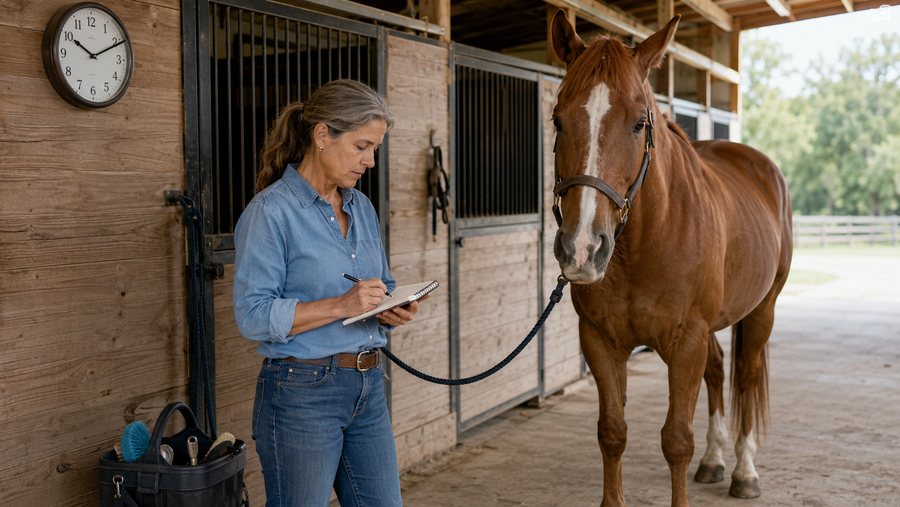
A practical horse symptom timeline and call template that helps owners give veterinarians clear observations without delaying urgent care.
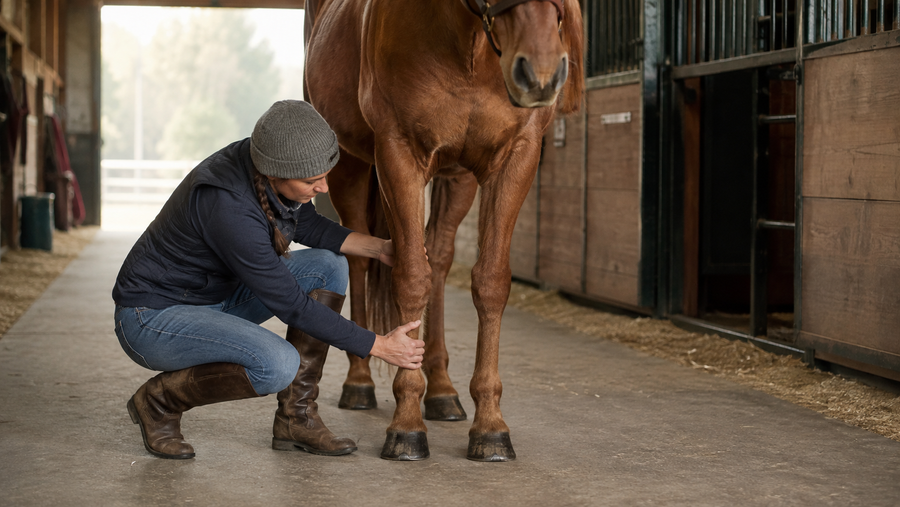
A calm check-first guide for a horse stocked up after standing overnight, including symmetry, heat, movement, skin, wrapping, and veterin...
!