
Jul 26, 2026
Hydrocortisone for Horses: When It Helps and When It Does Not
Can you use hydrocortisone on a horse? Learn what it does, when itching needs a veterinarian, and how to route intact skin versus broken ...

Wet-weather skin guide
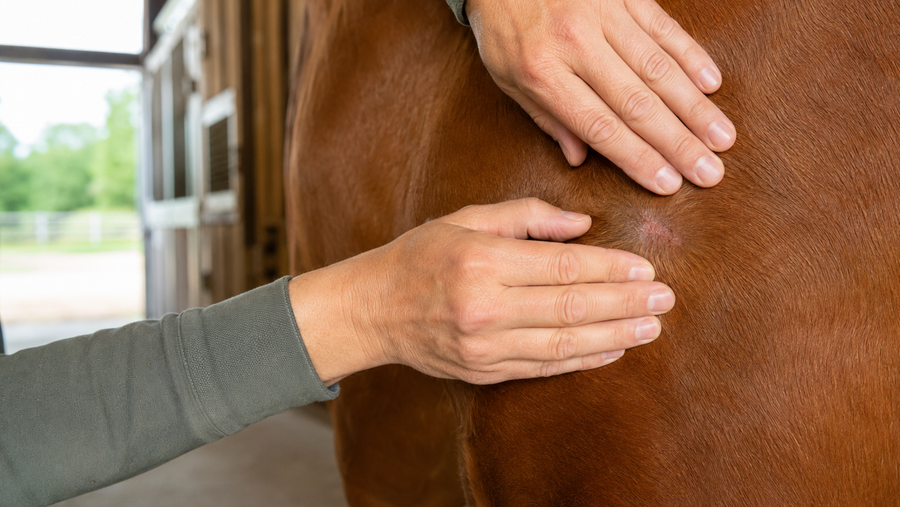
Rain rot often shows up after prolonged wet weather, heavy coats, dirty tack, damp blankets, and skin-barrier stress. The right first move is not aggressive scrubbing. It is a calm check, gentle cleaning, and complete drying.
Quick answer: Rain-rot-looking skin needs a clean, dry, observe-first routine. If the area is painful, spreading, swollen, draining, hot, bleeding, or not improving, involve your veterinarian.
Product path
Rapid Relief Cream supports appropriate external skin-care routines. Rain-rot-looking skin can need veterinary guidance, especially when painful, spreading, draining, swollen, hot, or recurring.
Educational support only. This page does not diagnose, treat, cure, or prevent disease.
Can you use hydrocortisone on a horse? Learn what it does, when itching needs a veterinarian, and how to route intact skin versus broken ...

A Real Rider Resource guide for handling rides that start wrong by simplifying the ask and protecting the horse’s try.

A practical rider checklist for a horse that is not acting normal, covering baseline behavior, appetite, water, manure, movement, legs, f...
!