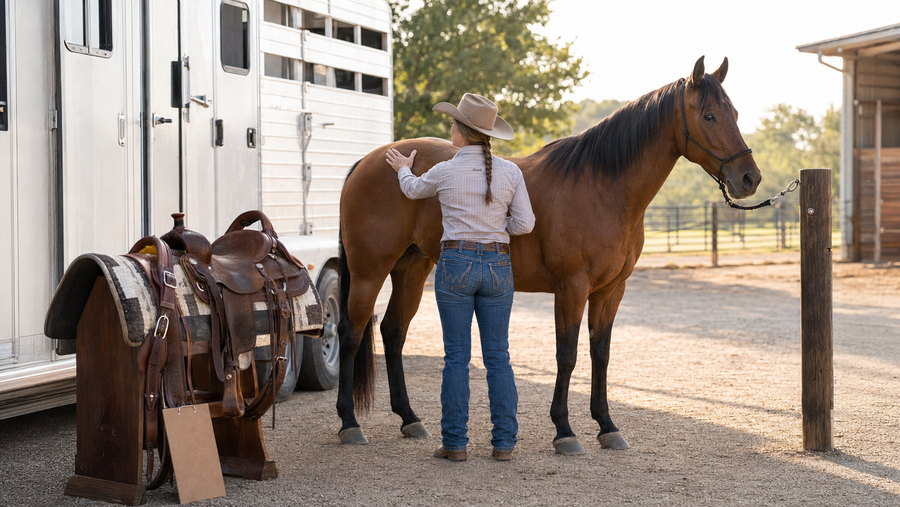
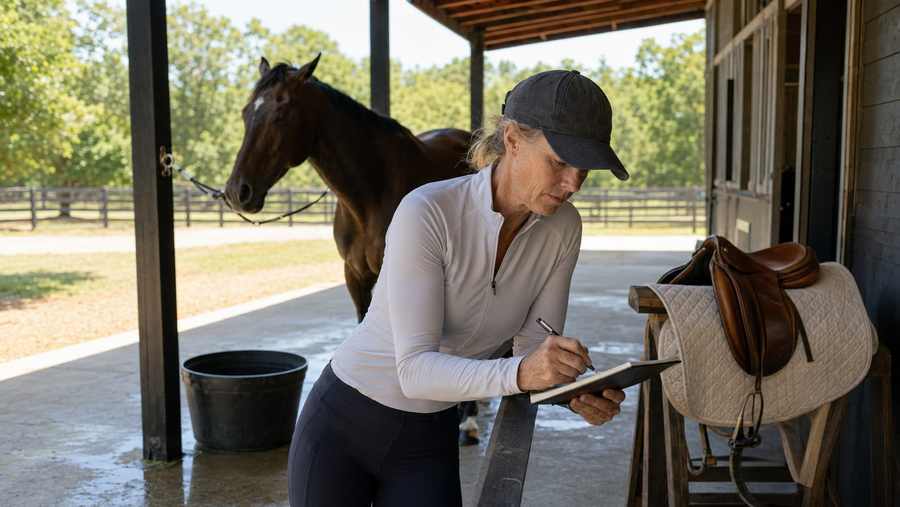
Real Rider Resource
The expensive part is already paid
Most seasons are not lost in one dramatic moment. They are lost in small compromises. The fix is not more stuff. It is a calmer routine you can repeat.

The real cost is not money. It is momentum.
You can spend on the trailer, the training, the entry fees, the fuel, the feed, the farrier, the vet checks, and the time off work. Then you lose your rhythm because recovery became optional.
That is the trap. The investment is already made. The routine is what protects it.
Quiet truth: most problems start as small signals. A horse that takes longer to loosen. A horse that feels different after a day off. A horse that tightens up on a haul.
Those are not emergencies. They are reminders that routine wins.
The calm routine that keeps tomorrow’s ride feeling like today’s
1) The two minute pre ride check
- Walk your horse off in hand for 60 seconds.
- Look for normal, not perfect. Same stride, same willingness, same posture.
- If something feels off, lower the ask before you raise the volume.
2) The honest cool down
- Finish the ride like you mean to ride again tomorrow.
- Do not skip the last ten percent. That is where good rides become repeatable rides.
- Cool down until breathing and attitude are back to baseline.
3) The post ride reset window
This is where calm support fits. Riders who keep things steady use simple, sensation neutral tools that do not distract the horse and do not create drama.
- Keep it controlled. Thin applications beat heavy ones.
- Match the routine to the workload, not the calendar.
- Choose formats that you will actually use consistently.
If you want a structured application reference: use this guide for timing and technique.
4) The next morning reassessment
The next morning tells the truth. Not the adrenaline. Not the show day glow. If stiffness shows up, that is your cue to tighten the routine, not to panic buy products.
- Walk out first, observe, then decide.
- Adjust frequency only when workload changes.
- Track patterns, not single days.
Reduce decision fatigue. Make the routine easy to keep.
The fastest way to lose trust is to create a routine you cannot maintain. The best programs remove friction:
- Keep your core tools where you use them: tack room and trailer.
- Pick the smallest number of tools that fit your real schedule.
- Use prevention as the default, not the reaction.
Need clarity without guesswork? Start here, then build your proactive rhythm.
Prehabilitation is proactive care that helps prevent the conversation you never want to have later.
Where liniment gel fits, without making it complicated
For many riders, liniment gel is a simple part of a calm routine because it is controlled, tidy, and easy to repeat. The goal is not to chase sensation. The goal is to support consistency.
FAQ
How often should a horse recovery routine happen?
Match frequency to workload. Light work may be occasional. Travel, shows, or heavier blocks often benefit from a more consistent structure. The routine should be repeatable, not heroic.
Is a pre ride routine different from a post ride routine?
Yes. Pre ride is a readiness check and calm preparation. Post ride is the reset that protects tomorrow. The best programs do both in small, consistent ways.
What matters most for keeping a season steady?
Reducing decision fatigue. Keep the routine simple enough that you do it on average days, not just on show days.
Informational only. Not intended to diagnose, treat, cure, or prevent disease. Consult your veterinarian, farrier, and saddle fitter for medical or fit concerns.