Quick answer: If a horse is back-sensitive after a long haul, do not assume ordinary travel tightness. Check posture, feet, legs, back, girth area, hydration, appetite, manure, temperature when indicated, and the first steps after unloading. Call the veterinarian for severe or persistent pain, lameness, fever, colic signs, weakness, swelling, wounds, or abnormal breathing.
A horse works throughout the trip. Starting, stopping, turns, road vibration, uneven footing, and long periods of standing require constant balance. A quiet unload does not prove that the horse is ready for hard work.
Watch the Unload
Observe how the horse backs or steps out, turns, lowers the head, and walks away from the trailer. Note short steps, reluctance to turn, a tucked posture, stumbling, weight shifting, or resistance to normal handling.
Start with observation and quiet movement only if the horse is sound and safe.
Check More Than the Back
- Feet: loose shoes, packed material, heat, stronger digital pulses, or hoof damage.
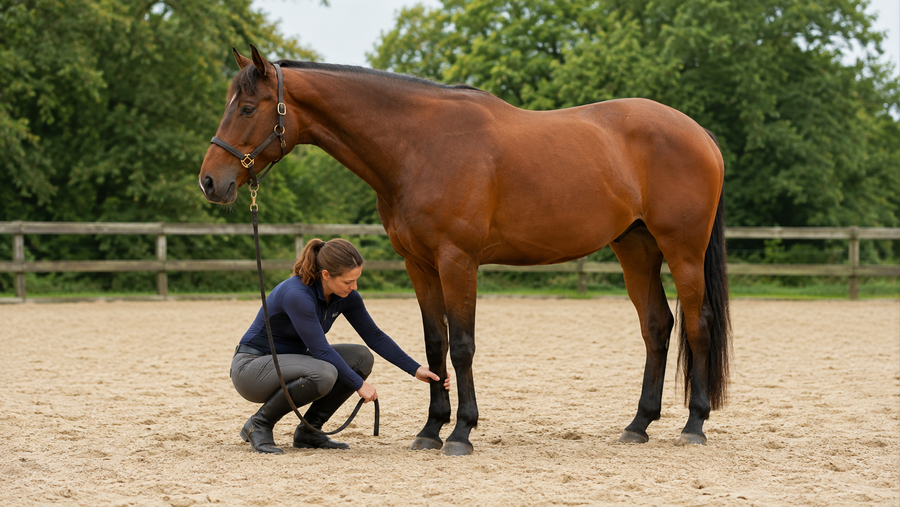
- Legs: filling, heat, wounds, shipping-boot rubs, or uneven weight bearing.
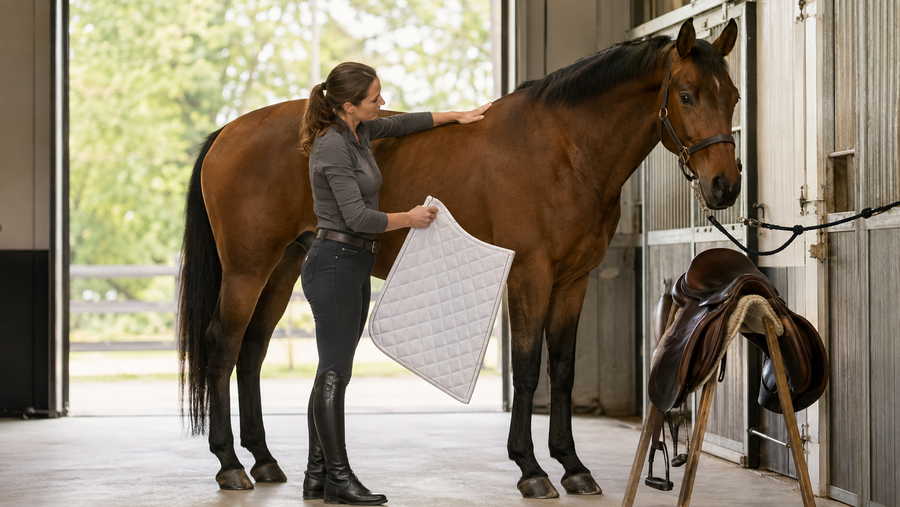
- Back and pelvis: posture, guarding, swelling, rubs, or a new response to light touch.
- Whole horse: appetite, water, manure, temperature when appropriate, attitude, and breathing.
- Equipment: trailer partitions, butt bars, chest bars, mats, bedding, and shipping gear.
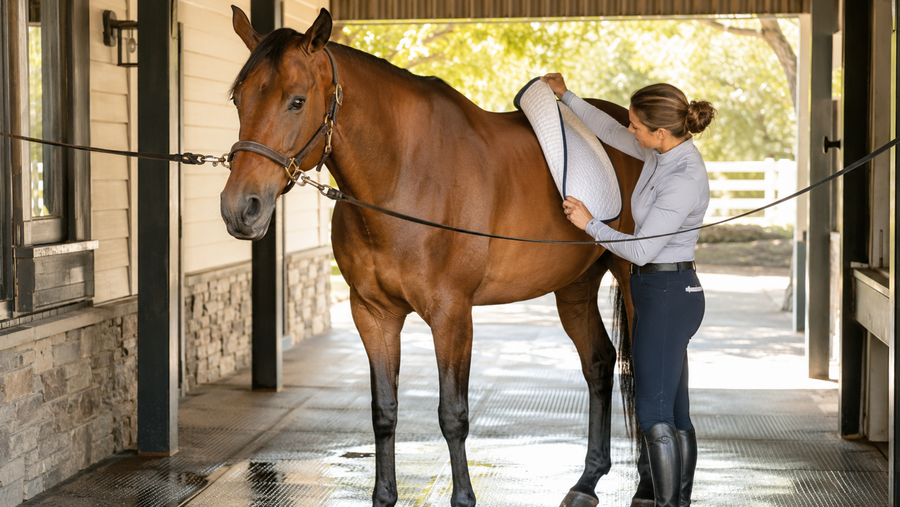
Compare both sides with light, consistent touch. Do not apply deep pressure or force stretching over an area that appears painful.
Review the Trip
Record haul duration, stops, road conditions, ventilation, temperature, water offered, and how the horse stood. Check the trailer for manure distribution, disturbed bedding, rub marks, or evidence of scrambling. This information can help the veterinarian and guide changes before the next trip.
Set the First Day From the Horse
If the horse is normal, a calm walk, turnout, hydration, forage, and rest may be enough. When sensitivity or stiffness remains, skip the planned work and seek guidance. The entry schedule should not determine whether the horse is ready.
Count the haul when planning the horse’s recovery and next session.
Where Draw It Out® Fits
Draw It Out® 16oz Liniment Gel may fit a familiar, label-directed external post-haul routine for an appropriate horse after red flags have been addressed. It does not diagnose back pain, treat an injury, or replace veterinary, farrier, or tack evaluation.
FAQ
Can hauling make a horse back-sensitive?
Standing and balancing during travel can fatigue the body, but sensitivity may also have other causes that require assessment.
Should I ride the day a horse arrives?
Base the decision on the horse, trip, conditions, and recovery. A quiet reset day may be more appropriate than scheduled work.
When should I call the veterinarian?
Call for severe or persistent pain, lameness, fever, colic signs, weakness, swelling, wounds, abnormal breathing, or a horse that is not returning toward normal.
General horse-care education only. This article does not diagnose or treat a horse and does not replace veterinary advice.