How Much Horse Liniment Should You Use? A Thin-Layer Guide
How much horse liniment should you use? Learn the thin-layer standard, what too much looks like, application mistakes, and when a leg needs your veterinarian.

Short answer: A horse clay brace makes the most sense when you want a thick, stay-put post-work layer on the lower legs. A liniment gel makes more sense when you want a fast, clean topical step that can fit into a broader routine. Neither format replaces a veterinary exam when heat, swelling, pain, or uneven movement is new or significant.
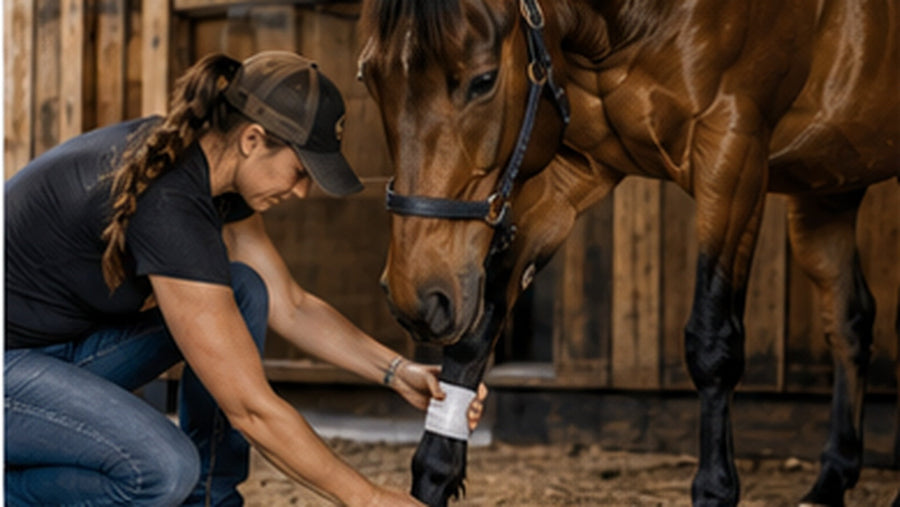
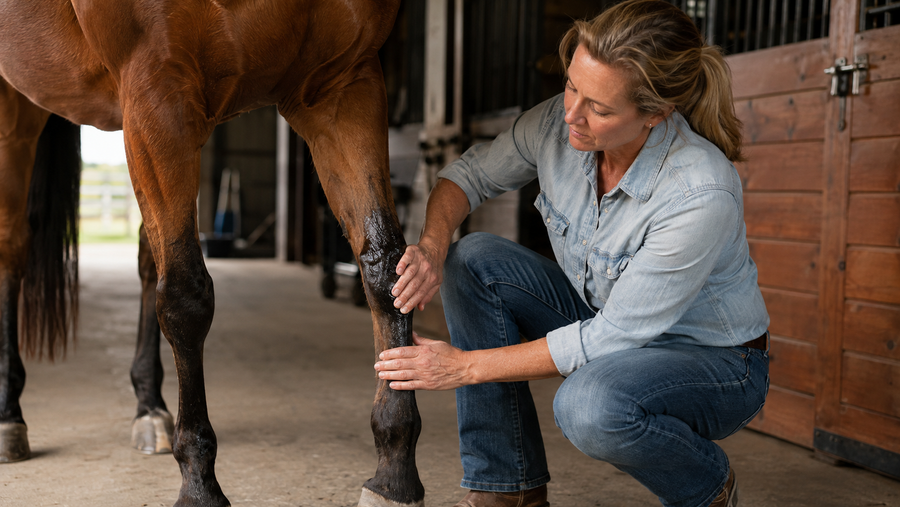
A clay brace is a thick topical product applied to a horse’s lower legs after work. Riders often reach for one after demanding training, hard footing, hauling, or a long show day because the clay stays where it is placed and creates a deliberate wash-rack routine.
MasterMudd™ EquiBrace™ is a pumpable 64oz clay brace made for practical post-work use. Its pump format matters more than it sounds. Cleaner dispensing means less digging through an open tub, less wasted product, and a routine barn staff can repeat.
| Choose | When your priority is |
|---|---|
| Clay brace | A thick, visible, stay-put lower-leg application after harder work |
| Liniment gel | A quick topical step for targeted areas or a regular post-ride routine |
| Both | Two different jobs in one organized recovery station |
Call your veterinarian when you find marked heat, rapidly increasing swelling, a strong digital pulse, broken skin, significant pain, unwillingness to bear weight, or a new uneven gait. A topical routine is for responsible care around the work. It is not permission to train through a warning sign.
The terms are sometimes used loosely in barns, but formulas and directions differ. Follow the exact label for the product in your hand instead of assuming every clay product can be used the same way.
They may serve different jobs, but do not layer products on the same area unless the labels support it. A clean approach is to assign each product a specific area or moment in the routine.
Only when the current label gives directions for covering or wrapping. More product and more compression are not automatically better.
MasterMudd™ EquiBrace™ gives the barn a pumpable, stay-put clay brace for the lower-leg job.
Shop the practical next stepHow much horse liniment should you use? Learn the thin-layer standard, what too much looks like, application mistakes, and when a leg needs your veterinarian.
Before you bandage a horse’s leg, compare heat, swelling, tenderness, skin condition, and movement first. This practical wrapping guide explains when routine bandaging fits—and when to call a...
Separate muscle loss from fat loss, record topline changes, recognize veterinary red flags, and plan nutrition and exercise around the cause.
!