Can You Use Horse Liniment in Hot Weather? A Practical Summer Guide
Can you use horse liniment during the heat of the day? Yes, but the horse's temperature, skin condition, and recovery matter more than the clock. Here is the...

A horse jumping sideways at flies may be irritated, distracted, sore, overreactive, or simply dealing with too much insect pressure. The answer is not always more leg or more discipline. Start by checking the horse.
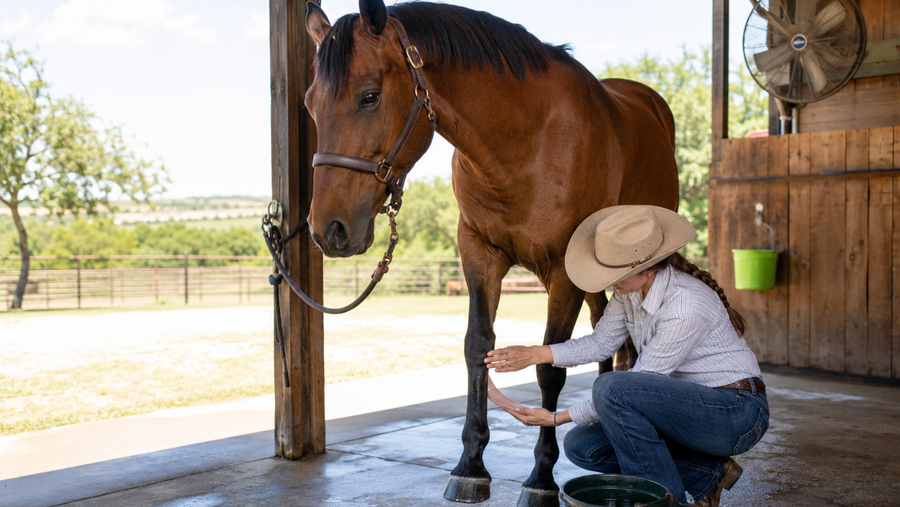
If your horse jumps sideways at flies, check skin, belly, sheath or udder area, ears, eyes, legs, tail rubbing, fly gear fit, sweat, and whether the reaction happens in one place or everywhere. Call your veterinarian for wounds, swelling, eye irritation, hives, severe sensitivity, neurologic signs, or behavior that feels unsafe or abnormal.
Some horses are more reactive to insects than others. Heat, sweat, thin skin, bites, rubs, and poor fly gear fit can make a horse feel trapped in his own skin. When that happens under saddle, the horse may spook, kick, clamp the tail, rush, stop, or jump sideways.
Groom before and after riding. Look under fly gear daily. Check sweat-prone areas before irritation builds. Adjust ride time when insects are worst. If the horse becomes unsafe, stop and reassess instead of drilling through a fight that may not be a training problem.
For learning paths, start with the Horse Health Library and What Does My Horse Need?. If external care support is appropriate after checking skin or post-ride comfort, review the active horse liniment collection.
It may be insect pressure, skin irritation, sweat, fly gear rubs, sensitivity, soreness, or a location-specific trigger.
Not before checking the horse. Address skin, insects, gear, and safety first.
A horse fighting flies may need management before he needs a stronger ride.
Can you use horse liniment during the heat of the day? Yes, but the horse's temperature, skin condition, and recovery matter more than the clock. Here is the...
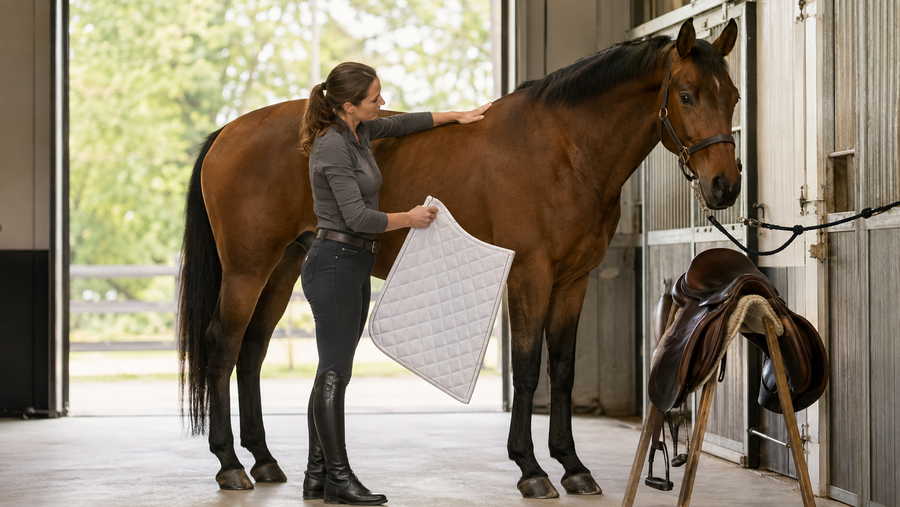
A practical horse health guide for sensitivity after a new saddle pad: sweat marks, dry spots, pad edges, saddle balance, and when to call for help.
Canterbury Park canceled July 26 racing after projected heat indices above 105°F. Here is what riders and horse-event organizers should build into a heat stop-plan.
!