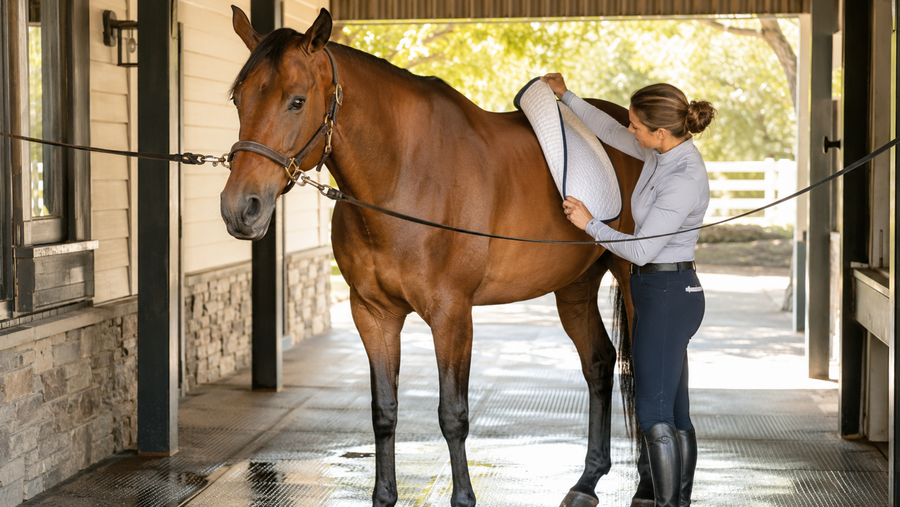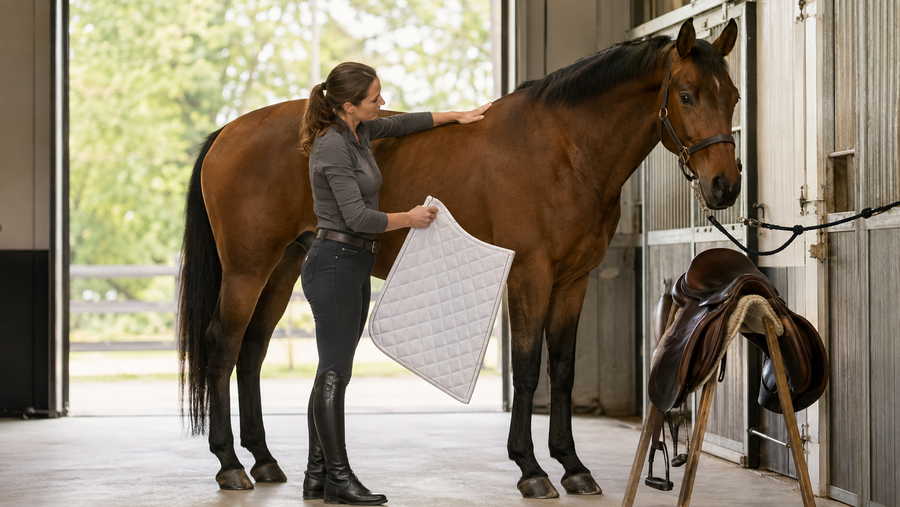
Horse Sensitive After a New Saddle Pad? What Owners Should Check
A practical horse health guide for sensitivity after a new saddle pad: sweat marks, dry spots, pad edges, saddle balance, and when to call for help.

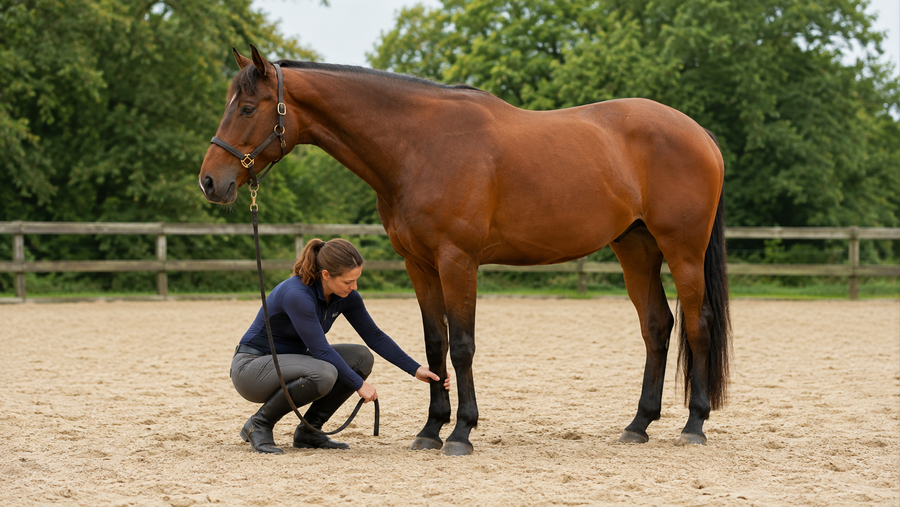
Puffy legs after hauling deserve a real check before you ride. Travel can create filling, but heat, pain, wounds, and uneven movement change the decision.
If your horse’s legs are puffy after hauling, check symmetry, heat, pain, wrap marks, wounds, digital pulse, first steps, hydration, and whether puffiness improves with quiet movement.
After the horse is checked and no red flags are present, Draw It Out® Liniment Gel or Draw It Out® Liniment Concentrate can fit a normal external post-haul leg-care routine.
It can happen after standing, but heat, pain, lameness, wounds, or one-sided swelling require more caution.
Only after the horse moves evenly and the swelling is not hot, painful, abnormal, or worsening.
The ride starts after the horse has been read honestly.
A practical horse health guide for sensitivity after a new saddle pad: sweat marks, dry spots, pad edges, saddle balance, and when to call for help.
A practical horse health guide for fetlock puffiness after deep sand: heat, pain, symmetry, boot marks, footing depth, and vet red flags.
Heat rash under tack can involve sweat, friction, moisture, dirt, pressure, fit, or skin disease. Inspect the area and stop friction before reuse.
!