

Jul 08, 2026
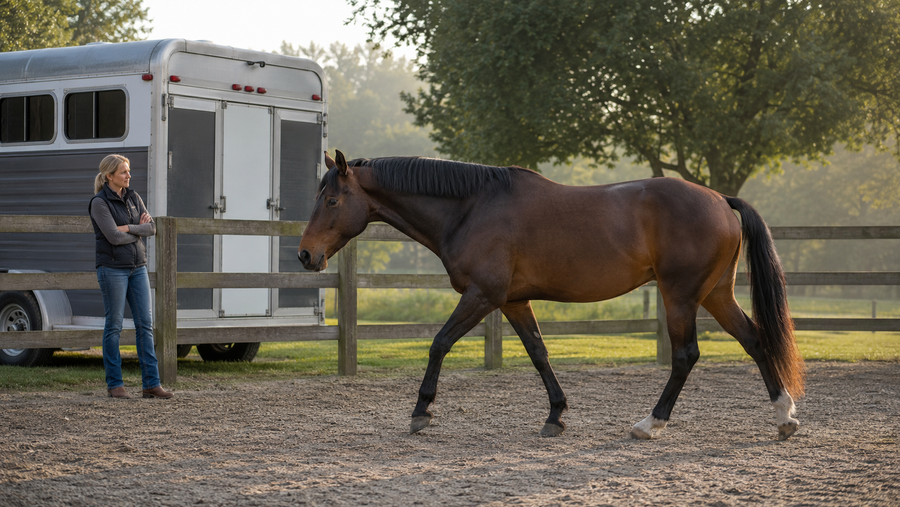
Horse Stiff Behind After Trailer Ramp? What to Notice
A practical horse health guide for hind-end stiffness after a trailer ramp: first steps, ramp traction, body checks, and vet red flags.

A lost shoe is not automatically a crisis, but it is always a check. The hoof, the first steps, and the footing tell you whether this is a simple farrier reset or a no-ride situation.
When a horse loses a shoe, move to safe footing, pick out the hoof, look for loose or embedded nails, torn wall, sole tenderness, heat, digital pulse changes, swelling, and uneven steps. Keep the horse on clean footing, call your farrier, and skip the ride if the horse is sore, off, punctured, bleeding, or not moving normally.
Sometimes, but only if the shoe came off cleanly, the horse is moving evenly, the hoof wall is not meaningfully damaged, the footing is forgiving, and your farrier agrees with the plan. If the horse is lame, protective, tender on turns, or missing a front shoe on hard ground, do not ride.
Draw It Out® is not a substitute for a farrier or veterinarian. For hoof and skin care around the foot, Silver Hoof EQ Therapy® is the clearest product tie-in. If the lost shoe came during work, turnout, or a slip and you are also monitoring the leg above the hoof, Draw It Out® Liniment Gel or Draw It Out® Liniment Concentrate can fit the normal external leg-care routine after the horse checks clean.
Move to safe footing, pick out the hoof, check for loose or embedded nails, compare the opposite foot, and watch movement on level ground.
Only if footing is safe and the horse is comfortable. Rocky, muddy, frozen, or high-energy turnout can make hoof damage worse.
Call your farrier for shoe and hoof-wall concerns. Call your veterinarian for lameness, puncture risk, heat, swelling, severe pain, or inability to bear weight.
A clean lost shoe may be manageable. A sore horse is telling you the answer is no.
A practical horse health guide for hind-end stiffness after a trailer ramp: first steps, ramp traction, body checks, and vet red flags.
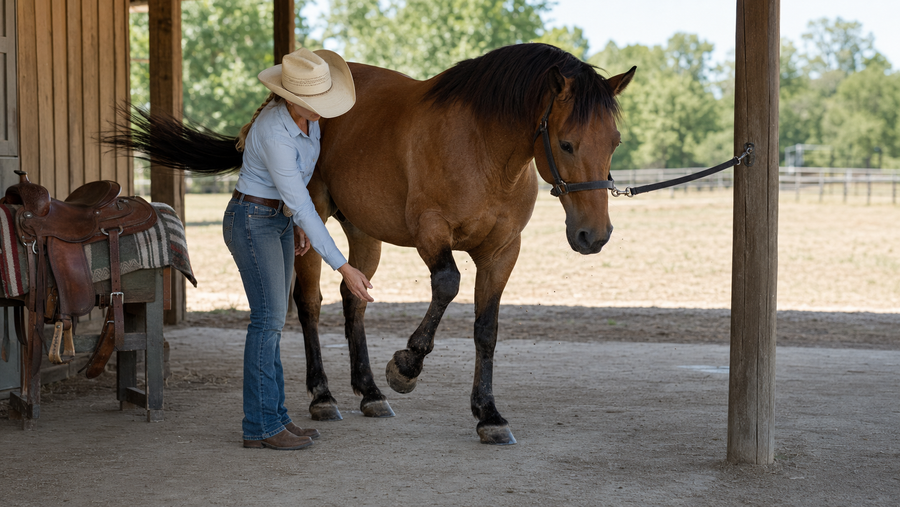
Before you ride in fly season, check the legs, belly line, sweat, turnout spots, tack area, and fly-control routine so stomping does not ...
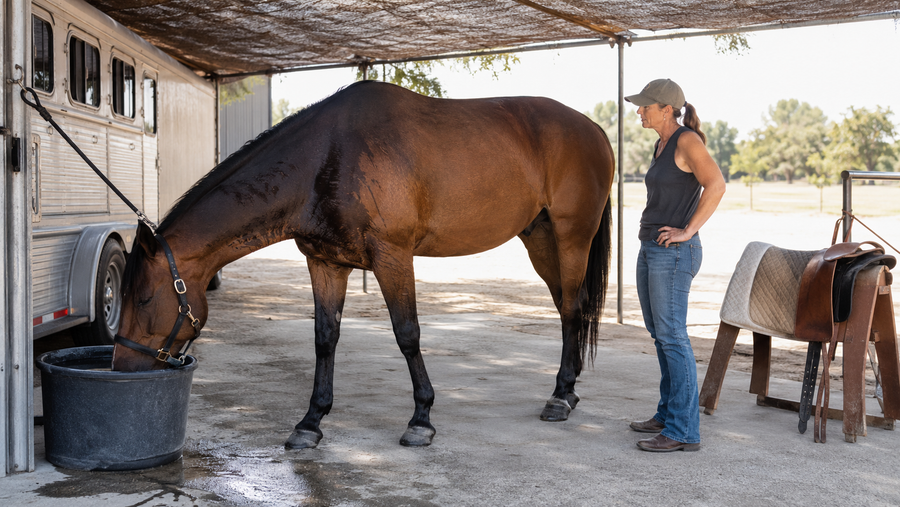
A practical horse electrolyte guide covering diet, water, salt, heat, humidity, hauling, sweat, recovery, and urgent veterinary signs.
!