Can You Use Horse Liniment in Hot Weather? A Practical Summer Guide
Can you use horse liniment during the heat of the day? Yes, but the horse's temperature, skin condition, and recovery matter more than the clock. Here is the...

Stocked up legs after turnout in heat can look mild, but they still deserve a clear check. Heat, standing, insects, workload, sodium balance, footing, and small injuries can all change how legs look and feel.
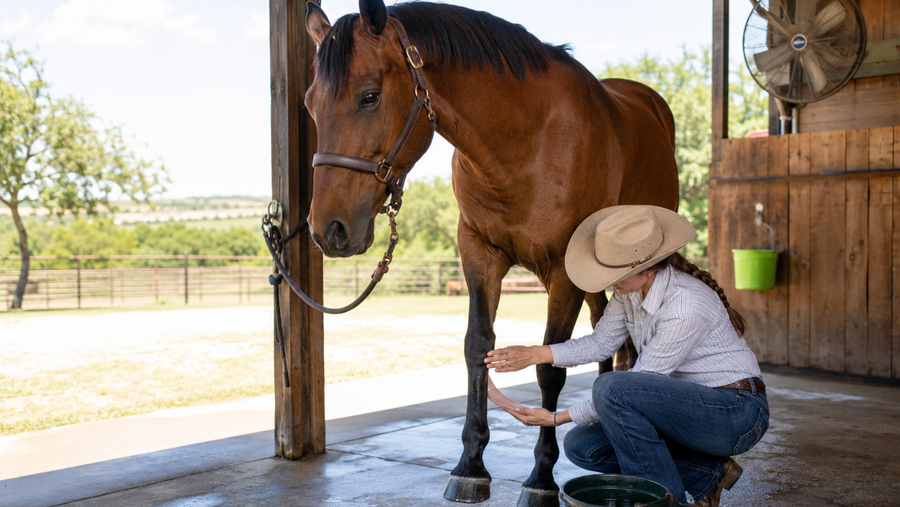
If your horse stocks up after turnout in heat, check whether swelling is even, soft, hot, painful, one-sided, or paired with lameness. Watch movement, digital pulse, wounds, bug bites, water, salt, and whether swelling improves with gentle movement. Call your veterinarian for heat, pain, lameness, one-sided swelling, fever, wounds, or swelling that does not resolve.
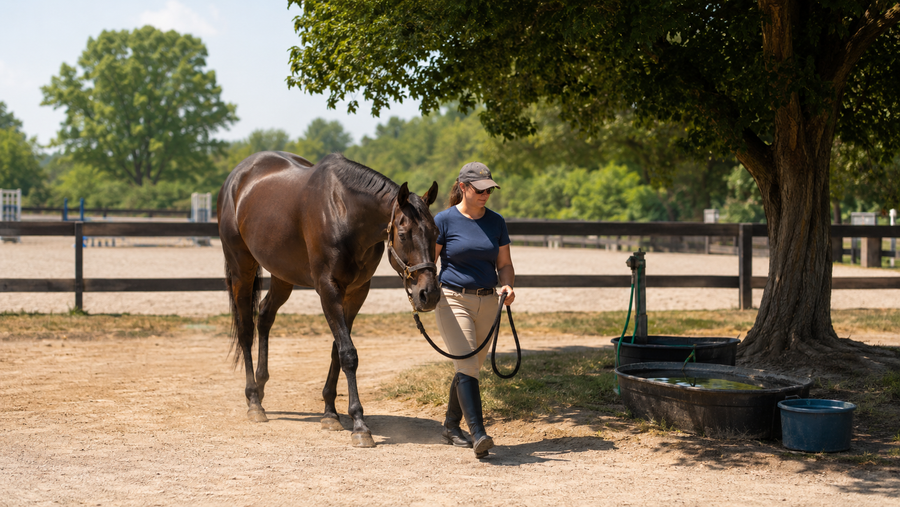
Summer turnout can mean more standing in shade, more insects, harder or wetter ground, and different water or salt needs. Mild filling can show up after routine changes, but heat and swelling together require caution.
Bring the horse in calmly. Check all four legs by hand. Walk the horse if safe. Recheck after movement. Record temperature, turnout time, work the day before, water, salt, and footing. If anything feels hot, painful, uneven, or abnormal, call your veterinarian.
Use the Horse Health Library and What Does My Horse Need? guide to sort recovery and leg-care routines. For external support after appropriate checks, review the active horse liniment collection.
Sometimes mild filling can happen, but heat, pain, lameness, wounds, or one-sided swelling need veterinary attention.
Not until you have checked the legs and movement. Call the vet if swelling is hot, painful, uneven, or abnormal.
Check with your hands, compare sides, and do not guess through heat or pain.
Can you use horse liniment during the heat of the day? Yes, but the horse's temperature, skin condition, and recovery matter more than the clock. Here is the...
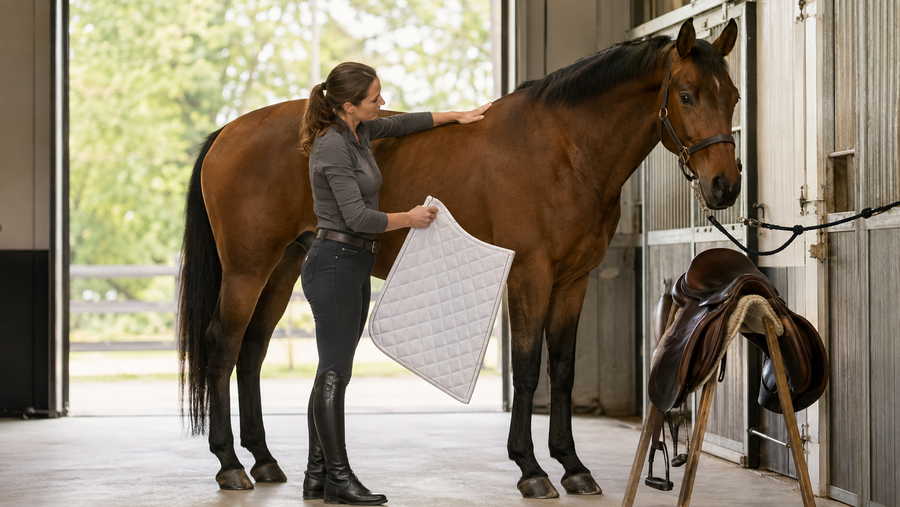
A practical horse health guide for sensitivity after a new saddle pad: sweat marks, dry spots, pad edges, saddle balance, and when to call for help.
Canterbury Park canceled July 26 racing after projected heat indices above 105°F. Here is what riders and horse-event organizers should build into a heat stop-plan.
!