Spring Foot Placement Changes in Horses: Why Precision Drops Before Lameness Shows Up
Sometimes the first spring warning is not lameness. It is less precise foot placement, muddier transitions, and a horse that feels less e...
Horse Health • Summer Barn Routine
Humidity changes the barn. Coats stay tacky. Sweat dries slower. Tack marks hang around longer. Skin that looked fine yesterday can start talking today.
Short answer: In humid barn weather, check your horse’s girth area, chest, elbows, flanks, saddle area, mane base, tailhead, and lower legs for trapped sweat, tack pressure, rubbing, heat, swelling, odor, hair loss, crusting, or new sensitivity. Clean, dry, check early, and adjust work or tack before irritation builds.
Heat gets the attention. Humidity does the quiet damage.
When the air is heavy, sweat and rinse water do not leave the coat as fast. Dust sticks. Tack areas stay damp. Hair lays flat. A horse that normally dries clean can suddenly carry moisture under the girth, behind the elbow, along the saddle line, or down the legs.
This is not a reason to panic. It is a reason to look sooner.
The mistake is treating humidity like normal weather. The better move is giving the horse an extra minute before and after work.
For a related tack-pressure check, read Girth Area Sweat Marks on Horses. For warm-weather cooling context, read Horse Still Hot After Untacking?
Humidity is not solved by a bottle. It is managed by a routine. That matters.
Draw It Out® 16oz Liniment Gel fits when you want a stay-put, sensation-free liniment gel for normal post-work horse-care routines. It is not a shortcut around cleaning, drying, tack fit, or veterinary care. It is a practical piece of the daily recovery routine.
For barns managing multiple horses, the horse liniment gel collection gives you size options for daily use, travel, and barn-size routines.
A little sweat mark is information. A sore, hot, swollen, open, spreading, or foul-smelling area is a different conversation.
Skip the ride and call your veterinarian or trusted professional if you see open wounds, fast-spreading irritation, significant swelling, heat with lameness, drainage, fever, or behavior that feels clearly out of character.
Use a simple rule for humid weather: check the places moisture hides before the horse tells you louder.
Humidity slows drying. Sweat, rinse water, dust, and tack pressure can stay against the coat longer, especially under the girth, saddle area, elbows, mane base, tailhead, and lower legs.
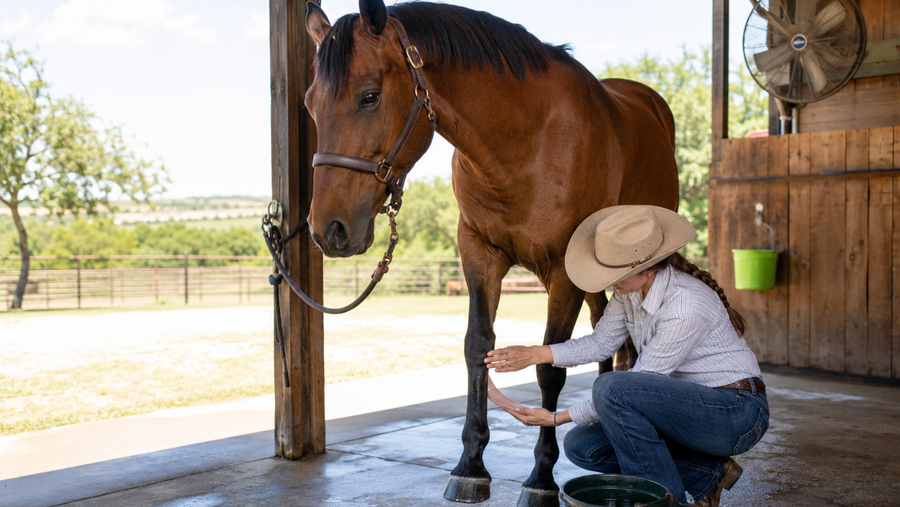
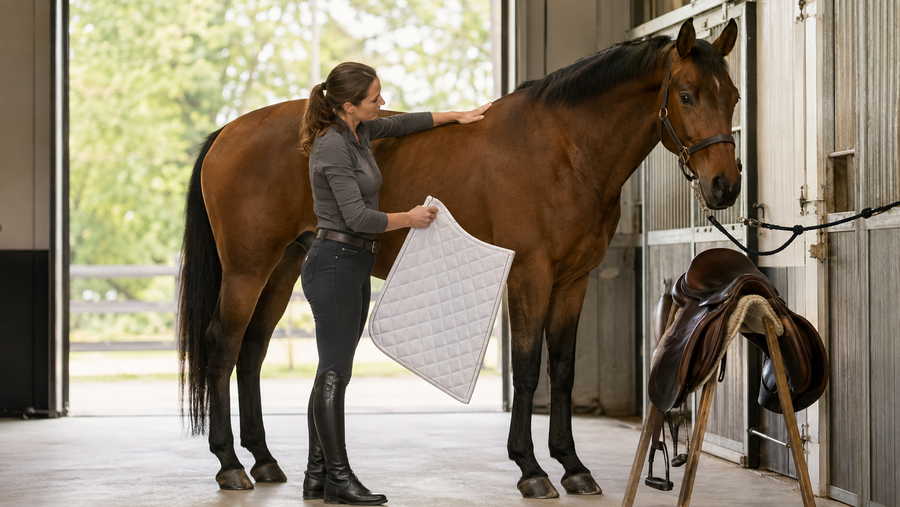
Start with the girth area, behind the elbows, saddle area, chest, shoulders, mane base, tailhead, and lower legs. These areas commonly trap moisture, sweat, dirt, or tack pressure.
Use judgment. Small pressure marks may mean adjusting tack, cleaning better, or giving the area time. Do not ride over open, hot, swollen, painful, spreading, or draining irritation.
Liniment gel fits as part of a normal post-work recovery routine after the horse is properly cleaned and dried. It does not replace grooming, drying, tack adjustment, or veterinary care.
This article is educational and is not veterinary advice. Always follow product labels and contact your veterinarian for serious, worsening, or unusual symptoms.

Sometimes the first spring warning is not lameness. It is less precise foot placement, muddier transitions, and a horse that feels less e...

If your saddle suddenly feels less secure in spring, coat transition, loose hair, early sweat, and shifting friction may be changing tack...

Big claims get attention. Fine print tells the truth. This guide shows riders how to compare horse care labels by reading the promise, di...
!