Cold Weather Horse Stiffness Checklist
Cold days change footing, turnout, hydration, tack fit, and the first minutes of movement. The right response is not a rigid warm-up time. It is a better baseline check and a ride that progresses only when the horse does.
Quick answer
Before riding a horse that looks stiff in cold weather, watch the first steps, check every leg and foot, assess the back and shoulders, inspect footing, and begin with quiet straight-line walking. The horse should become more comfortable and coordinated as the warm-up progresses. If movement stays uneven, worsens, or includes pain, heat, swelling, unwillingness to bear weight, or neurological signs, stop and involve a veterinarian.
Cold weather is usually more than temperature
A winter horse may have less turnout, drink differently, carry a heavier coat, wear blankets, stand longer, walk on frozen mud, or work in deeper indoor footing. Fitness and workload may change too. Any of those factors can affect how the first steps look. Do not assume “the cold” explains every change, and do not assume a horse must work through it.
The useful question is whether the horse returns toward its normal baseline with appropriate movement - or whether the pattern remains, becomes asymmetric, or deteriorates.
Before you saddle
Watch the first 20 steps
Look for a shortened stride, toe drag, head movement, hip hike, reluctance to turn, poor tracking, or a horse that is simply cautious on the surface.
Check every leg
Compare left to right for heat, filling, tenderness, cuts, scabs, boot pressure, or a digital pulse that differs from normal.
Pick and inspect the feet
Remove packed snow, ice, frozen mud, bedding, and stones. Check shoes, traction devices, soles, and the footing the horse must cross.
Check the back and tack
Blanketing, coat, body condition, and topline changes can affect saddle fit. Notice rubs, dry spots, defensiveness, or a saddle sitting differently.
Footing decides how much you should ask
- Frozen ground: hard, uneven impact and hidden ruts may justify changing the plan.
- Deep footing: demands more effort and can fatigue an unconditioned horse quickly.
- Slick footing: turns normal work into a balance problem. Do not use the ride as a traction test.
- Frozen mud or snowballs: can change hoof landing and stride before the horse reaches the arena.
- Indoor dust: may change respiratory comfort even when the temperature feels manageable.
If footing is unsafe, the answer is not a more aggressive warm-up. Choose hand walking on safe ground, controlled turnout, another location, or a rest day.
A progressive cold-weather warm-up
- Start straight and simple. Walk on safe, level footing and let the horse find a regular rhythm.
- Use large lines. Add broad turns before circles, lateral work, collection, speed, hard stops, or repeated patterns.
- Add short transitions. Ask a small question, then evaluate the answer. The horse should become more willing and coordinated.
- Recheck both directions. Notice whether one side, lead, turn, or gait remains different.
- Let improvement earn intensity. Do not move to harder work because the clock says the warm-up is finished.
Improve, stay the same, or worsen?
Improves steadily
The stride becomes freer, rhythm more even, and attitude more willing. Continue progressively while watching fatigue and footing.
Stays unchanged
Do not keep increasing pressure to force a different answer. End the work, reassess feet, legs, back, tack, and the need for professional input.
Worsens
Stop. A horse that becomes more uneven, painful, reluctant, weak, or uncoordinated is not having an ordinary warm-up issue.
Changes with footing
That is useful evidence, not permission to test harder. Record the surfaces, direction, and gait, then share the pattern with the right professional.
Red flags that end the ride
- Obvious or increasing lameness.
- Unwillingness to bear weight normally.
- Marked heat, swelling, pain, trauma, or a strong abnormal digital pulse.
- Weakness, stumbling, incoordination, collapse, or unusual mental status.
- Fever, respiratory distress, colic signs, or behavior clearly outside normal.
- A problem that repeatedly returns despite rest and a sensible warm-up.
Hydration and standing time still matter in winter
Cold-weather horses may drink less when water is very cold, unfamiliar, frozen, or difficult to reach. Reduced turnout and longer standing can also change leg fill and first-step stiffness. Keep clean water available, monitor intake and manure, maintain an appropriate forage and electrolyte plan with veterinary guidance, and give the horse safe opportunities to move.
Do not use topical care as a substitute for turnout, conditioning, hoof care, tack fit, hydration, or diagnosis. Those pieces set the stage for whether a winter routine works.
After the ride and the next morning
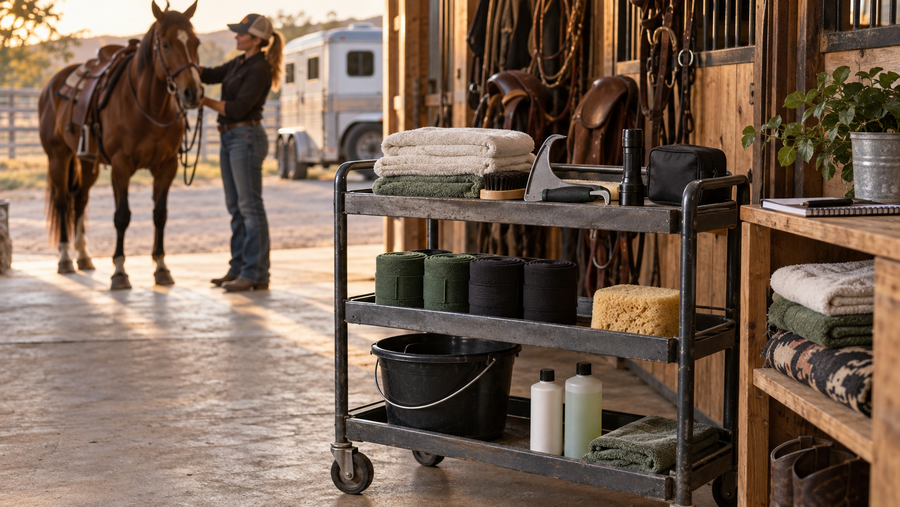
Cool the horse gradually and prevent a sweaty coat from becoming chilled. Use towels, airflow, a breathable cooler, and blanket changes as conditions require. Check legs, feet, back, shoulders, girth area, hydration behavior, and attitude before putting the horse away.
The next morning, watch the horse leave the stall or pen before grooming hides the first steps. Compare the same areas again. A horse that is stiffer, more filled, or less willing after rest needs a changed work plan and may need professional evaluation.
Targeted support after the safety check
Draw It Out® 16oz Liniment Gel is the ready-to-use, stay-put format riders commonly choose when targeted daily horse care fits the plan. It is odorless, colorless, sensation-free, and made without menthol, camphor, capsaicin, alcohol, witch hazel, or DMSO.
See the 16oz Liniment GelUse the Solution FinderCold-weather stiffness FAQ
How long should I warm up a horse in cold weather?
There is no universal number. Start with quiet walking and progress only while the horse’s movement, rhythm, and willingness improve. Age, fitness, footing, workload, and health all change the answer.
Should a stiff horse always improve with movement?
No. Some ordinary first-step stiffness may improve, but pain or lameness can remain or worsen. Stop if the horse does not trend toward normal or shows red flags.
Can blankets cause stiffness?
A poorly fitted blanket can rub or restrict movement, while body and topline changes beneath a blanket can also affect tack fit. Inspect the horse and equipment rather than assuming temperature alone is responsible.
Can I apply liniment before riding?
Only according to the specific product label. A topical does not replace the first-step check or progressive warm-up and should not be used to cover unexplained pain.
Get practical horse-care guidance
Join the Draw It Out® herd for rider-first notes on stiffness, hauling, skin, hoof care, and recovery routines.
Educational information only. This article does not diagnose or treat a horse and does not replace veterinary advice. Follow current product labels and event rules.