


Jul 13, 2026
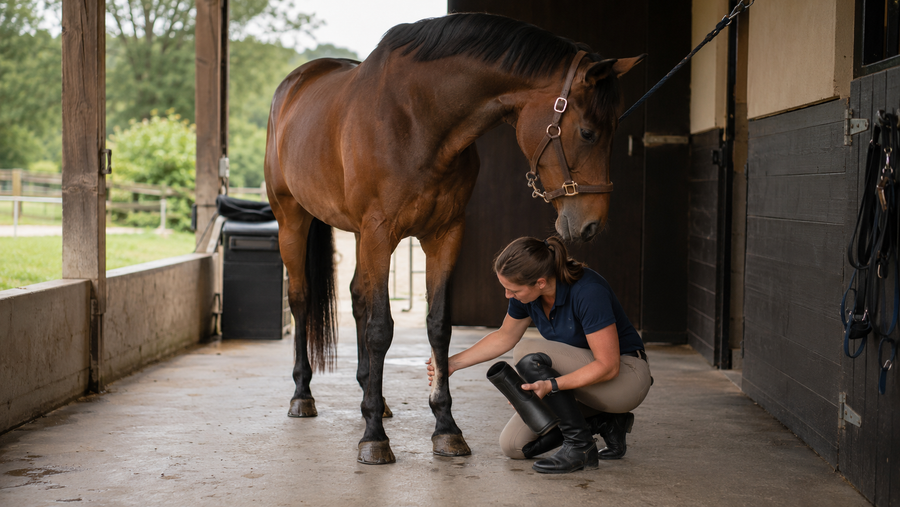
Horse Skin Scabs Under Boots? What Owners Should Check
A practical horse health guide for skin scabs under boots: boot fit, trapped sweat, dirt, rub lines, skin checks, and when to call the vet.

When you’ve poured months of work into training and invested thousands in entries, the last thing you want is a disqualification because of what’s in your liniment. This guide gives you a quick way to vet labels and avoid banned substances—plus a printable barn card you can tack up in your aisle.
FEI and USEF rules are clear: banned substances mean penalties. Even products labeled “naturally derived” can contain ingredients that test. Knowing what to avoid—and what’s safe—keeps your ride legal and your horse comfortable.
| ✅ competition-conscious Signs | 🚫 Risk Signs |
|---|---|
| Mineral base | Menthol, Capsaicin |
| Aloe carrier | “Hot/Icy” claims |
| No smell or mild herbal scent | Strong camphor/chemical smell |
| FEI/USEF compliance noted | Vague “proprietary blend” |
Our liniment gel and concentrate are built with competition-conscious ingredient choices; current-rule verification still applies, sensation-free, and trusted by riders worldwide. Keep relief simple, safe, and effective with Draw It Out® 16oz Gel.
Topical menthol is often restricted or viewed as a “masking” agent under FEI/USEF rules. It’s safest to avoid it entirely in competition. Always check the rulebook and your labeling.
These are red flags—“cooling,” “warming,” or “icy/hot” claims typically imply menthol, camphor, or capsaicin. Use caution and read the full ingredient list.
Testing frequency varies by competition and division, but even small risks are enough to disqualify you—so it pays to be safe and consistent.
A practical horse health guide for skin scabs under boots: boot fit, trapped sweat, dirt, rub lines, skin checks, and when to call the vet.
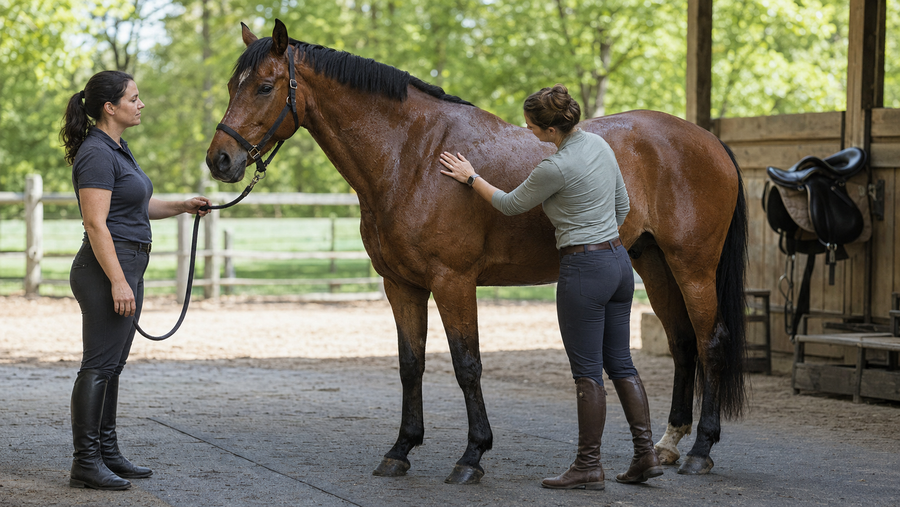
Quick answer: If a horse’s muscles quiver after work, stop the session, cool and observe the horse, and check breathing, attitude, moveme...
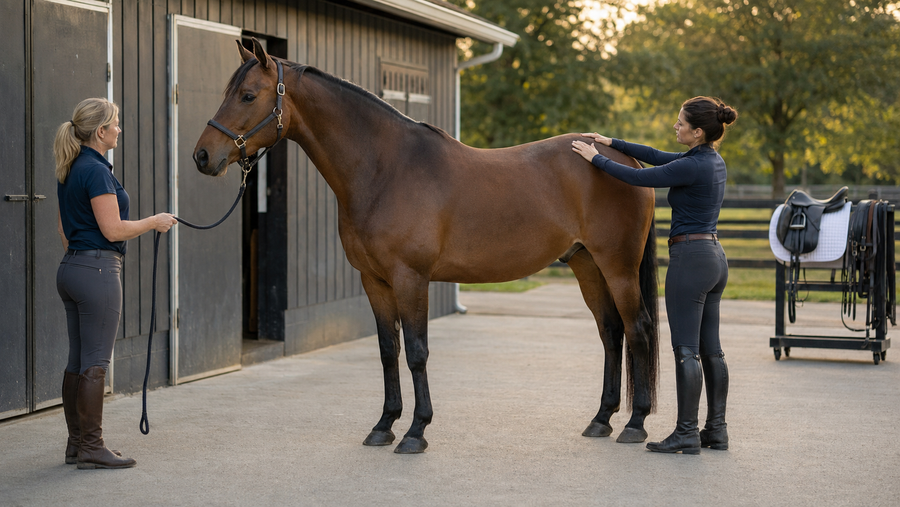
A practical rider-first guide to lower back tightness after canter work: what to check in the saddle, loin, hind end, footing, transition...
!