Horse Sensitive After a New Saddle Pad? What Owners Should Check
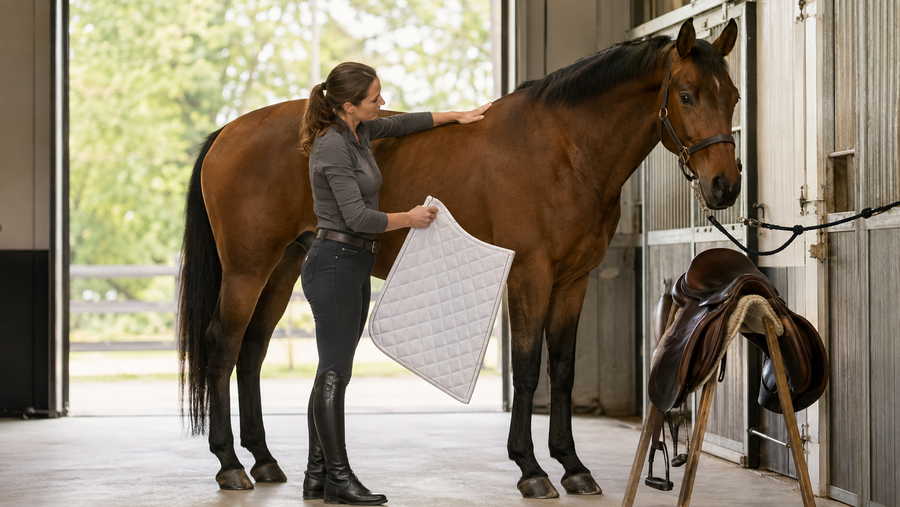
A practical horse health guide for sensitivity after a new saddle pad: sweat marks, dry spots, pad edges, saddle balance, and when to call for help.

Good horses will often keep giving long after their body has started asking for a quieter day. The rider who notices early gets to make better decisions before small soreness turns into a bigger interruption.
Your horse may need an easier day if they feel slower to warm up, more guarded under saddle, reluctant to bend, uneven in transitions, unusually dull, reactive to touch, or slower to recover after normal work. One off day does not always mean a crisis. It does mean the horse deserves observation, rest, and a practical recovery routine.
This is not about making every tired step dramatic. Horses are athletes, and athletes have heavy days. The goal is to separate normal post work fatigue from the kind of pattern that deserves a change in plan.
Soundness is not only built in the hard work. It is built in the judgment around the hard work. A lighter day after a demanding ride, haul, show, turnout change, or weather shift can protect confidence, movement quality, and long term consistency.
Watch how your horse starts, turns, backs, and transitions before assuming they are simply being lazy.
One tired day is useful information. The same tiredness three rides in a row is a louder signal.
A repeatable post work check gives you a baseline for what is normal for your horse.
Draw It Out® is built for practical recovery routines, not panic buying. The goal is to help riders support everyday muscle, joint, and body care with naturally derived products that fit real barn life.
For help choosing the right format, start with the Solution Finder or build a smarter daily routine with the Horse Prehabilitation Guide.
Call your veterinarian if your horse is clearly lame, unwilling to bear weight, swollen, hot in one limb, painful to touch, feverish, off feed, colicky, neurologic, or not improving with rest. A routine is useful. A routine is not a replacement for veterinary care.
The best horsemen do not only ask, “Can the horse do it today?” They ask, “What will this horse need tomorrow if I ask for it today?” That question builds better rides, better recovery, and better trust.
Look for changes from their normal baseline, including slower warm up, shorter stride, reluctance to bend, unusual attitude, sensitivity during grooming, or slower recovery after work.
That depends on the horse and the severity. Light movement may help some horses loosen up, but clear lameness, pain, swelling, or worsening stiffness should be evaluated by a veterinarian.
Cool the horse out properly, clean and dry the coat, check legs and major muscle groups, offer water, observe recovery, and choose a support routine that fits the work performed.
Draw It Out® products can fit into everyday post work body care routines when used as directed. They are not a substitute for veterinary care when a horse is injured, sick, or clearly lame.
This article is educational and is not veterinary advice. Always follow product labels and contact your veterinarian when your horse shows signs of injury, illness, severe pain, or a problem that does not improve.
A practical horse health guide for sensitivity after a new saddle pad: sweat marks, dry spots, pad edges, saddle balance, and when to call for help.
A practical horse health guide for fetlock puffiness after deep sand: heat, pain, symmetry, boot marks, footing depth, and vet red flags.
Heat rash under tack can involve sweat, friction, moisture, dirt, pressure, fit, or skin disease. Inspect the area and stop friction before reuse.
!