
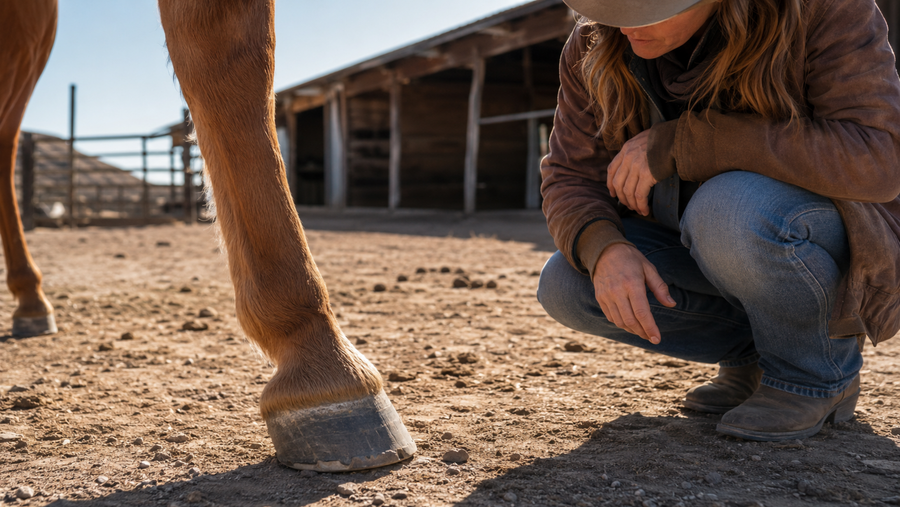
Horse Hoof Wall Chipping in Dry Lots? What Owners Should Watch
A practical horse health guide for hoof wall chipping in dry lots: trim timing, footing, cracks, shoe checks, and farrier or vet red flags.

Hoof pain decision guide
A stone bruise is one possible reason a horse becomes tender after hard, rocky, or uneven footing. The same signs can also appear with an abscess, puncture, shoe pressure, thin soles, laminitis, a fracture, or another hoof problem.
Quick answer: Pick the hoof, look for a puncture or foreign object, compare heat and digital pulse with the opposite foot, limit work, and call the farrier or veterinarian when the horse is lame, painful, hot, strongly pulsing, or getting worse.
No single sign proves a stone bruise. Treat sudden hoof pain as a diagnostic question, not an invitation to dig aggressively into the sole.
If an object is embedded in the foot, contact a veterinarian before removing it unless immediate safety requires otherwise. Its position may matter for diagnosis.
The goal is not merely to make the horse appear more comfortable for the next ride. It is to understand why the foot hurts and reduce the chance of repeating the problem.
Use the label as written and keep the farrier informed about recurring odor, separation, cracks, tenderness, or changes in the frog and heel.
Products support routine care. Lameness, severe pain, heat, marked swelling, punctures, open wounds, eye concerns, fever, breathing changes, neurologic signs, or a horse that is getting worse need veterinary or farrier guidance.
No. Stop work until the source and severity of the hoof pain are understood.
Do not cut or probe the sole. Let a farrier or veterinarian decide whether and how the foot should be pared or opened.
No. It fits routine hoof hygiene. Lameness and suspected bruising require farrier or veterinary evaluation.
Written by Jon Conklin for Draw It Out® Horse Health Care Solutions. Educational support only. This article does not diagnose, treat, cure, or prevent disease. Follow current product labels and professional guidance.
A practical horse health guide for hoof wall chipping in dry lots: trim timing, footing, cracks, shoe checks, and farrier or vet red flags.
For Karly Petrossi, the win is getting to see Asher. Meet our October 2026 Real Rider honorees from Willow Creek, Montana, and the belief behind their story: backyard...
Separate muscle loss from fat loss, record topline changes, recognize veterinary red flags, and plan nutrition and exercise around the cause.
!

