How Long Does a 16oz Horse Liniment Gel Bottle Last?
There is no universal application count. Use this seven-day bottle-life test to choose between 16oz single, two-pack, four-pack, and 64oz Gel.

Quick answer: Horse liniment can fit a normal hindquarter-care routine after work, hauling, or a long day standing, but the rider check comes first. Compare both sides, watch the horse walk, feel for unusual heat or swelling, and look at the skin before applying anything. New asymmetry, marked pain, weakness, an abnormal gait, or reluctance to bear weight belongs with your veterinarian, not a thicker layer of topical product.
The hindquarters do a tremendous amount of work. They push, stop, turn, hold, climb, collect, and stabilize the rest of the horse. That makes the area worth checking. It also makes it a bad place to guess.
The first question is whether this looks like a normal post-work care situation or an evaluation situation. Liniment supports a routine. It does not diagnose the source of soreness, tell you which structure is involved, or make an unsafe horse safe to work.
Routine lane: The horse is comfortable, weight-bearing, moving normally for that horse, and the skin is clean and intact.
Evaluation lane: The horse has a sudden gait change, clear one-sided weakness, marked tenderness, swelling, heat, neurologic-looking movement, or worsening behavior.
If movement looks questionable, capture a short video before you change the picture. The companion guide, how to film a horse trot-up video for your veterinarian, shows how to make that recording useful.
Once the horse is in the routine lane, a horse-labeled topical can be part of the post-work check. Apply it to clean, dry, intact skin according to the current label. Keep your body beside the horse, stay out of the kick zone, and use calm, open-handed contact.
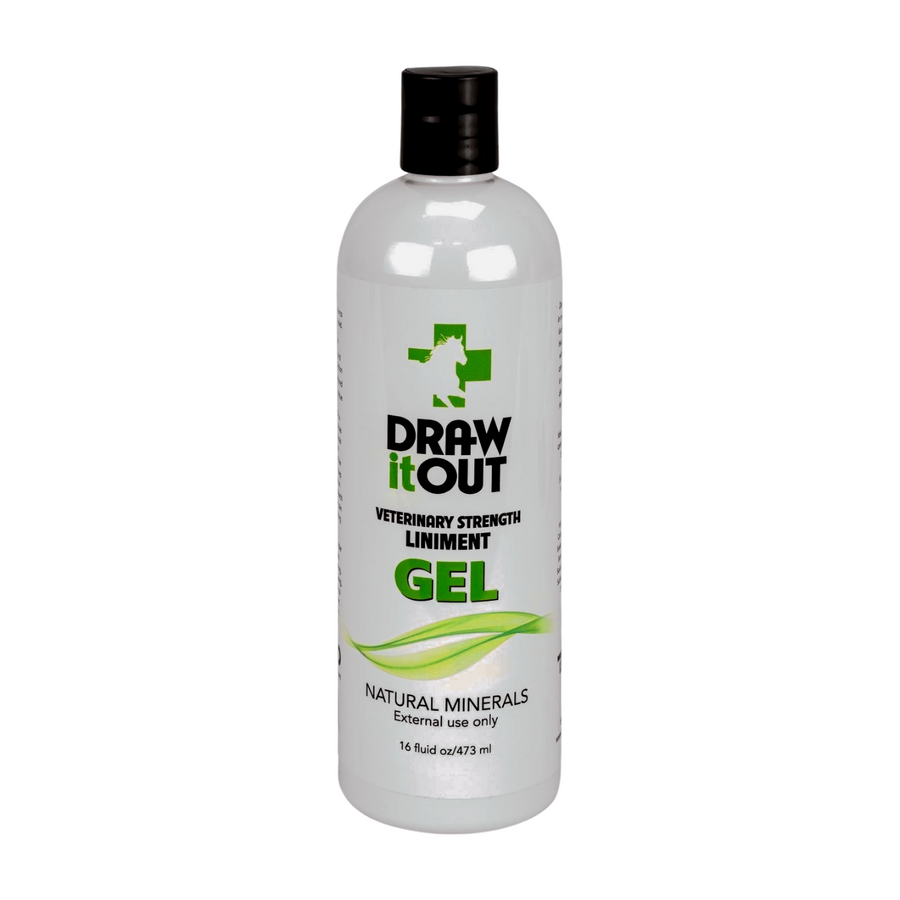
Draw It Out® 16oz Liniment Gel is the straightforward choice when you want targeted, stay-put placement over a specific muscle area. It is ready to use, odorless, colorless, and made without menthol, camphor, capsaicin, alcohol, or witch hazel. The absence of a dramatic hot or cold sensation is intentional. Judge the routine by the horse and the area, not by what your hand feels.
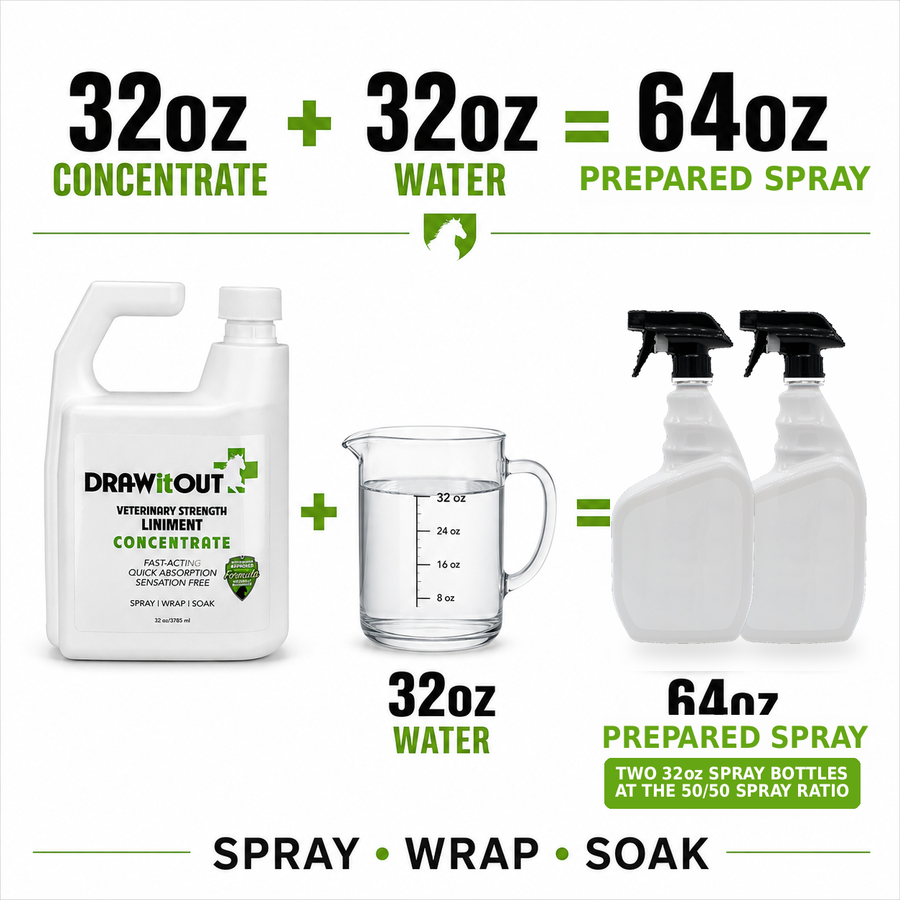
For broader spray coverage or a multi-horse barn routine, Draw It Out® 32oz Liniment Concentrate is the mix-to-use format. Follow the current label for preparation and use. Do not improvise stronger dilution because the horse worked harder.
That last step matters. Memory is generous to us. A simple barn note is not. Patterns become easier to see when they are written down.
Skip the routine and call your veterinarian when the horse is unwilling to bear weight, suddenly weak or uncoordinated, markedly lame, visibly swollen, unusually hot, very painful, or getting worse. The same applies after a fall, slip, kick, trailer incident, or other significant trauma.
UC Davis notes that abnormal hind-limb and pelvic drifting can have neurologic or musculoskeletal causes. That is a useful reminder that a hindquarter change is not always simple muscle fatigue. Read its overview of sidewinder syndrome in horses for one example of why abnormal movement deserves professional evaluation.
Yes, when the product is labeled for horses, the skin is intact, the horse is safe to handle, and the concern fits a normal care routine. Follow the current label.
Check and record movement first when anything looks new or unusual. A clear before-treatment video gives your veterinarian better context.
No. A response to touch can reflect sensitivity, anticipation, skin irritation, guarding, or many other factors. It is information, not a diagnosis.
Choose gel for targeted, hands-on placement. Choose concentrate when you want prepared spray coverage across a broader area or need a scalable barn format. The full gel versus concentrate guide compares both routines.
No. New, worsening, one-sided, or unexplained movement changes need veterinary judgment.
For routine hindquarter care on clean, intact skin, Draw It Out® 16oz Liniment Gel gives riders controlled, stay-put placement without the burn-and-blister approach of many traditional liniments.
Educational horse-care information only. External use only. Follow the current product label. This article does not replace veterinary diagnosis or treatment.
There is no universal application count. Use this seven-day bottle-life test to choose between 16oz single, two-pack, four-pack, and 64oz Gel.
See the 32oz horse liniment concentrate math, cost per prepared ounce, mixing discipline, and the exact barn routines where concentrate earns its space.
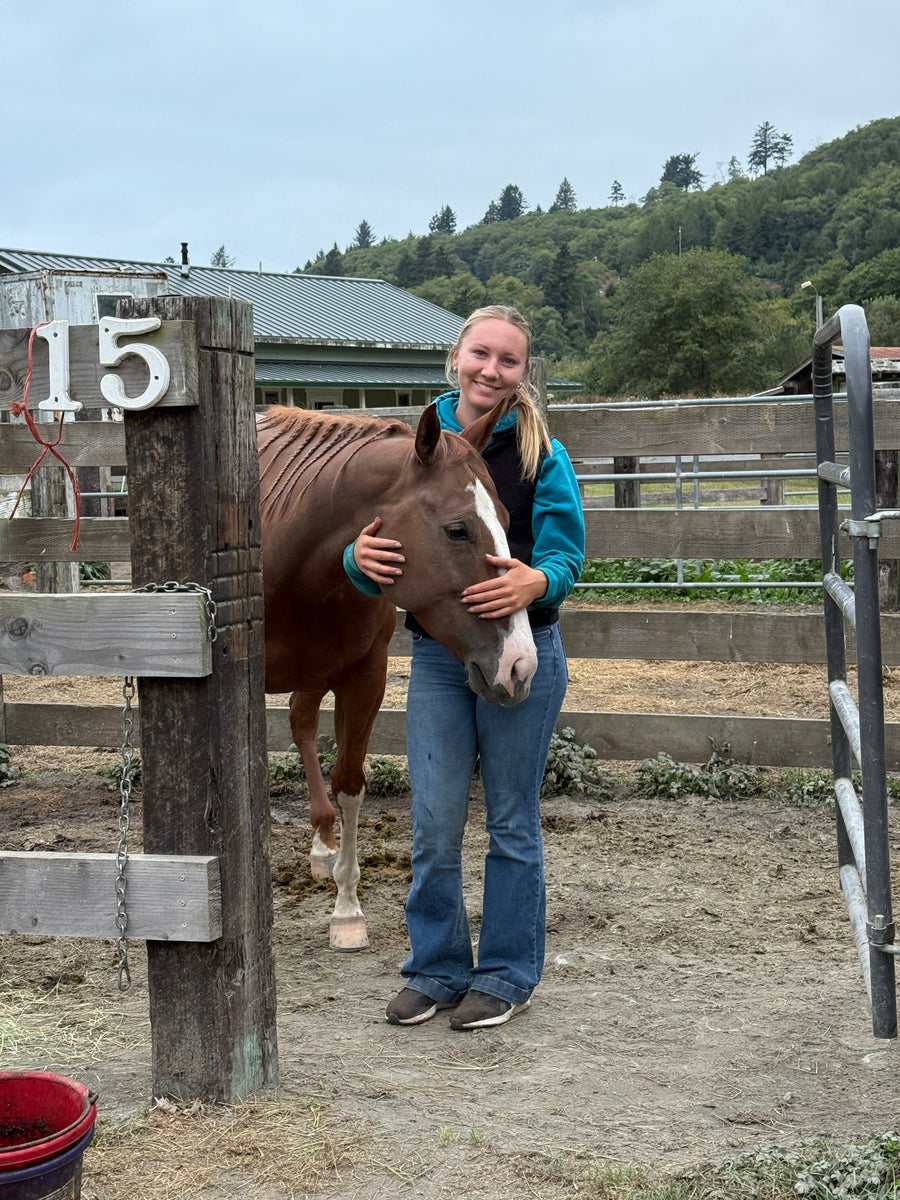
Meet Courtney Sabral of Chico, California, an experienced barrel racer and gymkhana rider whose care routine for Diamond and 26-year-old Ricky is built around consistency.
!