K9 Advanced™ Dog Care
Dock Diving Dog Skin and Coat Care: Water Dog Routine with K9 TheraMud
Dock diving dogs live in a hard cycle: sprint, launch, splash, shake, repeat. The skin and coat take water, sun, friction, and drying cycles over and over. This guide gives water-dog owners a simple post-dock routine that protects the dog without overcomplicating the day.
Why dock diving dogs need a skin and coat routine
Water dogs are not just getting wet. They are repeating impact, friction, sun exposure, drying cycles, and residue exposure. Pool water, lake water, sand, mud, algae, dock surfaces, harnesses, towels, and crates can all leave skin and coat looking rough if there is no repeatable routine.
The post-dock routine
| Step | What to do | Why it matters |
|---|---|---|
| Rinse | Rinse off pool, lake, pond, or ocean residue. | Residue can sit in the coat and irritate touchy areas. |
| Dry | Towel dry well, especially folds, belly, armpits, paws, and collar areas. | Moisture trapped against skin is where problems start. |
| Inspect | Check paws, elbows, belly, armpits, ears, and collar lines. | The same spots take the hit every session. |
| Condition | Use targeted conditioning on rough, dry, or weathered areas. | Routine care keeps small issues from becoming a weekly scramble. |
Where K9 TheraMud fits
K9 TheraMud fits after the rinse and dry step. It is not for soaking-wet coats or dirty skin. Use it as a targeted conditioning step for rough paw pads, elbows, dry noses, or coat areas that look tired after repeated water exposure.
- Apply after the dog is clean and towel-dry.
- Use a thin targeted layer.
- Focus on rough spots, not the entire dog.
- Watch for licking, redness, odor, or discomfort.
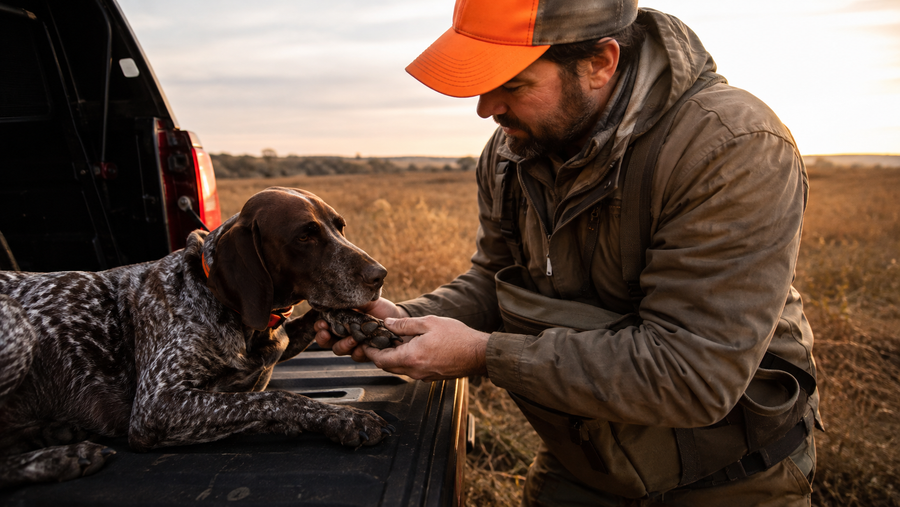
Trouble spots to inspect on dock dogs
Wet dog care is not glamorous. It is rinse, dry, check, condition, repeat. That is why it works.
Where to go next
Wet Dog Coat Check After Swimming, Rain, or Bath Time
FAQ
Should I rinse my dog after dock diving?
Yes. Rinsing helps remove pool, lake, pond, ocean, sand, and dirt residue before it sits in the coat.
When should I use K9 TheraMud on a dock diving dog?
Use it after the dog is clean and towel-dry, focusing on rough or dry areas such as paw pads, elbows, nose, or coat trouble spots.
What are the main skin trouble spots for water dogs?
Paws, elbows, belly, armpits, collar lines, and folds are common areas to inspect because they hold moisture or take repeated friction.
When should I call the vet after water exposure?
Call your veterinarian for swelling, heat, open skin, drainage, odor, sudden limping, fever, lethargy, or rapid worsening.