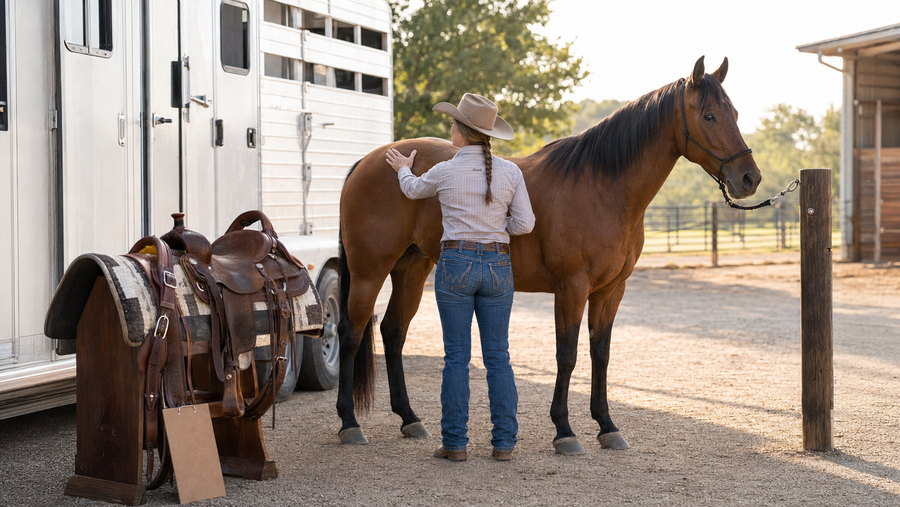
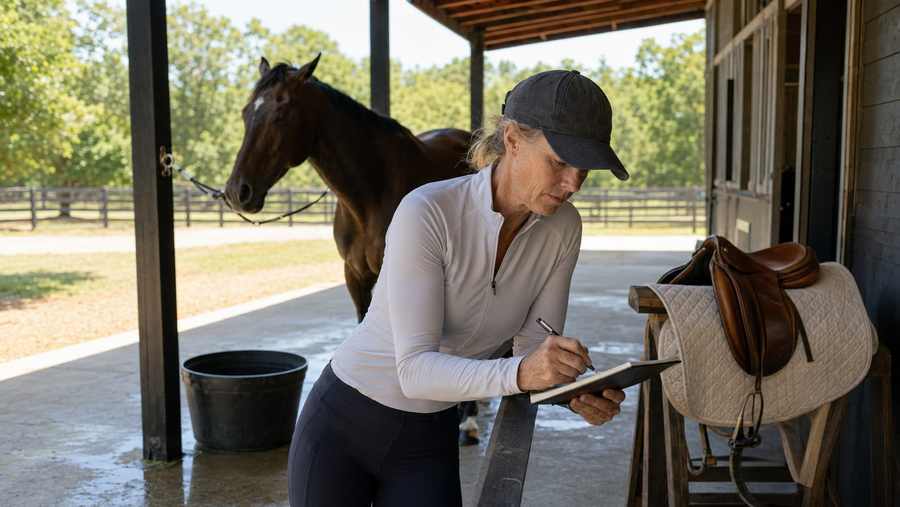
Quick answer: When a horse says no, the first job is not to win the argument. The first job is to decide whether the horse is confused, worried, uncomfortable, over-faced, fresh, tired, sore, or avoiding work. Real riders read the first warning before the ride turns into a fight.
A horse rarely starts with the biggest answer.
Most start small. A brace. A tail swish. A pinned ear. A step away from the mounting block. A sudden heaviness in the hand. A refusal to go forward that feels different than yesterday.
Real riders do not ignore that first warning. They read it.
Do not call it attitude too fast
Sometimes a horse is testing the line. Sometimes the horse is confused. Sometimes the rider changed the question. Sometimes the horse is uncomfortable. Sometimes the horse is fresh, tired, anxious, or physically not right.
The lazy answer is always the same: “He is just being bad.”
The better answer starts colder: what changed?
The first warning is usually the cheapest warning
By the time a horse is bucking, rearing, bolting, refusing hard, or completely shutting down, the conversation is already expensive. The quiet warning is where the rider still has room to think.
That does not mean quit every time a horse objects. It means investigate before escalating.
Separate training from care
A training problem asks for clarity, timing, repetition, and a fair release. A care problem asks for checking the body, tack, feet, teeth, workload, and routine.
Mixing those up creates trouble. Treating discomfort like disobedience makes horses dull, defensive, or dangerous. Treating every training gap like pain can leave a horse unprepared and confused.
Real Rider Resource takeaway
The goal is not to let the horse run the program. The goal is to be honest enough to ask why the no showed up.
A rider who can pause, read, adjust, and then ride with fairness is not weak. That rider is useful to the horse.
When to stop the ride
Stop when the no comes with sudden pain signs, lameness, swelling, dangerous behavior, abnormal breathing, panic, collapse of confidence, or a horse that feels unlike themselves.
There is no ribbon for winning an argument you should have investigated.
FAQ: When a horse says no
Does resistance always mean pain?
No. Resistance can come from confusion, fear, freshness, fatigue, training gaps, rider timing, tack issues, discomfort, or pain. The pattern matters.
Should I correct a horse that says no?
Sometimes the horse needs a clear correction. Sometimes the rider needs to stop and investigate. Good riders learn the difference before escalating.
What should I check first?
Check what changed: tack, feet, workload, rider ask, location, direction, weather, footing, body soreness, and whether the horse understands the question.
When should I get help?
Get help when the behavior is dangerous, sudden, repeated, paired with lameness or pain signs, or beyond your ability to evaluate fairly.
This article is general riding and horse care education. It is not veterinary advice or professional training instruction. For dangerous behavior, lameness, pain, swelling, breathing changes, or persistent performance changes, contact the appropriate professional.