ReJüv™ Recovery Journal
“Arthritis gel” is a shopping phrase, not one product category. Some gels are OTC medicines with approved Drug Facts. Others are cosmetic or wellness products that cannot make the same claims.
What kinds of topical gels appear in an arthritis search?
| Product type | What the label should tell you | What not to assume |
|---|---|---|
| OTC drug | Active ingredient, approved use, body-area directions, frequency, warnings, age limits, and when to stop. | Do not assume every OTC gel has the same instructions. |
| Prescription topical | The prescriber and pharmacy provide condition-specific directions and safety information. | Do not share it or use it outside the prescribed plan. |
| Cosmetic or wellness gel | External-use directions and support-oriented positioning on its own label. | Do not treat it as an arthritis drug because the texture or marketing looks similar. |
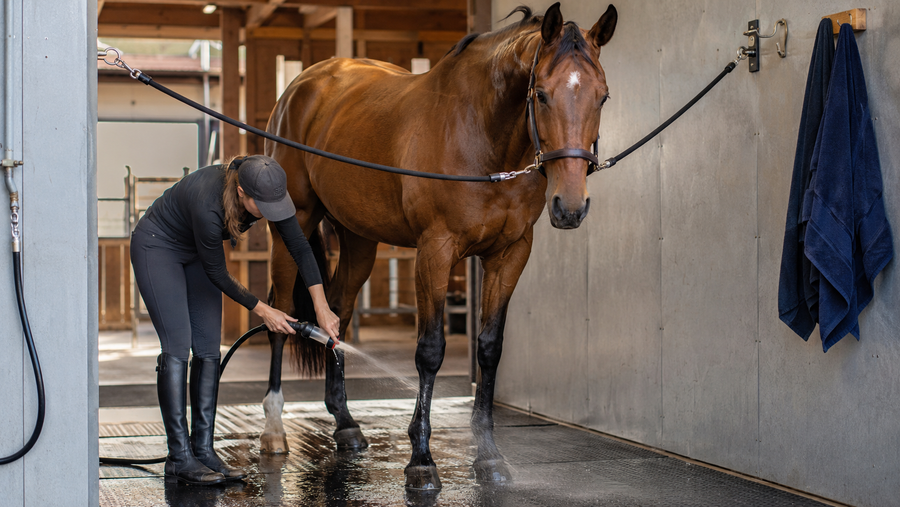
| Horse or dog topical | Species-specific directions for the animal named on the label. | Do not use it on a person. |
For example, the federal MedlinePlus guide to topical diclofenac for arthritis pain includes specific instructions about clean, dry skin, body areas, covering, heat, and drying time. Those directions belong to that drug. They are not universal directions for every gel.
A product can be human-labeled without being an arthritis medicine. That distinction protects the reader from two opposite mistakes: dismissing a drug label as “just another gel,” or treating a wellness product as if it were a drug.
What should you check before buying or applying a topical?
1. Who is it for?
Confirm human, horse, or dog use. Barn familiarity does not override a species label. See why horse liniment is not the human product lane.
2. What category is it?
Look for a Drug Facts panel, prescription instructions, cosmetic labeling, or wellness directions. Category determines what the product can truthfully claim.
3. What is the active ingredient?
Drug-labeled topicals can use different active ingredients with different limits, interactions, and warnings. Ask a pharmacist when you are unsure.
4. Where can it go?
Check body-area restrictions, intact-skin directions, hand washing, covering, heat, and frequency. Do not invent your own application plan.
Use a six-question label check
- Is this exact product intended for people?
- Is it an OTC drug, prescription, cosmetic, or wellness product?
- Does its stated use match the reason I am considering it?
- Do the directions allow the body area, frequency, clothing, glove, brace, or sleeve I have in mind?
- Could it conflict with another topical, patch, medication, heat source, allergy, pregnancy, skin condition, or medical history?
- Am I using a product to avoid evaluating a symptom that has changed?
Does a hot, cold, or tingling sensation prove that a gel is working?
No. Sensation describes part of the skin experience. It does not prove that a joint has been treated or that the product is appropriate for the cause of the symptom.
Some people deliberately choose menthol or capsaicin drug products and should follow those Drug Facts. Others prefer a menthol-free routine because odor, cooling, clothing, workspaces, or sensory comfort matter. Neither preference replaces the label. Compare the sensory profiles in the menthol-free versus menthol topical guide.
Strong burning, blistering, spreading redness, hives, facial swelling, or trouble breathing is not a sign to “push through.” Wash off the product if directed, stop use, and seek appropriate care.
Where can ReJüv™ fit in a personal routine?
ReJüv™ is a human-labeled, menthol-free, capsaicin-free topical wellness gel. It is colorless and low odor, and it is intended for a thin external-use routine on clean, dry, intact human skin.
ReJüv™ is not an OTC arthritis drug and does not diagnose, treat, cure, or prevent arthritis, inflammation, injury, or disease. A rider, rancher, barn worker, driver, or active adult may choose it because the quiet sensory profile fits an established personal-care routine. That is a routine-fit decision, not a medical treatment claim.
To understand the category, read what a topical recovery gel is. To choose a format, use the ReJüv™ size comparison. The ReJüv™ collection is the primary product path.
When should joint symptoms get medical care?
Arthritis is a group of medical conditions, and new joint symptoms are not automatically arthritis. Seek prompt evaluation after major trauma, inability to bear weight, deformity, a locked or unstable joint, sudden severe pain, marked swelling, persistent numbness, weakness, fever, spreading redness, or a hot joint with illness.
Arrange routine medical care when stiffness, pain, swelling, grip change, reduced motion, sleep disruption, or activity limits persist or worsen. The National Institute of Arthritis and Musculoskeletal and Skin Diseases explains that osteoarthritis can affect pain, stiffness, swelling, movement, stability, and daily function, and that treatment is broader than a single topical product.
Bring the exact product list to the appointment or pharmacy. Include OTC gels, prescription topicals, patches, supplements, and skin products. That makes it easier to spot duplicate ingredients or conflicting directions.
Common questions
Is every product called an arthritis gel an OTC medicine?
No. Read the label. A drug product has a Drug Facts panel or prescription labeling. Cosmetic and wellness gels are different categories.
Is ReJüv™ an arthritis treatment?
No. ReJüv™ is a topical wellness gel and is not intended to diagnose, treat, cure, or prevent arthritis or another condition.
Can I layer ReJüv™ over diclofenac or another drug gel?
Do not improvise combinations. Follow each label and ask a pharmacist or healthcare professional before using multiple topicals on the same area.
Does menthol-free mean there is no risk of irritation?
No. Any topical can irritate some skin. Patch-test sensitive skin, use only on intact skin, and stop if irritation occurs.
Can I use a horse arthritis gel on myself?
Use products according to their species label. Horse products belong with horses; human products belong with people.
Safety boundary: This guide is educational and not a substitute for professional medical care. Follow the current product label. Use ReJüv™ only on clean, dry, intact skin. Avoid eyes, mouth, broken skin, external heat, and improvised topical combinations. Patch-test sensitive skin, stop if irritation occurs, and seek care for severe, sudden, traumatic, unexplained, persistent, or worsening symptoms.