Cold Back in Winter: Daily Warm‑Up Guide & Relief Routine for Horses
Reading time: ~6 minutes • Season: Winter conditioning
Winter hits the back first. A cold-backed horse steps short, braces through the ribcage, and hesitates to lift into the trot. It’s not attitude—it’s physiology. Cold muscles don’t stretch, cold fascia doesn’t glide, and a chilled topline takes longer to wake up.
The good news: a simple, consistent routine before and after the ride can protect your horse’s comfort, stride length, and long-term soundness. The key is slow warming, targeted support, and a calm approach that honors how the body actually works in winter.
What Makes a Horse “Cold Backed” in Winter?
When temperatures drop, the topline becomes more vulnerable to tightness. Three things happen:
- Muscle fibers stiffen and take longer to loosen
- Blood flow slows, delaying warm-up response
- Fascia tightens, reducing stretch and lifting through the back
A horse that moves fluidly in summer may feel sticky, hollow, or reactive by December. That’s normal—if you adjust for it.
Step 1: Hands-On Back Prep Before Saddling
Start with slow grooming strokes along the back, loins, and hamstrings. Use your hands to feel for cold patches or tension pockets.
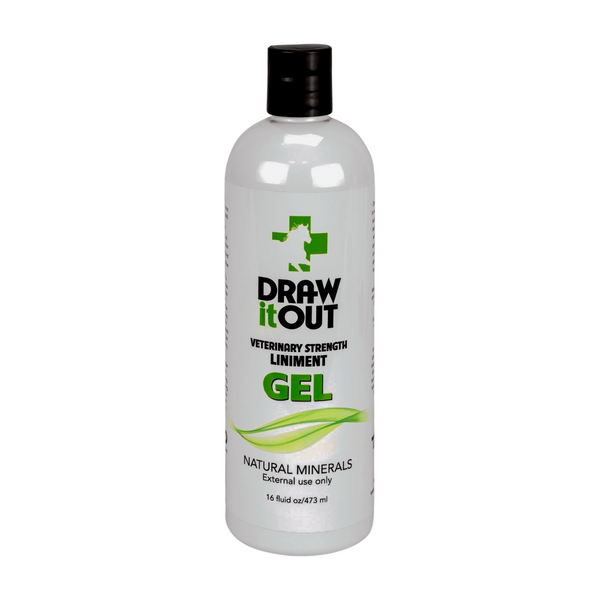
Apply a small amount of Draw It Out® High Potency Gel to the lumbar region, SI area, and sensitive lines along the back. The gel absorbs quickly without heat, making it ideal for tight toplines in cold weather.
Step 2: Saddle, Then Walk Before You Cinch
Allow your horse to walk 2–3 minutes with the saddle resting in place before tightening the girth. This warms the tissues under the saddle area and prevents sudden compression on cold muscles.
Step 3: The First 8 Minutes Under Saddle
Follow this exact progression to unlock tight backs:
- Minute 0–2: Loose walk, long rein, encourage forward stretch
- Minute 2–5: Big bending lines—serpentines, shallow loops
- Minute 5–8: Walk poles or raised cavaletti for back lift and engagement
This pattern warms the ribcage, wakes up the hind end, and helps the topline release without force.
Step 4: Gradual Trot with Purpose
When you add trot, give your horse the room to lengthen. Stay out of the way. The first 60 seconds should feel like a “loosening jog,” not a collected frame.
If your horse struggles to soften, massage a small amount of MasterMudd™ EquiBrace into the lumbar and hamstring region before the ride. It supports deeper tissue ease, especially after hard freezes.
Step 5: Cool Down Matters More in Winter
Cold weather can lock the back up quickly after work. Finish every winter ride with a 10-minute walk, then apply Draw It Out® Gel again to help the tissues recover smoothly and stay loose for tomorrow.
This is where consistency pays off—your horse starts each day less tight than the day before.
Back-Friendly Winter Care Kit
- Draw It Out® High Potency Gel
- MasterMudd™ EquiBrace
- Hydro-Lyte® with GastroCell®
- Explore the Wisdom Library
Daily insight for real riders lives inside the Draw It Out® Wisdom Library.