Real Rider Resource
Horse Won't Canter? What to Check Before Asking Harder
A horse that refuses the canter and a horse that departs but cannot hold the canter are showing two different patterns. Neither pattern tells you the cause by itself. Slow down, describe what actually happens, lower the difficulty, and involve the right professional when the change is sudden, repeatable, painful, or unsafe.
Quick answer: Do not assume a reluctant canter is stubbornness. First decide whether the horse will not depart, departs on only one lead, or canters briefly and falls back to trot. Check the rider's cue, balance, tack, footing, fatigue, and the horse's normal movement. Stop and seek assessment if you see lameness, heat, swelling, marked asymmetry, escalating resistance, or a sudden change from the horse's baseline.
Start by naming the pattern
Refuses the departure: The horse stays in trot, rushes, pins the ears, kicks out, swaps the hindquarters, or reacts when the cue is applied. That can reflect cue confusion, anticipation, balance, tack, fatigue, fear, or discomfort. The behavior is information, not a diagnosis.
Cannot hold the canter: The horse departs, takes a few strides, then breaks to trot. This can happen when the circle is too small, the pace is rushed, the horse lacks balance or conditioning, the rider blocks the motion, or the horse is uncomfortable. A horse may also hold one lead more easily than the other. Record the difference without deciding what it means medically.
Changes only in one setting: Compare straight lines with circles, both directions, arena footing with a safe open space, and ridden work with competent groundwork. A pattern that appears only under saddle is useful information, but it does not prove the saddle or rider is the only cause.
A practical decision sequence for riders
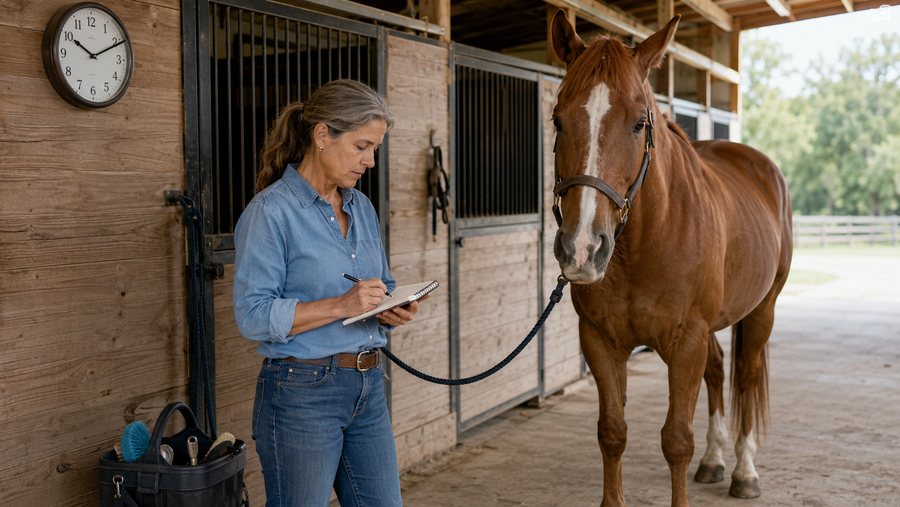
- Write down the exact moment. Note direction, lead requested, surface, circle size, speed, where in the session it happened, and what the horse did next. Video from the side and behind can help a trainer or veterinarian see a pattern you cannot feel.
- Return to an easy baseline. Walk and trot on large, balanced lines. Check rhythm, steering, willingness to go forward, and whether the stride looks even. Do not use repeated canter cues as a test if the horse already feels abnormal.
- Check the simple variables. Look for shifted tack, pinching, uneven stirrups, a girth issue, a recently changed bit, deep or slick footing, fatigue, and a cue that arrives late or conflicts with the rider's hand.
- Compare both sides without drilling. One quiet attempt each way may provide enough information when the horse otherwise feels normal. Repeatedly chasing the departure can turn uncertainty into anxiety and can worsen soreness.
- Choose the right help. A qualified trainer can review timing and balance. A saddle fitter can assess fit. A farrier can evaluate the hoof-care picture. A veterinarian should assess sudden, persistent, asymmetric, or painful changes.
What not to conclude from one missed departure
One refusal does not prove a hock, stifle, back, saddle, training, or attitude problem. The goal is to collect clean observations and avoid making the horse repeat a difficult movement until a theory feels true.
Stop the session and seek guidance
- A sudden change in a horse that normally canters willingly
- Visible lameness, toe dragging, stumbling, weakness, or marked asymmetry
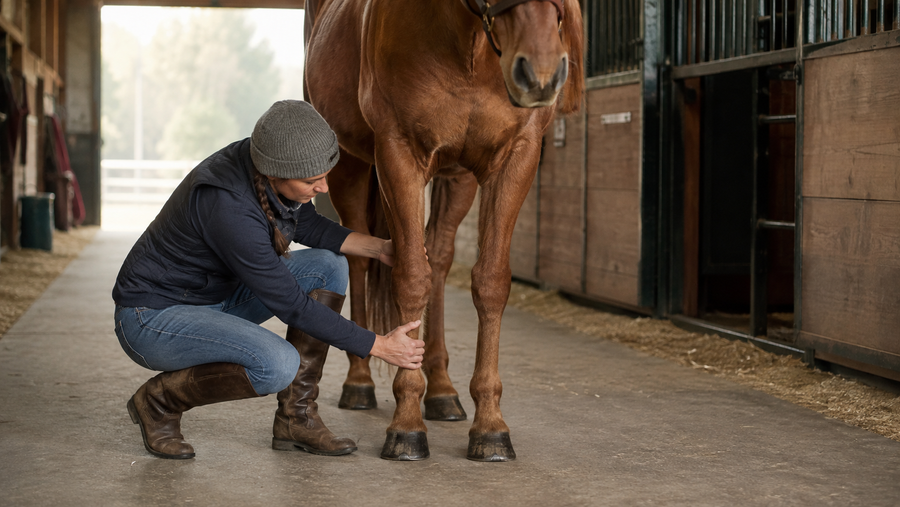
- Heat, swelling, a wound, a strong digital pulse, or pain when touched
- Bucking, rearing, bolting, or resistance that is escalating
- Back soreness, saddle-area reaction, or difficulty during ordinary walk and trot work
- A horse that cannot stay safe under saddle or appears neurologically abnormal
Do not try to ride through these signs or use a topical product to cover the question. Keep the horse safe and contact your veterinarian or other appropriate professional.
If the horse is cleared, rebuild the canter task
After professional concerns are addressed, make the exercise easier enough for the horse to answer correctly. Begin with forward, rhythmic walk-trot transitions. Use large curves and straight approaches. Ask for only a few organized canter strides, reward the response, and return to trot before balance disappears. Quality matters more than duration.
Build time gradually across sessions. Track whether the horse improves with conditioning, clearer cues, different footing, or tack adjustments recommended by a professional. If the pattern returns, stop treating it as a training puzzle and reopen the assessment.
Where routine topical care fits
Liniment does not diagnose or correct a canter problem. When a horse is moving normally, the skin is appropriate for label-directed use, and no red flags are present, riders may include Draw It Out® liniment gel in a normal post-work routine. Review application and wrap guidance in the horse liniment guide. If you are unsure which support path fits, use the Solution Finder.
Horse canter FAQ
Why does my horse refuse to canter?
A refusal can involve cue confusion, balance, fitness, tack, footing, fatigue, anticipation, fear, or discomfort. The response alone cannot identify the cause. Describe the pattern and seek assessment when it is sudden, persistent, asymmetric, painful, or unsafe.
Is refusing the canter different from not holding it?
Yes. Refusal happens at the departure. A horse that cannot hold the canter departs and then loses the gait. The observations may point professionals toward different training, balance, fitness, tack, or medical questions.
Should I push through until the horse canters?
Not when the response is unusual, escalating, or paired with abnormal movement. Repeating harder cues can create anxiety and may worsen a physical problem. Return to a safe baseline and involve a trainer or veterinarian as appropriate.
Can liniment fix a horse that will not canter?
No. Liniment is not a diagnostic tool or a treatment for an unexplained gait or behavior change. It may fit routine post-work care only after the horse is moving normally and safety questions have been addressed.
Educational note: This article provides general horse-care information and does not replace veterinary diagnosis, saddle assessment, farrier care, or qualified training help.