


Jul 31, 2026
Can You Keep a Horse Fit Riding Three Days a Week? A Realistic Plan
A realistic three-day horse fitness plan with base work, strength and skill, quality effort, recovery days, warning signs, and a sample w...
Free U.S. shipping at $50+
No code needed.
Shipping details
A one-sided lead problem is information—not proof of stubbornness and not a diagnosis. Compare direction, footing, rider timing, tack, feet, workload and comfort before asking harder.
Note whether the problem appears under saddle, on the lunge or both. Record the direction, surface, gait transition, point in the ride and whether fatigue changes it.
Deep, slick, uneven or unfamiliar footing can change confidence and balance. A recent jump in speed, circles, collection or conditioning can also expose a weak link.
Compare your hip, shoulder, rein and leg timing in both directions. A qualified trainer can help separate a cue or balance problem from a horse-comfort concern.
Check saddle placement, pad symmetry, girth area, shoeing changes, hoof tenderness and digital pulse. Small asymmetries can become more obvious in a canter depart.
Observe back, shoulders, hips, hocks and stifles without trying to diagnose from one sign. Sudden or persistent one-sided difficulty deserves qualified eyes.
Use a simpler exercise, safe surface and shorter session. Changing several things at once makes it harder to identify what actually helped.
A missed lead does not automatically mean pain, and repeated resistance does not automatically mean attitude. Lead selection asks for coordination, strength, clarity and confidence. Treat the pattern as a reason to slow down, compare both sides and get help when the horse is not improving.
After red flags, tack, feet, footing and training factors have been checked, Draw It Out® Gel can be part of a normal pre- or post-ride body-care routine. Follow the product label, use on intact skin and do not use a topical to cover up worsening discomfort or delay professional care.
Clear order-value path: the two-pack is $52 and currently clears the $50 threshold for free U.S. economy shipping. Prefer to start smaller? The single 16oz bottle remains available.
Educational content only. This guide does not diagnose, treat, cure or prevent disease and does not replace veterinary, farrier or qualified training advice.
The best routines are quiet. They do not draw attention, but they prevent problems before they show up.
A realistic three-day horse fitness plan with base work, strength and skill, quality effort, recovery days, warning signs, and a sample w...
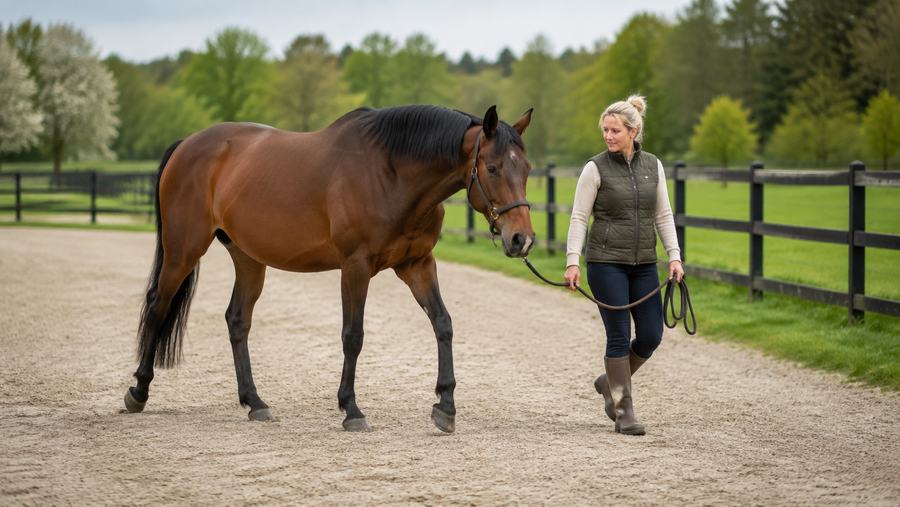
An easy day may suit a sound horse that benefits from low-stress movement. Learn when to choose walking, turnout, light work, rest, or ve...
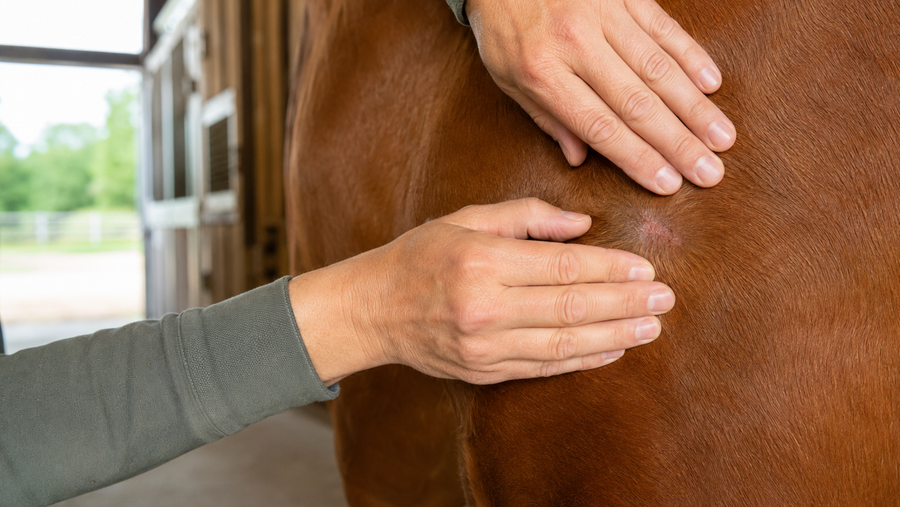
Can you use hydrocortisone on a horse? Learn what it does, when itching needs a veterinarian, and how to route intact skin versus broken ...
Want a smarter way to handle soreness, heat, swelling, and post-ride leg care? Visit our Performance Recovery Hub for clear routines and product guidance.
Visit the Recovery Hub!