Why Horses Act Girthy Even When They Look Sound
When a horse pins its ears, bites the air, walks off, or tightens through the barrel while you adjust the girth, it is rarely simple attitude. Horses often show discomfort before they show obvious lameness. Girthiness is one of those early signals riders should take seriously.

Quick answer
A horse can act girthy even when they look sound because girthiness may come from mild soreness, saddle fit, rib or back tension, stomach discomfort, skin irritation, cold muscles, or remembered pain. The rider should slow down, check the horse, tighten the girth in stages, and involve a vet or saddle fitter when the behavior is new, intense, persistent, or paired with other changes.
What riders notice first
Girthy behavior often starts small. A horse may not limp. They may not refuse work. They may still ride fairly well once moving. But during tack up, something changes.
Common signs during saddling
- Biting or snapping when the girth is tightened
- Pinning ears as the saddle or cinch comes out
- Tail swishing during saddling
- Walking off or shifting away when you reach under the belly
- Flinching along the ribs, barrel, sternum, or back
- Holding the breath or bracing through the body
What riders often miss
- The reaction starts before the girth is tight
- The horse gets worse on cold days
- The horse reacts more after hard work or travel
- The saddle fit changed as the horse changed shape
- The girth or pad is rubbing in the same place every ride
If your horse protests before you even mount, they are giving you information. That does not mean panic. It means pause, check, and stop treating the reaction like a manners problem until discomfort has been ruled out.
Why a horse can look sound but still act girthy
Soundness and comfort are related, but they are not identical. A horse can jog sound and still have tight muscles, sore ribs, girth groove sensitivity, digestive discomfort, or a memory of pain tied to saddling.
That is why tack up behavior deserves attention. It can show the rider what the horse is managing before the issue becomes obvious in the work.
Common causes of girthy behavior
Back or ribcage soreness
Soreness along the back, ribs, sternum, shoulder, or girth groove can make normal tack pressure feel sharper than expected. Horses may brace before they show an obvious performance problem.
Poor saddle or girth fit
A saddle or girth that pinches, shifts, rubs, or concentrates pressure can create a negative association with saddling. Fit should be checked regularly because the horse’s body changes with workload, age, season, and conditioning.
Ulcers or stomach discomfort
Some horses become defensive when pressure is added around the barrel because they are uncomfortable through the digestive system. A veterinarian should be involved when girthiness appears with appetite changes, weight loss, dullness, attitude changes, or poor performance.
Skin irritation or rubs
Dried sweat, dirty tack, scurf, clipper sensitivity, bug irritation, fungus, or small rubs can make the girth area reactive. Clean skin and clean tack are part of comfort, not just appearance.
Cold or tight muscles
Some horses are more reactive when they are cold, stiff, or coming back into work. The first few minutes of the routine matter more than most riders think.
Past negative experiences
Horses remember patterns. A horse that was once hurt, rushed, pinched, or over tightened may anticipate discomfort even after the original issue improves.
When this is more than normal sensitivity
Call your veterinarian or another qualified professional when girthy behavior is sudden, escalating, unsafe, paired with lameness, swelling, heat, wounds, appetite changes, weight loss, colic signs, poor performance, or a major attitude change.
This article is rider education. It is not a diagnosis. The goal is to help you notice the signal sooner and respond with better judgment.
First things riders can do
The best response is not complicated. Slow down and make the tack up routine more observant.
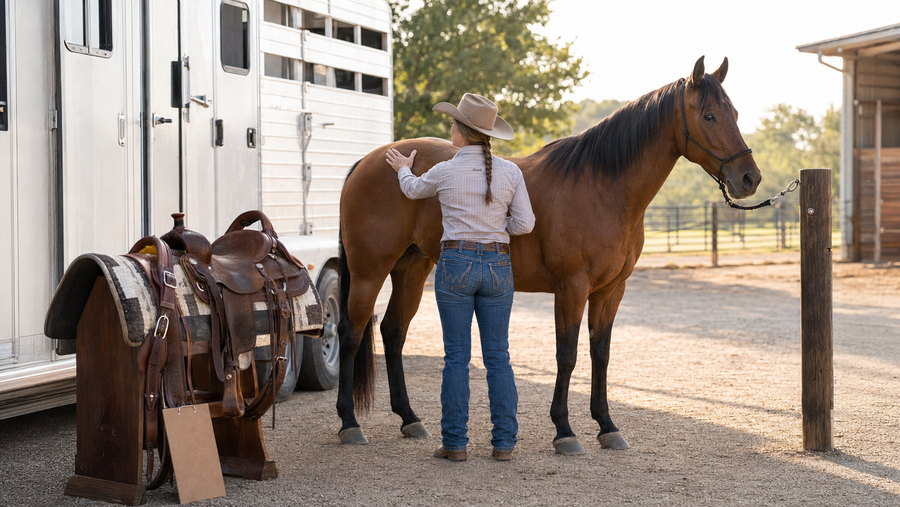
Check before you saddle
Run your hand over the back, loins, ribs, girth groove, shoulder, sternum, and pectoral area. Watch the horse’s eye, ear, breathing, skin twitch, and posture.
Look at the tack
Check the pad, saddle, girth, billets, cinch, and contact points. Dirt, sweat, hard edges, wrinkles, or a poor fit can make a good horse look difficult.
Tighten one stage at a time
Bring the girth up lightly, pause, walk the horse a few steps, tighten another hole, pause again, then check before mounting.
Give extra warm up time
On cold days, after travel, or after heavy work, let the horse’s body come online gradually instead of asking them to accept pressure and go straight to work.
Track the pattern
Notice when it happens. Same saddle? Same girth? Same side? Same weather? Same workload? Patterns make the problem easier to solve.
How Draw It Out® fits into the routine
Draw It Out® products are not a replacement for veterinary care, saddle fit, proper conditioning, or good handling. They fit best as part of a repeatable comfort routine for hard working horses.
- Draw It Out® 16oz High Potency Liniment Gel: many riders use this liniment gel along targeted muscle and soft tissue areas before or after work as part of a practical comfort routine. View the liniment gel.
- Draw It Out® Liniment Concentrate: a barn friendly option for larger area applications and post work routines. View the concentrate.
- Prehabilitation: the bigger idea is staying ahead of avoidable soreness before it turns into lost rides. Read the prehab guide.
Always follow label directions. Do not apply topical products to broken skin unless the label allows that use. Check the rules that apply to your discipline.
The mistake is waiting for obvious lameness
A horse does not have to be visibly lame to be uncomfortable. That is the point. Girthy behavior can be an early warning light. When riders ignore it, the horse may get louder. When riders punish it, the horse may stop giving small warnings and move straight to bigger ones.
Better riders do not chase drama. They notice small changes and take them seriously.
Read the full girthy horse guide
This article explains why a horse may act girthy even when they look sound. For the deeper checklist, causes, safe next steps, and tack up routine, read the full canonical guide.
Frequently asked questions
Can a horse be girthy but not lame?
Yes. A horse can appear sound under saddle and still react to girth pressure because of soreness, fit issues, digestive discomfort, skin irritation, or past negative experiences.
Is girthy behavior bad behavior?
It can create unsafe behavior, but the cause is often discomfort or anticipation. Correct the handling when needed, but investigate the reason behind the reaction.
Should I ride if my horse acts girthy?
It depends on the severity and context. Mild sensitivity may improve with a slower routine and fit checks. Sudden, severe, unsafe, or worsening reactions should be evaluated before riding.
Can cold weather make a horse more girthy?
Yes. Cold, tight muscles can make some horses more reactive during tack up. Extra warm up time and a slower girth routine may help.
Where should I start if I am not sure what product fits?
Start with the Draw It Out® Solution Finder. It helps route riders toward the most practical routine based on what they are seeing.
Where to go next
Not sure whether this is soreness, tack fit, digestive discomfort, or routine tension? Start with the guided path, then build a simple support routine around what your horse is showing you.