Real Rider Resource
Horse Resists Transitions? What Rough, Heavy, or Unbalanced Changes Can Mean
If your horse feels fine once in the gait but rough, resistant, heavy, or unbalanced during the change, pay attention. Transitions reveal how well the horse can rebalance, push, soften, and reorganize under saddle.
Speakable Summary
Rough or resistant transitions are not always a training problem. They can point to weakness, stiffness, soreness, fatigue, poor balance, or delayed engagement. The pattern matters most. Watch whether the issue appears in upward transitions, downward transitions, only one direction, after warm up, or as the ride goes on.
What Riders Usually Feel
A transition problem does not always look dramatic. Often the horse does the transition, but the change feels wrong.
The horse rushes, pops the head up, or struggles to push cleanly from behind.
The horse falls onto the forehand, braces, or feels like the rider has to hold the whole front end together.
The back tightens, the neck stiffens, or the horse resists the aid right at the moment of rebalancing.
Transitions start acceptable, then get rougher as fatigue or tightness builds.
Why Transitions Reveal So Much
Within a gait, a horse can sometimes hide weakness or stiffness. In a transition, the body has to reorganize quickly. The hind end has to step under. The back has to stay available. The shoulders have to lift. The horse has to change balance without losing rhythm.
The transition is the test. It shows whether the horse can stay comfortable, balanced, and responsive while changing the job.
Common Causes of Rough or Resistant Transitions
1. Lack of hind end engagement
Upward transitions require push. If the horse is not stepping under well, the change may feel rushed, delayed, hollow, or flat. This often connects with a horse that feels behind the leg or struggles to maintain impulsion.
2. Balance limitations
Downward transitions require the horse to shift weight back without collapsing forward. If that balance is not there, the horse may lean, brace, drop, or feel heavy in the rider’s hand.
3. Stiffness or restriction
Back, shoulder, hip, hock, stifle, or SI tightness can make transitions harder because the body has to bend, load, and stabilize quickly.
4. Early soreness
A horse may look mostly sound but resist the moment that asks for more effort. That can show up as tail swishing, hollowing, bracing, rushing, or reluctance during the transition.
5. Fatigue
If transitions get worse later in the ride, fatigue belongs on the list. The horse may not be refusing. The body may simply be running out of clean coordination.
Pattern Map: What the Transition Tells You
| Pattern | What it may suggest | What to watch next |
|---|---|---|
| Rough upward transitions | Weak push, poor engagement, back tension, or hind end discomfort | Does the horse step under or launch forward? |
| Heavy downward transitions | Balance issue, forehand loading, fatigue, or stiffness | Does the horse sit, brace, or fall forward? |
| Transitions improve after warm up | Cold stiffness, mild restriction, or delayed looseness | How long until the horse feels organized? |
| Transitions worsen during the ride | Fatigue, soreness, conditioning gap, or accumulating tightness | When does the quality start to fade? |
| One direction is worse | Asymmetry, stiffness, balance limitation, or one sided weakness | Does it match circles, leads, or lateral work? |
Quick Rider Checks
Compare upward and downward transitions. One tells you about push. The other tells you about balance.
Check the first ten minutes against the last ten minutes. Improvement suggests stiffness. Decline suggests fatigue or soreness.
Note whether the horse braces before, during, or after the aid. Timing helps separate confusion from physical difficulty.
Watch the next three strides. A transition is not just the change. It is whether the horse can stay organized after the change.
Where Draw It Out® Fits
Rough transitions are not solved by one product. They are improved by a better routine. Use care to support the horse before stiffness compounds, after work creates tightness, and during the days when the body needs help staying comfortable.
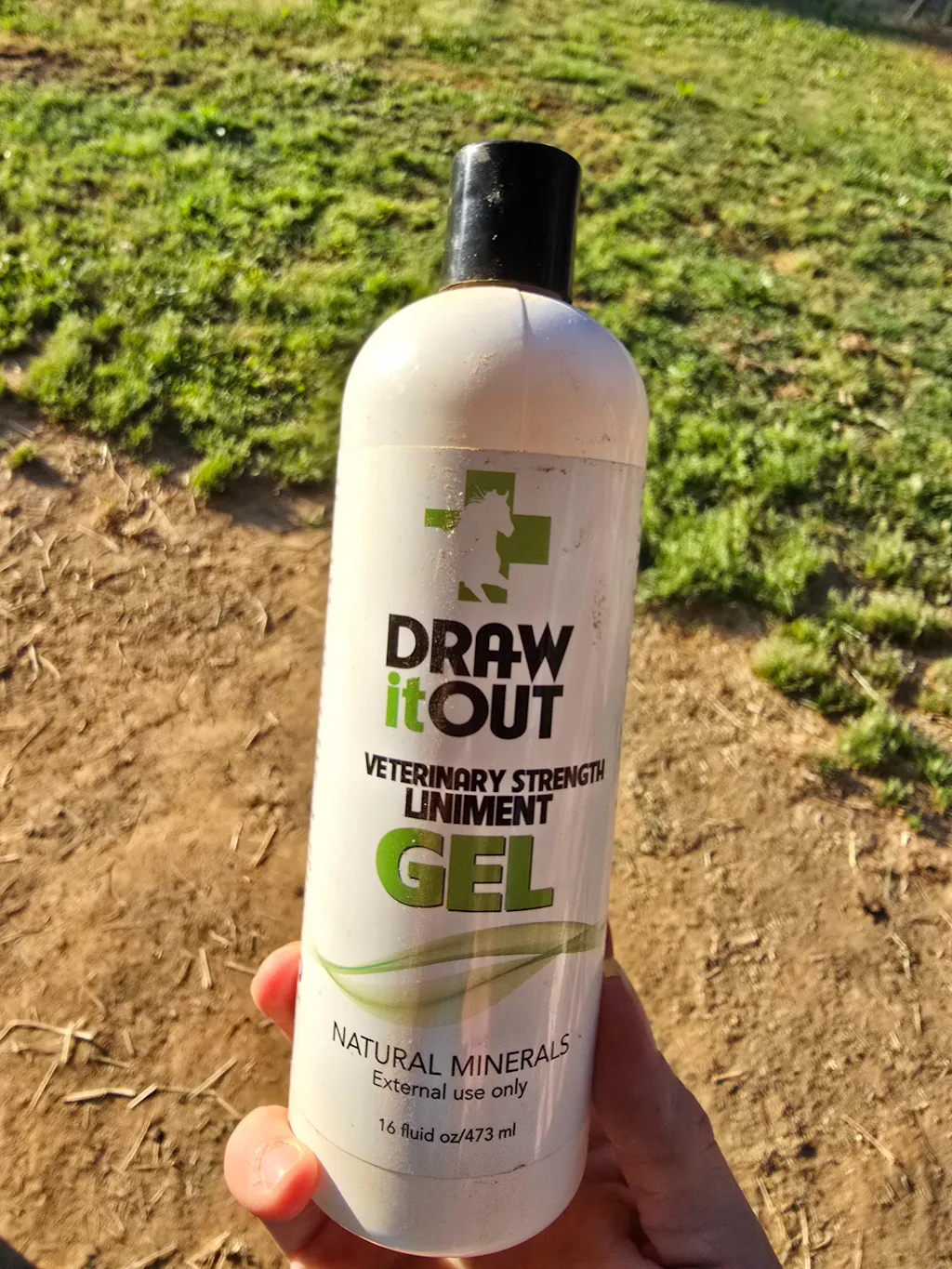
For daily muscle and movement support, start with the Draw It Out® liniment gel collection. For broader routine structure, use the Prehabilitation page. For product matching, use the Solution Finder.
Red Flags
Call your veterinarian or qualified professional if resistance escalates quickly, the horse becomes visibly uneven, shows pain behavior, refuses work, stumbles, loses coordination, or the pattern does not improve with rest and routine adjustment.
FAQ: Horse Resists Transitions
Why does my horse resist upward transitions?
Upward transitions require push, engagement, and clean coordination from behind. Resistance may come from weakness, stiffness, soreness, fatigue, rider timing, or confusion.
Why does my horse feel heavy in downward transitions?
Heavy downward transitions often point to balance limitations. The horse may be falling onto the forehand instead of shifting weight back and staying soft through the body.
Is transition resistance always a training issue?
No. Training can be part of it, but transitions also expose physical limitations. Look at patterns, timing, fatigue, direction, and whether the issue changes after warm up.
What should I do first if transitions suddenly feel rough?
Reduce intensity, check tack fit, compare both directions, note whether the issue appears in upward or downward transitions, and watch for soreness or unevenness. Use a calm recovery routine and involve your veterinarian if the pattern persists or worsens.