Draw It Out® Horse Health Care News
Equine Massage and Liniment Gel: Safe Roles in Horse Care
Understand where qualified equine massage and liniment gel fit in routine horse care, and when pain or lameness needs veterinary evaluation.
Quick answer: Equine massage and liniment gel can complement a sound care plan, but neither should be used to diagnose pain, treat an injury, or push a lame horse through work.
What massage can do
Qualified massage can support relaxation, body awareness, and a structured comparison of muscle tone and response. It can also reveal areas that deserve referral.
What massage cannot do
Massage cannot determine the cause of lameness, replace imaging, repair a torn tendon, or make every horse appropriate for work. Practitioners should stay within scope.
Where horse liniment gel fits
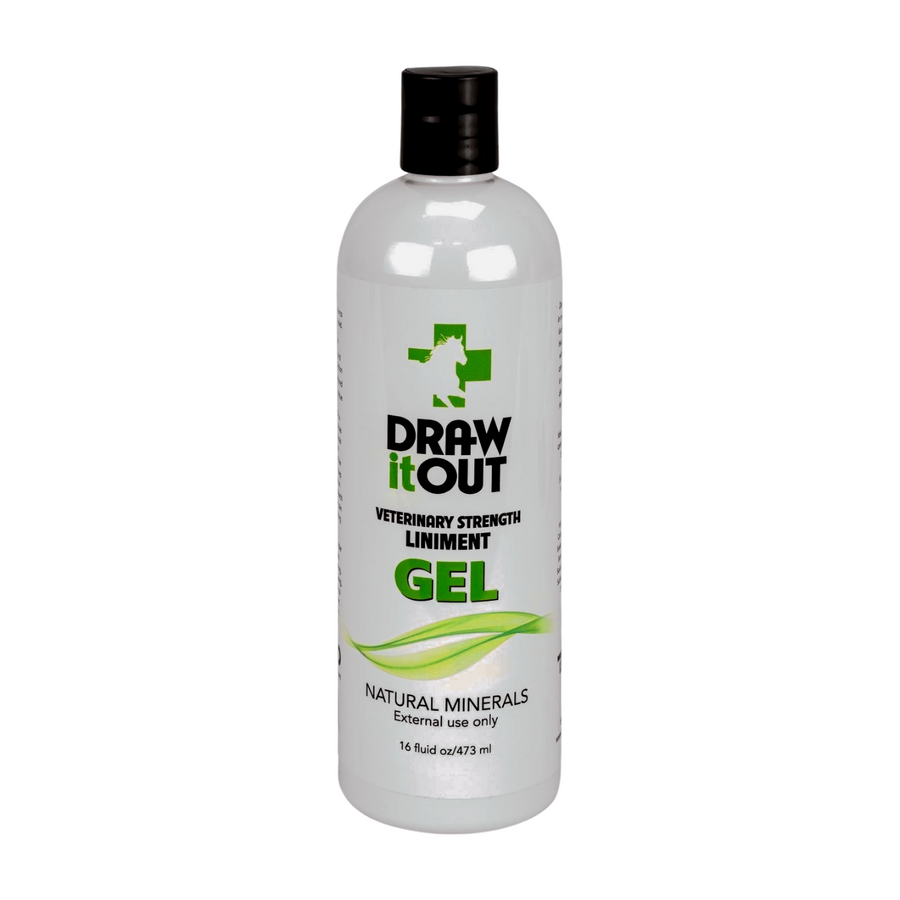
Draw It Out® Liniment Gel can fit routine body care on intact skin when used according to the current label. The hands-on application encourages the rider to notice heat, swelling, sensitivity, and asymmetry.
For a first bottle or a grooming tote, choose Draw It Out® 16oz Horse Liniment Gel. For frequent use across several horses, the 64oz Horse Liniment Gel offers the same ready-to-use formula in a larger bottle. Gel needs no dilution and suits controlled hand application.
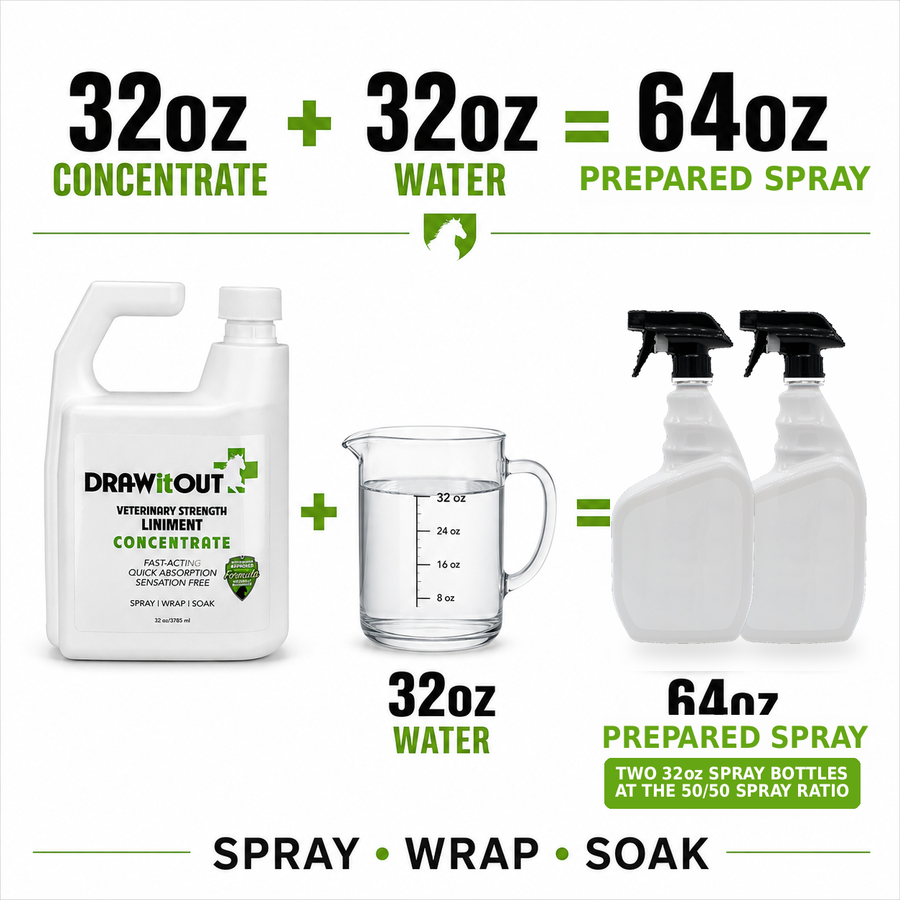
If broader spray coverage better fits the care plan, read the horse liniment gel, spray, and concentrate comparison. Concentrate requires label-directed preparation; a ready-to-use spray is a separate format.
A simple sequence
Observe the horse in motion. Check legs and body. Rule out red flags. Follow the professional plan. Apply the product only where the label and plan fit. Record the next-day response.
Stop signs
Do not massage or apply routine topicals over open wounds, unexplained swelling, severe pain, fever, neurological signs, suspected fracture, or acute lameness without professional direction.
Frequently asked questions
Should massage happen before or after riding?
Timing depends on the goal, horse, practitioner, and care plan. It should never be used to make an unfit horse appear ready.
Can liniment replace massage?
No. A topical and hands-on work are different tools. Use each only for its appropriate routine role.
Educational content only. This article does not replace veterinary, farrier, nutrition, medical, saddle-fitting, training, or other qualified professional guidance.
Explore the Horse Health Library or use the Solution Finder.